
Hormones are designed to change, not stay perfectly level. Hormone balance for women means hormones are working in a way that supports the body, while an imbalance can occur when levels or hormone signals affect normal functions. Levels naturally fluctuate around menstruation, pregnancy, and menopause; in the United States, menopause begins 12 months after a person’s last menstrual period, according to the National Institute on Aging.
If changes in your energy, mood, sleep, weight, or menstrual cycle feel confusing, you’re not alone in wanting clearer answers. These symptoms can have different causes, so noticing patterns can help you make informed choices without assuming every change points to the same issue.
This article explains what hormonal imbalance means, how it may affect health, and which medical conditions and lifestyle factors can contribute. It also covers common menopause symptoms and practical habits, from sleep and nutrition to movement and stress management, that may support hormone health. The aim is to help you understand what your body may be telling you and what steps could help you move forward.
Key Takeaways
- Hormone levels naturally shift through life, and symptoms can reflect different changes or causes rather than one single imbalance.
- In the United States, menopause begins 12 months after a person’s last menstrual period, according to the National Institute on Aging.
- Changes in mood, energy, sleep, weight, or menstrual patterns can offer useful clues; notice when they occur and how they affect daily life.
- Medical conditions, stress, disrupted sleep, nutrition, and other lifestyle factors may all influence hormone regulation.
- Consistent sleep, balanced meals, regular movement, and stress management are practical habits that may support hormone health.
What is a hormonal imbalance?
A hormonal imbalance occurs when hormone levels or signals disrupt normal body functions. The pattern and timing of symptoms can help guide what to explore next.
Common Signs Across Body Systems
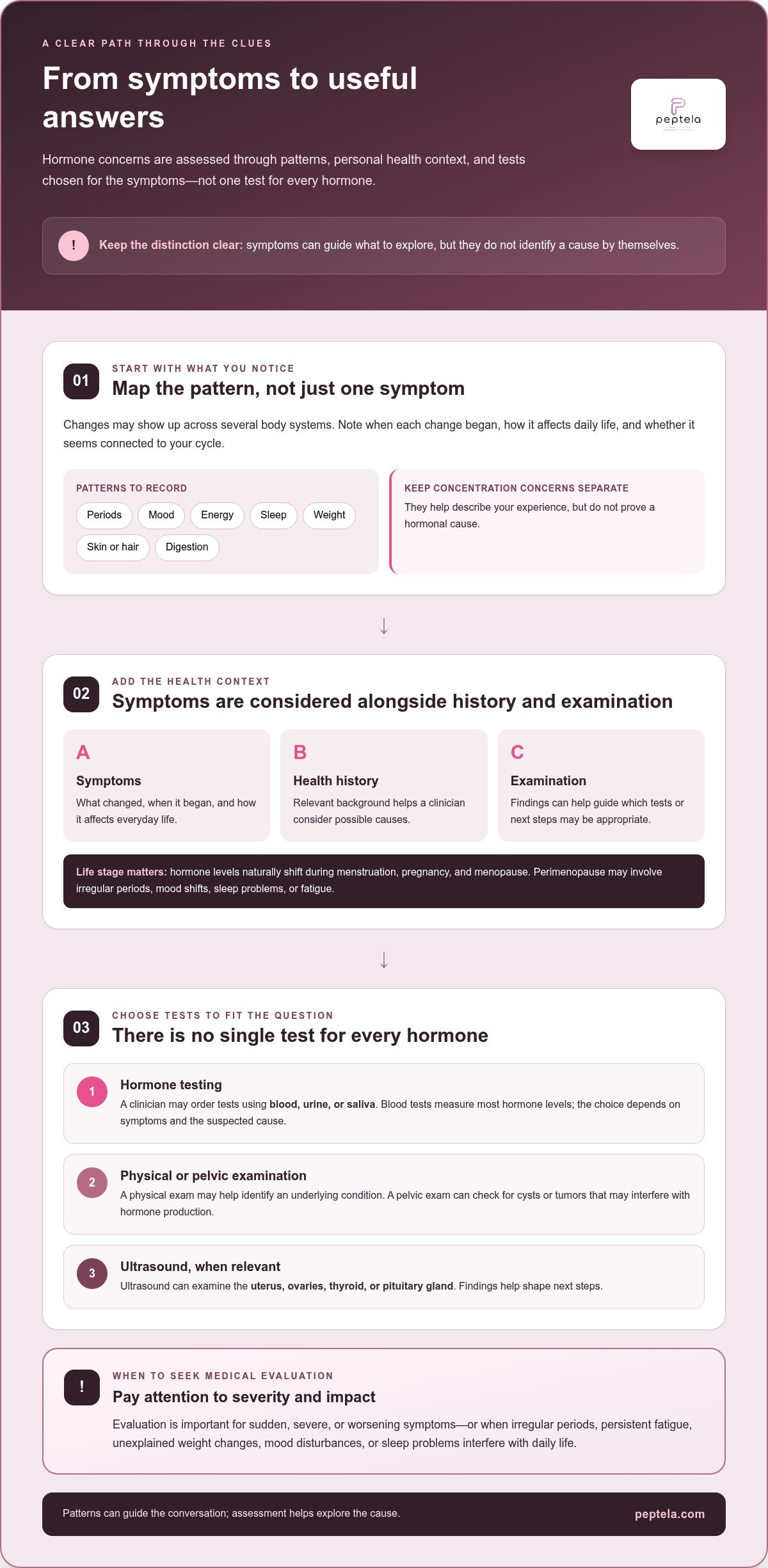
Hormone-related changes can affect periods, mood, energy, skin, hair, and metabolism. This matters because symptoms across several body systems may point to a pattern worth discussing, though they don’t identify a cause by themselves. For example, changes in periods may appear alongside mood shifts, fatigue, weight changes, or hair loss.
Thyroid hormones influence metabolism and energy, while changes in androgen levels may contribute to acne, altered hair growth, or hair loss. Bloating, constipation, and diarrhea can also occur. Note when each change began, how it affects daily life, and whether it seems connected to your cycle. Record concentration concerns separately: they help describe your experience but don’t prove a hormonal cause.
Hormone Changes Across Life Stages
Hormone levels naturally shift during menstruation, pregnancy, and menopause. During the menstrual cycle, changing levels can influence periods and other symptoms; pregnancy also brings hormonal changes. The same symptom may have different context at different life stages.
Perimenopause is the transition toward menopause, when changes may include irregular periods, mood shifts, sleep problems, or fatigue. In the United States, menopause begins 12 months after a person’s last menstrual period, according to the National Institute on Aging. The average age of menopause in the United States is around 51 years. Tracking cycle changes and symptoms can help clarify whether a pattern is changing over time.
Diagnosis and Hormone Testing
Hormonal imbalance is assessed by reviewing symptoms, health history, and examination findings. A primary care physician can assess symptoms and may order hormone tests using blood, urine, or saliva. No single test evaluates every hormone, so the choice depends on your symptoms and the suspected cause.
Blood tests measure most hormone levels, while a physical exam and health history can help identify an underlying condition. A pelvic exam can check for cysts or tumors that may interfere with hormone production; ultrasound can examine the uterus, ovaries, thyroid, or pituitary gland. These findings help shape next steps. Seek medical evaluation for sudden, severe, or worsening symptoms, or when irregular periods, persistent fatigue, unexplained weight changes, mood disturbances, or sleep problems interfere with daily life.
Herbal products also deserve careful consideration. Talk with a primary care physician before trying natural remedies intended to boost estrogen, since supplements can affect the body and may not suit every situation. Bring the product name and a list of current medicines to the discussion. This gives the clinician useful context alongside your symptom and cycle notes.
Health effects of hormonal imbalance
Hormones influence physical and emotional well-being through connected systems. Their effects can extend to bone strength, sleep, digestion, mood, and metabolic health.
Hormones and Daily Health
Hormones help coordinate daily functions, so changes can affect several areas at once. Estrogen supports bone density and cardiovascular health; progesterone contributes to sleep quality and emotional stability. Thyroid hormones influence metabolism, while cortisol helps regulate the stress response. This matters because fatigue, mood changes, or sleep disruption can have overlapping causes.
During the menopausal transition, estrogen and progesterone production declines greatly, according to the National Institute on Aging. Changing estrogen levels can also relate to low libido, vaginal dryness, or pain during sex. Lower estrogen can reduce serotonin, which helps stabilize mood. These effects may influence comfort, emotional well-being, and everyday routines.
Nutrition supports hormone production through varied food sources. Avocados, chia seeds, fatty fish, nuts, seeds, and olive oil provide healthy fats. Soluble fiber may bind excess estrogen in the digestive tract, helping it leave the body rather than be reabsorbed. These foods support overall nutrition, but they don’t replace assessment of persistent symptoms.
Gut Health and the Estrobolome
The estrobolome refers to gut microbes involved in processing estrogen. Gut activity can influence how estrogen is metabolized and eliminated, making digestion relevant to hormonal health. Fiber-rich foods offer a practical way to support digestive function while providing nutrients for overall health.
Berries, seeds, avocados, leafy greens, and cruciferous vegetables add fiber and other nutrients to meals. Soluble fiber can bind excess estrogen in the digestive tract for excretion. A varied eating pattern supports gut health more sustainably than relying on a single “hormone-balancing” food. Persistent digestive symptoms still deserve attention as part of the broader health picture.
Inositol is another nutrient discussed in relation to metabolic health. It occurs in nine forms; myo-inositol and D-chiro-inositol are common forms used in supplements. Randomized controlled trials have studied myo-inositol doses of 2,000 to 4,000 mg per day for insulin function and cycle regularity. Talk with a physician before using supplements, especially when managing a health condition.
Hormone Replacement Therapy Effects
Hormone replacement therapy uses hormones to address low levels, and its benefits and risks depend on the treatment and personal health history. Hormone therapy has been shown to slow bone loss and reduce colon cancer risk. It has also shown cardiac benefits for patients who begin treatment before age 60. These findings don’t establish one approach as right for everyone.
Possible side effects and risks vary with the hormones used, treatment route, and individual circumstances. A clinician weighs the intended benefit against medical history and current symptoms. For example, someone seeking relief from vaginal dryness may discuss a different treatment approach than someone addressing low thyroid hormone. Personalized hormone balance care can help frame that conversation around symptoms, goals, and clinical assessment.
Potential causes, including medical conditions and lifestyle factors
Hormone levels can shift naturally through life or change with health conditions, medicines, and daily habits. Identifying likely causes helps distinguish expected transitions from changes that need clinical attention.
Natural and Medical Causes
Hormonal changes occur naturally during puberty, pregnancy, postpartum recovery, perimenopause, and menopause. These transitions can affect periods, sleep, mood, and energy, so life stage provides useful context when symptoms begin. Chronic stress, disrupted sleep, nutritional deficiencies, and certain medications can also affect hormone regulation.
Medical conditions may alter hormone production or the body’s response. Thyroid disorders, polycystic ovary syndrome, insulin resistance, and diabetes can interfere with normal function. Hypothyroidism involves low thyroid hormone and may slow metabolism, while Cushing’s syndrome involves too much cortisone. Up to 50% of people treated with radiation therapy for head and neck cancer develop hypothyroidism.
Common Causes of Hormonal Imbalance
Common causes include chronic stress, poor sleep, limited exercise, poor nutrition, thyroid issues, diabetes, and other underlying conditions. These factors can interact: disrupted sleep and ongoing stress, for example, can affect hormone regulation while also changing energy and appetite. Refined sugars, heavily processed foods, alcohol, and excessive caffeine may also contribute.
Patterns matter. Note when symptoms started, whether they align with a life-stage transition, and whether medicines or routines changed around the same time. A new medication, irregular periods, or persistent fatigue can help frame a clinical assessment. This context helps distinguish temporary changes from conditions that need targeted evaluation.
What causes hormone changes or imbalances in women? Natural life stages, medical conditions, chronic stress, disrupted sleep, nutritional deficiencies, limited exercise, and certain medications can all play a role. The cause depends on the person’s symptoms, health history, and the hormone systems involved.
Medical treatment depends on the specific condition. Options may include hormonal birth control for cycle-related symptoms, vaginal estrogen for dryness or pain, and anti-androgen medicines for effects linked to higher androgen levels. Clomiphene or letrozole may support ovulation with PCOS or infertility; metformin can help manage blood sugar, while levothyroxine can reduce hypothyroidism symptoms.
Treatment for a thyroid disorder, for example, differs from care for PCOS or menopause symptoms. Blood tests, medical history, and clinical assessment help determine whether intervention is needed and which options fit the cause. This individualized approach matters because the same symptom, such as fatigue, can arise from different conditions.
What are common symptoms of menopause?
Menopause-related changes can affect sleep, mood, appetite, body temperature, and periods. Lifestyle habits may support hormone regulation, but they don’t explain every symptom or replace assessment when symptoms interfere with daily life.
During the menopausal transition, changing hormones can influence everyday functions. Disrupted sleep, for example, may affect energy, while changes in appetite or activity can influence weight. Notice which symptoms occur, how often they affect your routine, and whether they change over time. Keeping a record can help you describe the pattern clearly during a medical discussion.
What lifestyle changes may support healthy hormone levels, and what does the evidence show? Regular movement, balanced meals, adequate sleep, and stress management support proper hormone function. These habits provide a practical foundation, but they don’t establish the cause of a symptom or guarantee a particular result.
Make sleep a consistent priority. Most adults should aim for seven to nine hours per night to support hormone health. A steady bedtime routine can help, and limiting blue-light exposure during the hour before bed may support that routine. Chronic sleep disruption can also affect hormone regulation.
Build meals around varied, nutrient-rich foods rather than restrictive rules. Fiber-rich foods and cruciferous vegetables, such as leafy greens and broccoli, can support nutrition. Prioritizing food sources of nutrients over supplements keeps the focus on everyday eating. Avoid extreme dieting and aim for consistent routines instead.
Movement can support overall metabolic health and hormone function. A practical routine might include low-to-moderate cardio, such as walking or cycling, two to three days per week. Strength training is another structured option. Choose an activity you can maintain, then adjust its intensity around your energy, sleep, and recovery.
Cycle regularity and insulin sensitivity are also discussed in relation to inositol. Randomized controlled trials have studied myo-inositol doses of 2,000 to 4,000 mg per day for insulin function and cycle regularity. That research does not make supplements a universal choice. Discuss a supplement with a physician before starting, especially if you take medication or have a health condition.
Supplement safety deserves attention. The U.S. Food and Drug Administration does not approve dietary supplements for safety and effectiveness before they’re sold to the public. B vitamins include nine types, but that number alone doesn’t show whether a supplement suits your needs. Prioritize food sources and discuss supplements with a clinician.
Regular activity, sleep, nutrition, and stress management are useful starting points, not diagnostic tests. If menstrual changes, persistent fatigue, or sleep problems interfere with daily life, seek medical evaluation. A clinician can consider your symptoms, health history, and possible thyroid or metabolic factors when assessing next steps.
Lifestyle habits that may help support hormone balance
Hormone-supportive routines rely on consistent choices, not a single food or supplement. Sleep, movement, nutrition, and stress management can support endocrine function and everyday health. Start with habits you can repeat, then observe how your energy, sleep, and menstrual patterns respond over time.
Protect a regular sleep schedule. Most adults should aim for seven to nine hours each night to support hormone health. Keep bedtime and waking times steady where possible, and limit blue-light exposure during the hour before bed. Sleep influences cortisol, somatotropin, and leptin, which contribute to stress response, growth, and appetite regulation. A consistent wind-down routine is a practical first step.
Build a sustainable movement routine rather than relying on occasional intense workouts. Moderate cardio, such as walking or cycling, two to three days per week offers one starting point. Strength training two to three days per week can also be part of an exercise plan. The broader routine can include moderate activity four to five days per week, with recovery built in. Adjust activity to your fitness and daily energy.
Choose foods that provide steady nourishment. Include fiber-rich foods and cruciferous vegetables, such as broccoli, alongside healthy fats from nuts, seeds, avocado, or olive oil. Prioritize food sources of nutrients over supplements, and avoid extreme dieting. Consistent meals and routines may help reduce sharp swings in hunger and energy that complicate daily well-being.
Make stress management part of your routine. Ten minutes of daily mindfulness meditation can have measurable effects on cortisol. Try a quiet breathing practice or guided meditation at a consistent time, such as after work. A simple structure makes the habit easier to repeat, but it doesn’t replace evaluation when symptoms suggest an underlying condition.
Regular activity, balanced nutrition, adequate sleep, and stress management support proper hormone function. They may also support insulin sensitivity and help maintain a healthy weight, but they don’t diagnose the cause of irregular periods or other symptoms. Pregnancy, menopause, thyroid disorders, and polycystic ovary syndrome can each affect hormone patterns. Seek medical evaluation when symptoms persist or disrupt daily life.
Choose one habit to build first, then track it alongside sleep, mood, and cycle changes. If you’re ready to discuss individualized support, explore hormone health care options.
Aim for seven to eight hours of sleep every night to support hormone balance. Ten minutes of daily mindfulness meditation can have measurable effects on cortisol, making it a simple practice to include in a consistent routine.
Include fiber-rich foods and cruciferous vegetables as part of a balanced approach to hormone health. Cruciferous vegetables assist the liver in metabolizing and detoxifying excess estrogen. Avoiding extreme dieting and maintaining consistent routines may help support steadier hormone patterns.
Peptela: Tirzepatide Injections
Peptela offers Hormone Balance, Tirzepatide Injections, NAD+, and Peptides as distinct options within personalized, clinician-guided care. If your questions center on hormonal symptoms, Hormone Balance is the relevant offering to explore. Tirzepatide Injections are a separate option, so don’t assume they address hormone-related symptoms. Sharing your health goals, symptoms, and relevant history can guide a discussion about which care path fits your needs. Peptela’s fully online longevity platform offers clinician-guided, subscription-based treatments, with no in-person visit required. Prescription products require an online evaluation with a licensed medical professional who will determine if a prescription is appropriate. Visit peptela.com to explore Peptela’s offerings.
Choose a Next Step That Fits Your Goals
Supporting hormone balance for women starts with treating your experience as useful information, not something to dismiss or solve through guesswork. Consider what you’d like to feel different in daily life, which changes matter most, and what questions you want answered. That clarity can help make a conversation about care more focused and personal.
Personalized care for hormone balance for women should begin with your goals and health context. Peptela offers Hormone Balance, NAD+, and Tirzepatide Injections as distinct options through its longevity platform. Note the changes you’ve noticed, what you hope to address, and your questions about possible care options. A clear starting point can help you discuss your priorities and consider a path forward.
Contact Peptela to discuss your questions. Take the next step at your own pace, with confidence in your ability to make informed choices about your well-being.
Frequently Asked Questions
What Foods Are Good for Balancing Hormones?
No single food balances hormones, but varied, nutrient-rich meals support overall health. For example, pair leafy greens and beans with salmon, or add berries, chia seeds, and avocado to breakfast. These combinations provide fiber and healthy fats, which contribute to nutrition and hormone function. Consistency matters more than relying on one “hormone-balancing” ingredient. Choose foods you enjoy and can include regularly.
What hormones affect women’s health and what do they do?
Estrogen, progesterone, thyroid hormones, cortisol, and insulin all contribute to health. Think of them as signals with different roles: estrogen supports bone and cardiovascular health, progesterone contributes to sleep and emotional stability, and thyroid hormones influence metabolism. Cortisol helps regulate the stress response, while insulin helps manage blood sugar. Their functions overlap, so symptoms alone don’t identify which hormone may be involved.
What are common signs of hormonal imbalance in women?
Common signs can include changes in periods, mood, energy, sleep, weight, skin, or hair. The pattern adds useful context: note when a symptom appears, how long it lasts, and whether it disrupts activities such as work or sleep. Recording cycle dates alongside mood and energy changes, for example, can make a health discussion more specific. A symptom pattern can guide assessment, but it doesn’t establish a diagnosis.
Do hormone-balancing supplements work, and are they safe?
Supplements aren’t a universal solution for hormone-related symptoms. The U.S. Food and Drug Administration doesn’t approve dietary supplements for safety and effectiveness before they’re sold. Tell a healthcare professional about any supplement you’re considering, especially products intended to boost estrogen or those taken alongside medicines. Share the ingredient list and your reason for using it so the discussion can account for your health needs and current treatments.


