

Hormones shape far more than reproductive health: they help regulate growth, metabolism, mood, and sexual function. They’re chemical messengers released by glands into the bloodstream, and scientists have identified over 50 in the human body. A hormone balance treatment depends on which hormone is affected and what’s driving the change; no single test measures every hormone.
Changes in energy, mood, periods, sleep, or sexual health can feel confusing, especially when symptoms overlap with other concerns. Understanding what hormones do is a useful first step toward making sense of what your body may be signaling.
This guide covers common signs and possible causes of hormonal changes, how clinicians may assess them, and the treatment approaches they may discuss. You’ll also learn how estrogen therapy and bioidentical hormone therapy differ, helping you understand the options and take a more informed role in your care.
Key Takeaways
- Notice patterns in your periods, energy, mood, sleep, and sexual health; symptoms can vary depending on which hormones are affected.
- Perimenopause and menopause can bring changes such as hot flashes, night sweats, and brain fog. Track what you experience to support a clearer discussion about your health.
- Sleep, stress, nutrition, activity, life stages, and underlying health conditions can all influence hormones. Consider how these factors fit into your daily routine.
- There’s no single test that evaluates every hormone. Assessment may combine your health history, symptoms, an exam, and targeted laboratory tests.
- Estrogen therapy and bioidentical hormone therapy are not interchangeable terms. Learn how their purpose and formulation differ before weighing treatment options with a clinician.
1. What are the signs and symptoms of hormonal imbalance?
Hormonal imbalance symptoms vary with the hormone involved and the amount produced. Changes can affect metabolism, mood, reproduction, and sexual function. Common signs include fatigue, low energy, weight gain, hair loss, mood swings, bloating, constipation, and diarrhea. A symptom alone doesn’t identify its cause, so notice when it starts and what else changes.
For women, shifts in estrogen and progesterone can make periods absent, frequent, heavy, or irregular. Perimenopause symptoms often begin in the 40s and may include hot flashes, night sweats, fatigue, and brain fog. Menopause-related estrogen decline can also contribute to vaginal dryness. Low estrogen after menopause may lead to vaginal atrophy, which involves inflammation and thinning of vaginal walls.
Sex hormone changes affect people differently. In women, they may influence menstrual cycles, vaginal comfort, mood, and sexual desire. In men, low sexual desire is one possible symptom associated with hormone disruption. Estrogen decreases can also lower serotonin and contribute to anxiety, depression, or irritability. These examples can guide a conversation, but symptoms alone don’t establish a diagnosis.
Some symptoms call for medical support. Seek care for sudden, severe, or worsening fatigue, weight changes, mood swings, or irregular periods. Periods lasting more than 7 days, no period by age 15, or periods stopping for 3 or more months after starting also warrant medical attention. Record dates, bleeding patterns, sleep changes, and symptoms before discussing them with a clinician.
Herbal products and supplements are not automatically safe because they’re described as natural. Some remedies may boost estrogen, so discuss them with a primary care physician before trying them. The U.S. Food and Drug Administration doesn’t approve dietary supplements for safety and effectiveness before they’re sold. Read the label and share the ingredients, including adaptogens or omega-3 supplements, during the discussion.
How much do hormone testing and treatment cost in the United States? Costs depend on the testing involved, treatment type, and dosing approach; the price depends on the case and is given after a quote request. Ask which services are included and what may affect your total cost.
Before starting treatment, ask: “What could explain my symptoms, what tests are appropriate, and what benefits and risks should I weigh?” Also ask how progress will be monitored and when the plan might be adjusted. These questions help clarify the goal and follow-up steps.
2. What conditions are caused by hormonal imbalances?
Hormonal changes can affect physical health, but symptoms don’t point to one condition on their own. Insulin resistance, diabetes, and thyroid disorders involve hormone regulation, while disrupted sleep and substance use may worsen related concerns. The relationship can work both ways: a health condition may affect hormone levels, and hormone changes may influence how the body functions. Assessment considers symptoms, health history, and relevant test results.
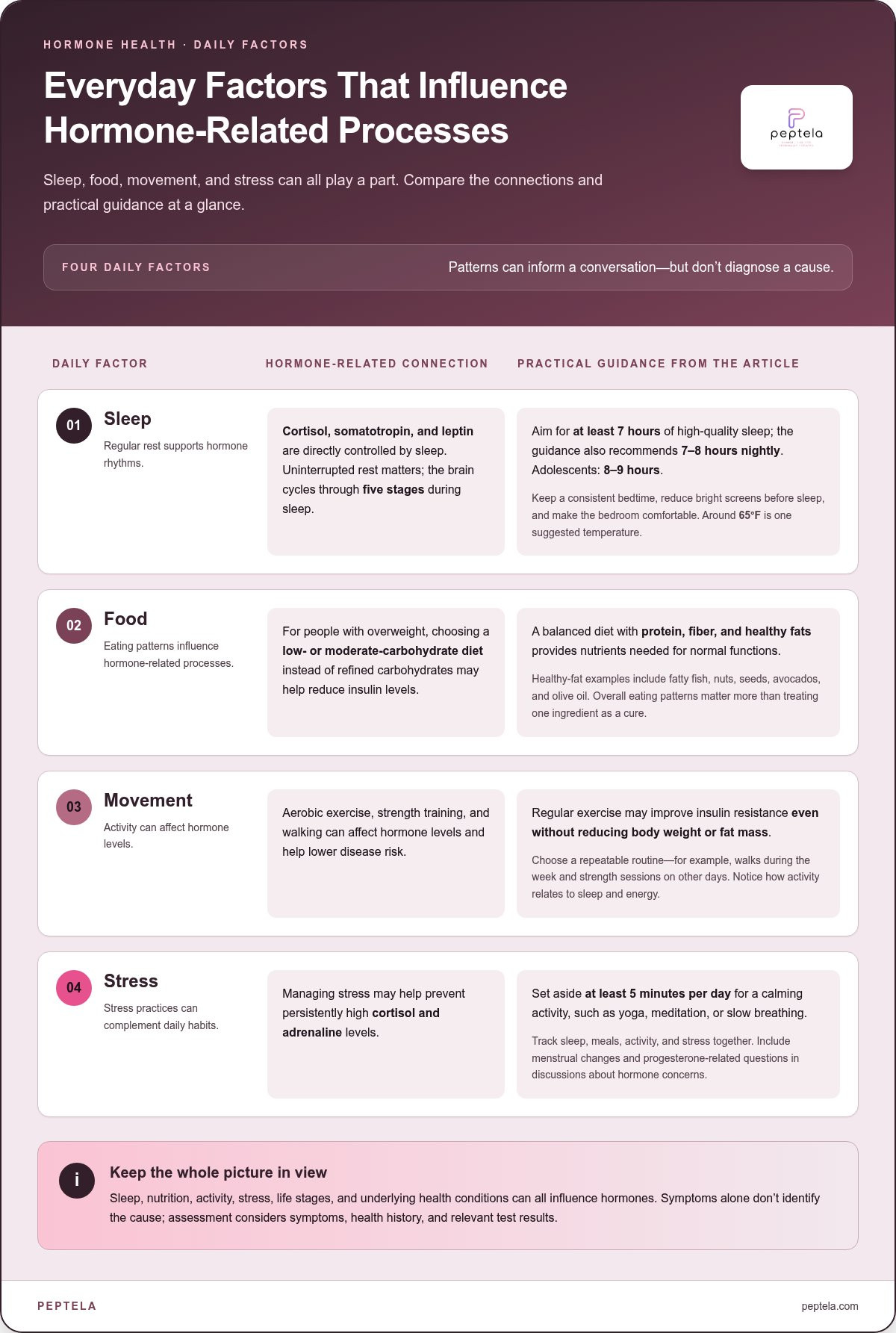
Sleep is one part of that picture. Cortisol, somatotropin, and leptin are hormones directly controlled by sleep, and regular rest supports their rhythms. Aim for at least 7 hours of high-quality sleep per night; the section’s sleep guidance also recommends seven to eight hours every night. Uninterrupted rest matters because the brain cycles through five stages during sleep. A short night can disrupt that pattern and affect energy the next day.
Build a repeatable routine before changing several habits at once. Keep a consistent bedtime, reduce bright screens before sleep, and make the bedroom comfortable; around 65°F is one suggested temperature. Adolescents need a different target, with 8-9 hours recommended for natural period support. If sleep remains broken, note bedtime, waking, caffeine, alcohol, and symptoms. Those details can show which daily factors track with changes in mood or energy.
Food choices also influence hormone-related processes. For people with overweight, choosing a low- or moderate-carbohydrate diet instead of refined carbohydrates may help reduce insulin levels. A balanced diet with protein, fiber, and healthy fats provides nutrients the body needs for normal functions. Fatty fish, nuts, seeds, avocados, and olive oil are examples of healthy-fat sources. Overall eating patterns matter more than treating any one ingredient as a cure.
Movement offers another practical step. Aerobic exercise, strength training, and walking can affect hormone levels and help lower disease risk. Regular exercise may improve insulin resistance even without reducing body weight or fat mass. Choose a routine you can repeat, such as walks during the week and strength sessions on other days. Consistency makes it easier to notice how activity relates to sleep and energy.
Stress practices can complement those habits. Set aside at least 5 minutes per day for a calming activity, such as yoga, meditation, or slow breathing. Managing stress may help prevent persistently high cortisol and adrenaline levels. Track sleep, meals, activity, and stress together for a practical record. If you’re discussing hormone concerns, include menstrual changes and progesterone-related questions in that conversation, rather than assuming one lifestyle change explains every symptom.
3. Causes of hormonal imbalance
Hormones are chemical messengers released by glands into the bloodstream. More than 50 hormones help regulate growth, metabolism, mood, and reproduction. A hormonal imbalance happens when the body produces too much or too little of a hormone. The cause may involve a life stage, a medication, a health condition, or several factors together.
Hormone levels shift naturally during puberty, pregnancy, and menopause. Aging can also change hormone production and how hormones work. Other possible influences include chronic stress, disrupted sleep, poor nutrition, and lack of exercise. Birth control and cancer treatments can affect hormone levels, while cysts or tumors may interfere with hormone production. Exposure to endocrine disruptors in plastics or pesticides may also affect health.
Some causes are linked to specific medical care. Approximately 75% of hypoparathyroidism cases result from accidental damage to the parathyroid glands during neck or thyroid surgery. Up to 50% of people treated for head and neck cancer with radiation therapy develop hypothyroidism. These examples show why treatment history matters during an evaluation.
Weight gain can accompany hormone changes, but it doesn’t identify the cause on its own. Stress can elevate cortisol levels, which may contribute to weight gain and other complications. A diet high in refined carbohydrates may promote insulin resistance. Diabetes and thyroid disorders can also affect hormone regulation, so consider weight changes alongside energy, sleep, medication use, and other symptoms.
Diagnosis starts with a full view of your health, not one isolated result. Evaluation may include a physical exam, a review of your health history, and discussion of medications and supplements. Hormone levels can be measured through blood, urine, or saliva tests. No single test evaluates every hormone, so the choice depends on the symptoms and concerns being assessed.
Additional checks can help identify other explanations. A pelvic exam may look for cysts or tumors that interfere with hormone production. Ultrasound may examine the uterus, ovaries, thyroid, or pituitary gland. These steps help connect symptoms with possible causes instead of assuming every change reflects the same imbalance.
Before prescribing hormone replacement therapy or another treatment, a clinician may conduct a comprehensive examination with laboratory testing. Bring a current list of medications and supplements, note when symptoms began, and describe changes such as weight gain or irregular periods. This information gives the clinician practical context for interpreting test results and considering the next step in a hormone balance treatment plan.
4. Estrogen and estrogen-progestin therapy
Estrogen influences vaginal tissue, mood, and other body functions. A decrease can lower serotonin levels and contribute to anxiety, depression, or irritability. During menopause, estrogen therapy may ease hot flashes, mood changes, and vaginal dryness. Hormone replacement therapy may also help with sleep disturbances and bone density loss. The right approach depends on symptoms, health history, and whether effects are localized or widespread.
Estrogen therapy comes in several forms, including pills, patches, creams, gels, and injections. A clinician considers symptoms and treatment goals when discussing options. For example, someone with vaginal dryness but no systemic symptoms may use topical estrogen cream or gel. Vaginal estrogen is a topical treatment for vaginal dryness and pain. Localized symptoms may call for a different approach than hot flashes affecting daily comfort.
For women with a uterus, estrogen-progestin therapy combines estrogen and progesterone. Whether a person has a uterus is a key factor in this distinction. Estrogen alone and estrogen-progestin therapy are not interchangeable choices. Before recommending a plan, a clinician considers symptoms, health history, and treatment goals.
Food supports general nutrition, but it doesn’t replace prescribed therapy. A Mediterranean-style eating pattern can include olive oil, nuts, seeds, fatty fish, and vegetables. Soluble fiber can bind excess estrogen in the digestive tract, allowing it to leave the body rather than be reabsorbed. Cruciferous vegetables assist the liver in metabolizing excess estrogen. These foods support dietary variety, not a guaranteed change in symptoms.
DIM is often discussed in relation to cruciferous vegetables and estrogen. If you’re considering a DIM supplement, show its label to your clinician and discuss how it fits with your health history and medications. Supplements can vary in ingredients and formulation. The U.S. Food and Drug Administration doesn’t approve dietary supplements for safety and effectiveness before they’re sold. Don’t assume a supplement works like estrogen therapy or offers the same benefits.
Choosing among estrogen options starts with identifying the symptoms treatment aims to address. Note whether your concerns include vaginal dryness alone, hot flashes, sleep disruption, or mood changes. Share your medications and supplements, and ask how the chosen formulation is intended to help. Discuss how progress will be monitored and what might prompt a change. Clear goals make it easier to compare a topical option with a broader therapy plan.
5. Bioidentical hormone replacement therapy
Bioidentical hormones are chemically identical to hormones naturally produced by the body. Hormone replacement therapy (HRT) aims to restore declining estrogen, progesterone, and testosterone levels in women. It may be considered for severe menopausal or andropausal symptoms. The goal is to address specific symptoms and hormone levels, not to treat every change as the same imbalance.
Bioidentical describes a hormone’s chemical similarity; compounded describes how a preparation is made. The terms answer different questions. “Bioidentical” alone doesn’t tell you whether a product is FDA-approved or compounded. Ask which hormone and formulation a treatment uses, and whether it’s an approved product or a compounded preparation.
HRT options can include pills, shots, and patches, which require regular dosing to remain effective. Pellets are another option used in clinical practice. About the size of a single grain of rice, they’re inserted just under the skin during an in-office procedure. When depleted, pellets are removed and replaced in the office. The route affects how treatment is given, while symptoms and health history guide the discussion.
For women, HRT may be used to address declining estrogen, progesterone, and testosterone. Treatment may help with symptoms such as vaginal dryness, sleep disturbances, mood swings, or bone density loss. Many women use HRT for a few years before tapering off, but that isn’t a schedule for everyone. Monitoring helps guide decisions about continuing, adjusting, or stopping therapy.
How do FDA-approved hormone treatments compare with compounded bioidentical hormones? Bioidentical refers to hormones chemically identical to those the body produces, while compounded refers to how a preparation is made. Ask about the specific product and formulation, then discuss how each fits your symptoms and health history.
Does health insurance cover hormone testing or hormone replacement therapy? Coverage varies by plan, test, and treatment. Review your benefits for the specific service, including any stated medical-necessity criteria and cost sharing.
What are the risks, side effects, and contraindications of hormone therapy? They depend on the hormone, formulation, route, and personal medical history. Review your current conditions, medications, and supplements with a clinician, and ask which effects might prompt a treatment adjustment.
Before starting, clarify which symptoms the therapy is intended to address, how hormone levels will be monitored, and how follow-up will shape the plan. These questions make the decision more specific to your needs and keep treatment focused on clear goals.
Peptela: Tirzepatide Injections
Peptela offers Tirzepatide Injections alongside Hormone Balance for different health goals. If your concerns center on hormone-related symptoms, explore Hormone Balance as the relevant next step. Tirzepatide Injections are a separate offering, not a replacement for an evaluation of hormone concerns.
Peptela’s personalized plans are clinician-guided, giving you a way to discuss your goals, symptoms, health history, and which offering may fit your needs. You can also explore Peptides as another available option.
If you’re ready to learn more about these options, visit Peptela online.
Take the Next Step Toward Personalized Care
Start with a focused conversation about what you want to address and what matters most in your daily life. Bring your priorities, questions, and treatment goals into that discussion. A clear starting point keeps decisions centered on your needs rather than a one-size-fits-all idea of hormone balance treatment.
Peptela offers Hormone Balance for people exploring hormone-related care, alongside Tirzepatide Injections and NAD+. These are distinct offerings for different goals, so begin with the concern you want to discuss. Take time to understand the options and decide what feels relevant to your health priorities.
Contact Peptela to discuss your options and take a thoughtful next step toward care that reflects your goals.
Frequently Asked Questions
What are hormones?
Hormones are chemical messengers that help coordinate activity throughout the body. They travel through the bloodstream and signal organs and tissues, influencing processes such as growth, metabolism, reproduction, and mood. For example, insulin helps regulate blood sugar, while estrogen and progesterone influence reproductive functions. Hormones work in connected systems, so a change in one signal can affect how other bodily processes feel or function.
What Are My Treatment Options for Hormone Balance?
Options depend on the hormone involved, symptoms, and underlying cause. A clinician may consider treating a medical condition, adjusting a medication, recommending lifestyle changes, or discussing hormone therapy. For menopause-related concerns, estrogen therapy and estrogen-progestin therapy are possible approaches. They differ in purpose and formulation, so share your symptoms, health history, and goals before choosing a hormone balance treatment plan.
What are the signs and symptoms of hormonal imbalance?
Symptoms vary, and a single sign can have more than one explanation. Fatigue, for example, may occur alongside changes in sleep, mood, or energy; menstrual patterns may also shift. Track when symptoms happen, how long they last, and whether they coincide with medication changes or life-stage transitions. A brief daily log can help you describe patterns clearly during a medical evaluation.
What conditions are caused by hormonal imbalances?
Hormone disruption may be associated with conditions such as diabetes, thyroid disorders, and hypoparathyroidism, but symptoms alone can’t establish a cause. The relationship may work both ways: a health condition can affect hormone levels, and hormone changes can influence body functions. Share relevant diagnoses and treatment history, such as thyroid surgery or cancer radiation, so a clinician can consider these factors during assessment.
What kind of doctors treat hormonal imbalances?
A primary care physician can assess symptoms and health concerns, then help determine an appropriate next step. Depending on the pattern, evaluation may involve a clinician with expertise in the affected system, such as reproductive or thyroid health. Bring a medication and supplement list, along with notes about symptom timing. That context helps focus the assessment instead of treating one symptom in isolation.
What does hormone imbalance mean, and what symptoms can it cause?
Hormone imbalance means the body produces too much or too little of a particular hormone, or hormone signaling changes. Possible symptoms include shifts in periods, mood, energy, weight, digestion, or sexual desire. The combination matters: changes in menstrual timing alongside hot flashes, for example, may suggest a different pattern than digestive symptoms alone. A clinician considers the full picture, not just one symptom.
What tests diagnose a hormone imbalance, and how are results interpreted?
No single test measures every hormone. Depending on symptoms, testing may use blood, urine, or saliva, alongside a health-history review and physical exam. Results are interpreted in context, including the hormone measured, symptoms, medications, and life stage. When concerns involve structures like the uterus, ovaries, thyroid, or pituitary gland, a clinician may recommend additional assessment, such as an ultrasound.
What treatments are available for hormone imbalance by cause and affected hormone?
Treatment depends on the suspected cause and the hormone involved. A thyroid condition, medication-related change, and menopause symptoms may call for different approaches. Options can include addressing an underlying condition, changing a relevant medication, lifestyle measures, or clinician-guided hormone therapy. For estrogen-related symptoms, the discussion may distinguish localized vaginal treatment from therapy for broader symptoms. Monitoring helps assess whether the approach matches the intended goal.


