

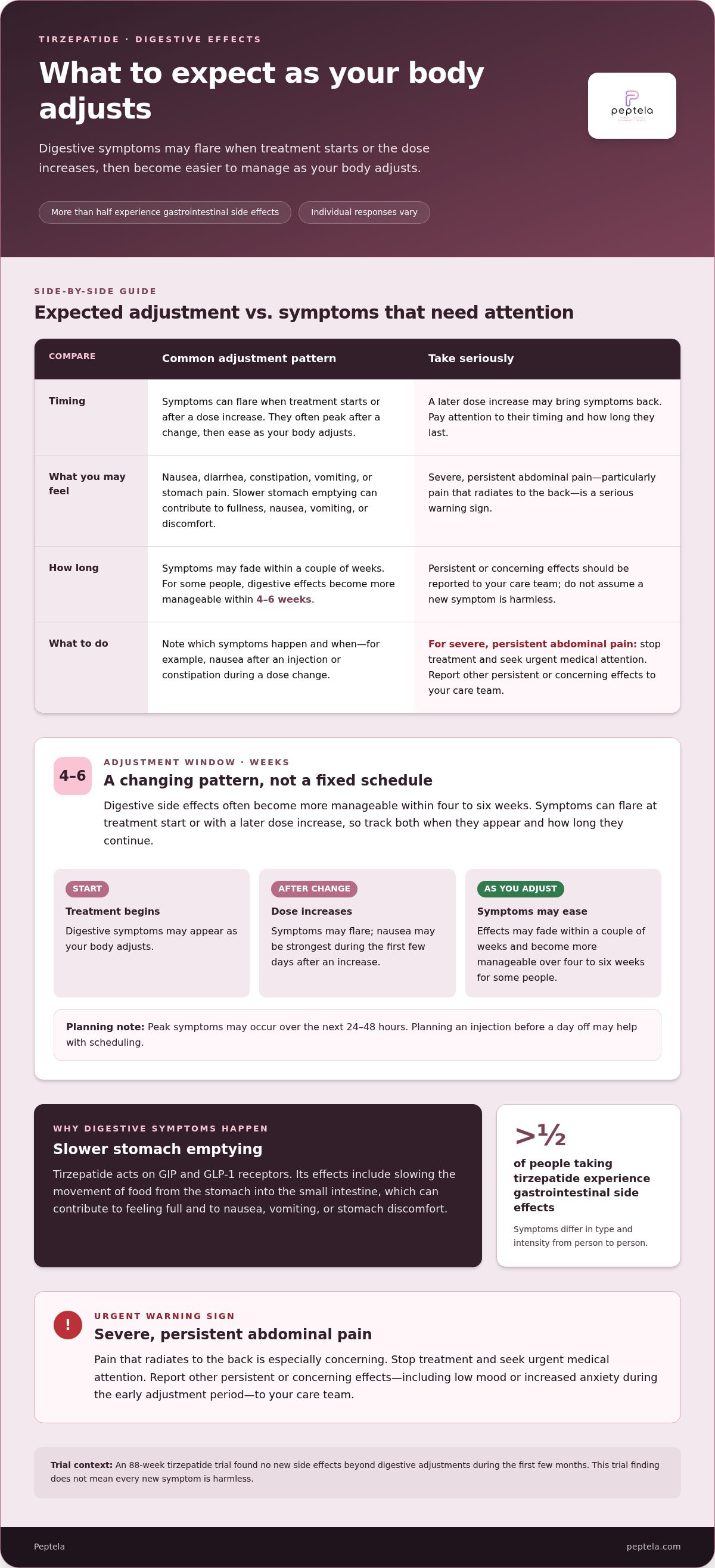
Digestive side effects often ease as your body adjusts to tirzepatide. Nausea, diarrhea, constipation, and vomiting are among the most commonly reported effects. They may become more manageable within four to six weeks, though symptoms can flare after starting treatment or increasing the dose.
It makes sense to want a clear picture of what you might feel and when. The risks and benefits of tirzepatide are easier to weigh when you understand its dual action: it activates GIP and GLP-1 receptors, which affect blood sugar regulation and appetite. Individual responses vary, so the pattern of side effects and the pace of change matter as much as the potential benefits.
This guide explains how long common side effects may last, how tirzepatide can affect glucose and weight, and what to expect from weekly injections. You’ll also learn how dose changes can shape the adjustment period, so you can approach treatment with practical expectations and informed questions for your care team.
Key Takeaways
- Learn how tirzepatide’s effects on insulin and blood sugar depend on glucose levels, and why other diabetes medicines can change the risk of low blood sugar.
- See how weight-loss results in clinical trials differed between people with and without type 2 diabetes.
- Understand the weekly injection routine, including how to rotate injection sites and handle a missed dose.
- Explore how tirzepatide’s two receptor pathways work together to influence appetite and blood sugar regulation.
- Recognize which symptoms deserve prompt medical attention so you can respond with clarity.
How long do tirzepatide side effects last?
Digestive side effects often become more manageable within four to six weeks as your body adjusts. Symptoms can flare when treatment starts or the dose increases, so pay attention to both their timing and how long they last.
Common Gastrointestinal Effects
Common gastrointestinal effects are digestive symptoms reported during tirzepatide treatment, including nausea, diarrhea, constipation, vomiting, and stomach pain. More than half of people taking tirzepatide experience gastrointestinal side effects. Symptoms differ in type and intensity, and one person may experience nausea while another notices constipation or diarrhea.
These effects can disrupt meals and daily routines, particularly during treatment adjustments. Track which symptoms occur and when, such as nausea after an injection or constipation during a dose change. This record can help your care team understand the pattern and distinguish temporary digestive effects from symptoms that need prompt attention.
Digestive Effects and Gastric Emptying
Slowed gastric emptying means food moves from the stomach into the small intestine more slowly. Tirzepatide acts on GIP and GLP-1 receptors, and its effects include slowing this movement. That can contribute to feeling full and to digestive symptoms such as nausea, vomiting, or stomach discomfort.
The digestive response is part of the medicine’s effects, but persistent or severe symptoms deserve attention. An 88-week tirzepatide trial found no new side effects beyond digestive adjustments during the first few months. That finding describes the trial; it doesn’t make every new symptom harmless or remove the need to report a concerning change.
Dose Escalation and Side Effect Duration
Dose escalation is the planned increase in tirzepatide dose over time. Side effects often peak after treatment starts or the dose increases, then fade within a couple of weeks as your body adjusts. Nausea may be strongest during the first few days after an increase and resolve within a few weeks.
For some people, gastrointestinal effects become easier to manage within four to six weeks. Symptoms may return with a later dose increase, so note the timing rather than assuming each flare signals a lasting problem. Peak symptoms may occur over the next 24-48 hours; planning an injection before a day off may help you manage your schedule.
Serious warning signs include severe, persistent abdominal pain, particularly pain that radiates to the back. Stop treatment and seek urgent medical attention for this symptom. Report other persistent or concerning effects to your care team, including mood changes such as low mood or increased anxiety during the early adjustment period. Side effects can also be reported to the FDA by calling 1-800-FDA-1088.
Who should not take tirzepatide? People with a personal or family history of medullary thyroid carcinoma or multiple endocrine neoplasia syndrome type 2 should not use it. Tirzepatide is contraindicated for people with a personal history of pancreatitis; people with severe gastroparesis should discuss that condition before use.
Effects on insulin, blood glucose, and liver sugar production
Glucose-dependent insulin release means tirzepatide helps the pancreas release insulin in response to blood sugar levels. The medication also affects appetite and the liver’s release of stored sugar. Together, these actions can improve glucose control, while the risk of low blood sugar depends partly on other medications.
Insulin is a hormone that helps move glucose from the bloodstream into the body’s cells. Tirzepatide activates GIP and GLP-1 receptors, supporting insulin release when blood sugar is elevated. In people with type 2 diabetes, clinical trials found substantial A1C reductions: in SURPASS 2, tirzepatide 15 mg reduced A1C by 2.30 percentage points over 40 weeks. A1C reflects average blood sugar over the past 2 to 3 months, so it complements day-to-day readings rather than replacing them.
Blood sugar monitoring means tracking glucose readings and symptoms to understand how treatment affects your daily levels. Follow the monitoring schedule provided for your care, and record readings alongside medication doses, meals, and symptoms. This can help identify changes after a dose adjustment or when meals are delayed. Hunger may also shift as tirzepatide affects appetite, so note changes in eating alongside glucose readings.
Hypoglycemia means blood sugar has fallen too low. Tirzepatide alone has a different risk profile from taking it with insulin or sulfonylureas; combining it with either medication increases the risk of hypoglycemia. If you use one of these medicines, track readings and symptoms, and share concerning changes with your care team. Don’t change insulin or sulfonylurea doses on your own.
Hydration monitoring means paying attention to fluid intake and how your body feels while tracking glucose. Tirzepatide treatment guidance recommends drinking at least eight glasses of water daily. If nausea, vomiting, or diarrhea makes it difficult to drink, note that alongside blood sugar readings and symptoms. This context can help distinguish a glucose change from the effects of illness or reduced fluid intake.
Pregnancy and birth control considerations include discussing treatment timing before pregnancy and planning for possible changes in oral contraception. Tirzepatide shouldn’t be used during pregnancy without first speaking with your care team; anyone planning pregnancy should discuss timing and options with a medical provider. People using birth control pills may be advised to use another type for 4 weeks after starting tirzepatide and after each dose increase. If breastfeeding, discuss treatment with your care team before use.
For a clearer picture of how treatment fits your glucose goals, explore Tirzepatide Injections as part of a clinician-guided care plan.
Weight loss in people with and without type 2 diabetes
Weight loss with tirzepatide differs across trial populations, and diabetes status is one important distinction. The approved brand and treatment goal also determine how the medication is used.
Weight-Loss Efficacy and Individual Variation
Weight-loss efficacy describes how much weight participants lost during a treatment study. In SURMOUNT 1, participants without type 2 diabetes taking tirzepatide 15 mg lost 20.9 kg over 72 weeks. In SURPASS 2, people with type 2 diabetes taking the same dose lost 11.2 kg over 40 weeks.
These results come from different trials and time periods, so they aren’t a direct comparison between the groups. Across clinical trials, the 15 mg dose was associated with up to 20-21% body-weight loss over 72 weeks. Individual results can vary with factors such as dose, treatment duration, appetite changes, and the ability to sustain eating and activity habits. Less hunger may make changes in food intake easier to maintain, but trial averages don’t predict an individual’s exact result.
Comparison With Semaglutide
A medication comparison evaluates outcomes in similar populations over comparable treatment periods. Tirzepatide studies report weight and glucose outcomes, but results from separate trials shouldn’t be treated as a direct comparison with semaglutide. Compare weight change, A1C change for diabetes, and side effects in the context of the treatment plan and personal health factors.
In the United States, tirzepatide is sold as Mounjaro for type 2 diabetes and Zepbound for weight loss and moderate-to-severe obstructive sleep apnea in adults with obesity. Mounjaro is FDA-approved for type 2 diabetes in adults and children ages 10 and older. These are distinct brand names and approved uses, so the treatment goal matters.
Dose escalation means gradually increasing the dose during treatment. Adults generally start with 2.5 milligrams injected under the skin once a week for 4 weeks; the usual maximum dose for the listed conditions is 15 milligrams once a week. Tirzepatide is used with diet and exercise to help control blood sugar in people with type 2 diabetes. The starting dose and gradual increases are part of the dosing schedule, not a measure of how quickly weight should decrease.
Weight regain means putting back weight lost during treatment after stopping it. Many patients regain weight after stopping tirzepatide if they haven’t established lasting lifestyle changes. Planning sustainable eating and activity habits during treatment can help build routines that continue beyond medication use. Hormones and appetite can influence weight, so focus on repeatable behaviors rather than expecting a trial average to define your progress.
Injection convenience and injection-site reactions
Tirzepatide is injected under the skin once weekly, with an injection day chosen to fit a consistent routine. Following dose timing, rotating injection sites, and using the instructions for missed doses can help keep each injection on schedule.
Weekly Injections and Missed Doses
A weekly injection is one dose given under the skin every week. If you miss a dose, you may take it within 4 days; after more than 4 days, skip it and resume your regular schedule. Keep doses at least 3 days apart. You may change your injection day if at least 3 days have passed since your previous dose.
Dose escalation means gradually increasing the dose during treatment. Tirzepatide doses increase every four weeks or more, allowing for stepwise adjustment. Follow the prescribed dose rather than increasing it early to speed results. A written calendar can help distinguish a planned increase from a missed or delayed injection, especially when your routine changes.
Injection-Site Reactions
An injection-site reaction is a local response where the medicine enters the skin. Redness or swelling can occur; contact a healthcare provider if it spreads beyond two inches or lasts more than two days. Rotating among the stomach, thigh, and upper arm helps avoid repeatedly using the same spot.
Site rotation means alternating the approved injection areas from dose to dose. For example, if you inject into your thigh one week, use the stomach or upper arm next time. The injection goes under the skin, not into a vein or muscle. Follow the device instructions for the exact injection steps, and use the same weekday when possible.
Some people leave the injection pen at room temperature for about 30 minutes before use to reduce soreness. Storage instructions depend on the device: a single-dose pen or vial may stay at room temperature for up to 21 days after removal from refrigeration. Don’t freeze single-dose tirzepatide, and don’t use medicine that has been frozen.
A single-patient-use Mounjaro KwikPen contains 4 doses, so note when you begin using it and follow its instructions. The injection schedule doesn’t remove medicine-specific safety considerations: tirzepatide carries an FDA boxed warning about thyroid C-cell tumors observed in animal studies, and it is contraindicated for people with a personal history of pancreatitis. A clinic’s written dose calendar can help organize timing, but it doesn’t replace the device directions or treatment guidance.
Tirzepatide’s dual GIP and GLP-1 action
Dual GIP and GLP-1 action means tirzepatide activates receptors for two hormones involved in glucose regulation. GIP stands for glucose-dependent insulinotropic polypeptide; GLP-1 stands for glucagon-like peptide-1. Understanding the tirzepatide risks and benefits starts with this key point: the medication acts through both pathways, which influence blood sugar and appetite.
GIP and GLP-1 are hormones linked to the body’s response to eating. Tirzepatide activates both receptor pathways, rather than acting on GLP-1 receptors alone. This dual action connects food intake, glucose levels, and insulin response. It explains the medication’s mechanism, but it doesn’t mean every person will experience identical changes in hunger, fullness, or blood sugar.
Glucose-dependent insulin release means insulin secretion responds to blood sugar levels. Tirzepatide supports insulin release when glucose is elevated, helping the body manage blood sugar. Insulin helps move glucose from the bloodstream into cells. Because this action depends on the body’s current glucose state, blood sugar readings can help show how treatment is working over time.
Liver sugar production refers to the liver’s contribution to glucose in the bloodstream. The liver releases stored sugar as the body needs it, including between meals. Tirzepatide’s actions relate to the broader regulation of glucose after eating and between meals. Its dual receptor activity affects metabolic signaling, while everyday readings show how glucose levels shift within your routine.
Appetite signaling is communication between the digestive system and brain that shapes hunger and fullness. Tirzepatide can influence appetite and slow gastric emptying, changing how soon someone feels full while eating. For example, a smaller meal may feel satisfying sooner. These effects may support weight management, though appetite responses and weight changes vary from person to person.
A treatment response is the pattern of changes in glucose, appetite, and other effects during medication use. For someone with type 2 diabetes, blood sugar control may be a central treatment goal; for an adult with obesity, weight management may be the focus. The prescribed use and personal health goals shape which outcomes matter most. The tirzepatide risks and benefits are best understood in that individual context.
Clinical interpretation means considering medication effects alongside a person’s health details and goals. Track changes in hunger, eating patterns, glucose readings, and side effects, then share those observations with your provider. Specific examples can make the conversation more useful than a general impression. Explore clinician-guided Tirzepatide Injections as a next step in discussing treatment.
Peptela: Tirzepatide Injections
Peptela offers Tirzepatide Injections for people exploring clinician-guided treatment after learning about tirzepatide’s effects and risks. Its personalized plans are guided by a fully in-house care team with 199+ years of combined clinical experience.
A conversation about treatment can connect your goals, health history, and questions about side effects with a care plan. Peptela also offers Hormone Balance and Peptides, which may relate to other wellness goals. Discuss whether Peptela’s Tirzepatide Injections align with your needs and treatment priorities.
For a personalized discussion about Tirzepatide Injections, contact Peptela.
Make your next step a considered one
Understanding tirzepatide risks and benefits can help you move from reading to a personal conversation. Consider what you want treatment to support, what concerns you most, and which changes you’d want to track. Bringing those priorities to a discussion can clarify the next step and help align it with your health goals.
Peptela offers Tirzepatide Injections, along with NAD+ and Hormone Balance. These are distinct offerings, and a conversation can help you focus on the one that fits the questions you’re bringing forward. Your health history and treatment goals shape which approach makes sense for you.
You don’t need to have every decision settled before asking questions. Start with the concern that matters most, whether it’s treatment fit, day-to-day effects, or how to approach your wellness goals with intention. Contact Peptela with your questions and take a considered next step toward care that reflects your priorities.
Frequently Asked Questions
What is this medication?
Tirzepatide is a prescription medicine that activates GIP and GLP-1 receptors. These pathways influence blood sugar regulation and appetite. In the United States, tirzepatide is sold under two brand names: Mounjaro for type 2 diabetes and Zepbound for weight loss and obstructive sleep apnea in adults with obesity. The brand name and treatment purpose depend on the condition being treated.
What side effects may I notice from receiving this medication?
The most commonly reported effects are nausea, diarrhea, constipation, and vomiting; some people also experience stomach pain. Nausea, for example, can affect eating, while diarrhea or vomiting can make it harder to maintain your usual fluid intake. Note when symptoms occur and how they affect your routine. Severe, persistent abdominal pain, especially pain radiating to the back, requires stopping treatment and seeking urgent medical attention.
Can tirzepatide cause depression or mood changes?
Some people report mood changes, including low mood or increased anxiety, during the early adjustment period. Record mood changes alongside dose timing, sleep, appetite, and daily activities. For example, note whether low mood begins after treatment starts or changes after a dose increase. This record can help you describe what has changed and when, rather than relying on a general impression.
Does tirzepatide affect mental health?
Some people report mental-health changes during early tirzepatide treatment, including increased anxiety or low mood. These reports don’t establish that the medication causes every change, and experiences can differ. Pay attention to shifts in mood, motivation, or anxiety that affect normal activities. If you notice a concerning change, contact a healthcare professional promptly, especially if it worsens or interferes with daily life.
Does tirzepatide affect your menstrual cycle?
Weight and metabolic changes may influence reproductive function. The Cleveland Clinic says improved metabolic health from GLP-1 medications may help restore ovulation in some people. A change in ovulation can affect menstrual timing, but tirzepatide isn’t a treatment specifically for polycystic ovary syndrome (PCOS). Track cycle changes and discuss them with your care team, particularly if you’re planning pregnancy or use oral birth control.
How does Mounjaro work?
Mounjaro contains tirzepatide, which activates GIP and GLP-1 receptors involved in blood sugar regulation. When blood sugar is elevated, the medicine supports insulin release; it also affects appetite and slows stomach emptying. For instance, some people feel full sooner while eating. Mounjaro is FDA-approved to treat type 2 diabetes in adults and children ages 10 and older, alongside diet and exercise.
What are tirzepatide’s benefits for weight loss and type 2 diabetes?
Tirzepatide can support weight loss and help control blood sugar in people with type 2 diabetes when used with diet and exercise. Its effects on appetite and insulin signaling contribute to these treatment goals. The appropriate brand depends on the use: Mounjaro is for type 2 diabetes, while Zepbound is for weight loss and obstructive sleep apnea in adults with obesity. These uses are distinct.
How much weight do people lose on tirzepatide in clinical trials?
Trial results varied by population, dose, and study length. In SURPASS 1, participants with type 2 diabetes taking 15 mg lost 9.5 kg over 40 weeks; in SURPASS 3, they lost 12.9 kg over 52 weeks. In SURMOUNT 1, participants without type 2 diabetes taking 15 mg lost 20.9 kg over 72 weeks. These are study results, not individual predictions.


