

More collagen alone does not explain how skin maintains firmness and elasticity. Interest in GHK-Cu peptide injections for skin elasticity and collagen raises a broader question: how might this copper-binding peptide affect skin structure, and what does the evidence actually show?
When skin feels less elastic or appears looser, it makes sense to look beyond a single ingredient. GHK-Cu is associated with collagen and elastin support, but reported effects do not guarantee a visible change for everyone. Injectable GHK-Cu is not FDA-approved in the United States, so it is important to understand the evidence and potential risks before considering it.
This article explains how GHK-Cu may relate to collagen, elasticity, and scalp changes, and why evidence for injections differs from evidence for topical use. It also covers reported timelines for facial and scalp changes, potential side effects, and considerations for a clinician-guided decision. The aim is to clarify what researchers have explored, what remains uncertain, and what to consider in light of your goals.
Key Takeaways
- Understand how GHK-Cu is linked to collagen and elastin support, and why changes in skin firmness take time.
- Learn how to distinguish findings about topical products and laboratory models from evidence on injections in people.
- Set realistic expectations for when facial, scalp, and post-weight-loss skin changes might become noticeable.
- Review potential side effects, the limits of long-term safety data, and why medical evaluation matters before considering injections.
- Understand why clinician guidance matters when considering peptide injections.
Can GHK-Cu Really Deliver the Results It Promises?
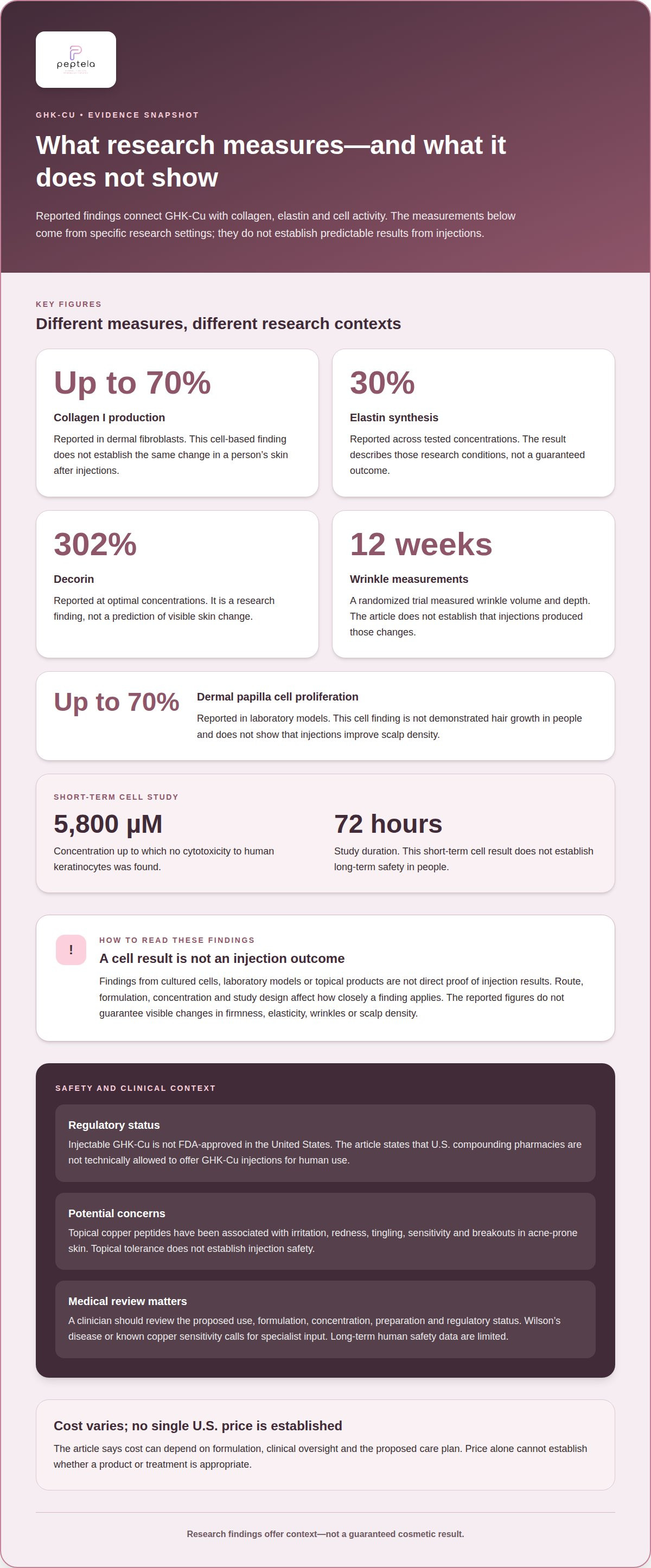
GHK-Cu research explores collagen and elastin support, but findings depend on the study setting and formulation. A 12-week randomized trial measured changes in wrinkle volume and depth with GHK-Cu.
Collagen and Elastin Production
GHK-Cu is a copper-binding peptide associated with collagen and elastin production, two proteins that help give skin structure and flexibility. In practical terms, this connection matters because changes in firmness involve more than surface hydration. Research reports increased collagen I production in dermal fibroblasts by up to 70%, but that result does not establish the same change in a person’s skin after injections.
Other reported findings include a 30% increase in elastin synthesis across tested concentrations and a 302% increase in decorin at optimal concentrations. These figures describe specific research conditions, not a guaranteed outcome for every formulation or individual. The setting matters: results from cells or laboratory models cannot, by themselves, predict visible growth or elasticity changes in people.
Collagen Production and Skin Remodeling
Skin remodeling is the gradual renewal and reorganization of structural components, including collagen. GHK-Cu is studied in connection with this process because research has examined its relationship to collagen production and skin repair. For anyone considering a wrinkle-focused approach, the distinction matters: a change in collagen-related markers is not the same as an immediate lifting effect.
The 12-week randomized trial measured wrinkle volume and depth, offering a human skin outcome rather than only a laboratory marker. However, the supplied finding does not establish that injections produced those changes. Route, formulation, concentration, and study design all affect how closely a finding applies to injectable use.
That distinction is central when assessing claims about GHK-Cu peptide injections for skin elasticity and collagen. Findings from topical creams, cultured cells, or laboratory models are not direct proof of injection results. A study of dermal fibroblasts can suggest a possible biological pathway, but it cannot show how much a person’s skin will tighten or how long any change will last.
GHK-Cu also occurs naturally in human plasma, but that does not establish that injections produce a specific cosmetic result. Reported findings about collagen and elastin provide a scientific rationale for further study. They do not confirm that everyone will see a visible difference or that laboratory effects will translate directly to skin.
In short, research links GHK-Cu with collagen production, elastin synthesis, and skin remodeling. The 12-week wrinkle trial provides a measured outcome, while cell-based percentages describe narrower research conditions. These findings support interest in the peptide, but they do not make every claim about injections equivalent or establish a predictable cosmetic result.
Are There Any Dangers or Side Effects?
Injectable GHK-Cu is not FDA-approved in the United States, according to the U.S. Food and Drug Administration. As described on September 7, 2026, compounding pharmacies in the United States are not technically allowed to offer GHK-Cu injections for human use. This regulatory status is important when assessing claims about access, oversight, and product quality.
There is no single U.S. cost for GHK-Cu injections. Cost can vary with the formulation, clinical oversight, and proposed care plan. A price alone cannot establish whether a product or treatment is appropriate, particularly because injectable GHK-Cu is not FDA-approved.
Injectable GHK-Cu has limited long-term human safety data. A 2016 study in Scientific Reports found no cytotoxicity to human keratinocytes at concentrations up to 5,800 micromolar over 72 hours. That short-term cell finding does not establish long-term safety in people or resolve risks from injection, dosing, or product preparation.
A clinician can assess potential concerns by reviewing your medical history, the proposed formulation, concentration, and reason for treatment. Wilson’s disease or known copper sensitivity calls for specialist input before use. A clinician can decide what evaluation is appropriate before injectable GHK-Cu use, but testing does not replace a full clinical assessment. Because no FDA-approved GHK-Cu product exists, the prescribing provider should determine dosing.
Reported effects of topical copper peptides include irritation, redness, tingling, sensitivity, and breakouts in acne-prone skin. Serums and injections use different routes, so tolerating a topical product does not establish injection safety. Concentrations also vary by formulation, and directions for one serum should not be applied to another product or injectable preparation.
Hair and scalp claims need the same careful distinction. In laboratory models, GHK-Cu stimulated dermal papilla cell proliferation by up to 70%. That finding concerns cells, not demonstrated hair growth in people. It does not show that injections improve scalp density or predict how an individual’s follicles will respond.
Before considering treatment, a clinician’s review should cover the product’s intended use, stated concentration, preparation, and regulatory status. It should also consider copper-related risks and the limited long-term human data. These points support an informed discussion without treating laboratory findings as proof of clinical outcomes.
Can GHK-Cu Copper Peptide Tighten Skin After Weight Loss?
After weight loss, loose skin reflects changes in tissue structure, not hydration alone. Reported GHK-Cu timelines describe gradual changes, not immediate tightening.
Extracellular Matrix Remodeling
The extracellular matrix is the supportive network around skin cells, including collagen and elastin. Matrix metalloproteinases, or MMPs, are enzymes that break down matrix components and are part of ongoing remodeling.
Claims about GHK-Cu sometimes link MMP regulation with tissue repair, antioxidant activity, or reduced inflammation. These describe proposed biological effects, not predictable tightening after weight loss. The practical distinction is between a mechanism studied in cells and a visible change in loose skin. A claim that a copper peptide stimulates remodeling does not establish how much skin will firm.
Skin Firmness and Elasticity
Firmness describes how supported skin feels; elasticity describes its ability to stretch and recoil. Remodeling refers to gradual changes in skin structure. These outcomes are related, but distinct.
After weight loss, the degree of looseness and the skin’s existing structure affect what an intervention might change. Hydration can influence how skin looks and feels, while remodeling involves structural proteins over time. A change in hydration should not be mistaken for a lasting change in elasticity or a lifting effect.
Reported timelines separate early hydration from slower structural changes. Subtle hydration changes from subcutaneous copper peptide therapy may appear in 4 to 8 weeks. Collagen remodeling is described as building over eight to twelve weeks, while noticeable collagen remodeling and follicular shifts are reported to require 12 to 24 weeks of consistent management.
These timeframes describe different outcomes, not stages that every person will experience in sequence. Hydration can affect surface appearance before collagen-related remodeling becomes noticeable. The 12 to 24 week timeframe includes follicular shifts, but it does not establish a specific degree of skin tightening after weight loss. Skin laxity and elasticity are not interchangeable measures.
A described post-weight-loss protocol uses a 10 to 12 week cycle. That duration is a protocol detail, not evidence that a cycle will tighten loose skin. It also should not be treated as personal injection guidance. Injectable GHK-Cu has limited long-term human safety data, and its regulatory status in the United States matters when evaluating any protocol.
For an individual decision, clarify which outcome matters: hydration, firmness, elasticity, or visible excess skin. A clinician can distinguish these goals and consider skin condition, treatment route, and relevant evidence. GHK-Cu research offers a rationale for studying remodeling, but reported timelines do not promise a specific result after weight loss.
Expected timelines for facial and scalp changes
Reported timelines vary depending on the area and type of change being considered. Facial skin and scalp changes have separate timeframes, so one should not be used as a stand-in for the other.
Facial skin changes with GHK-Cu are often reported within four to eight weeks. This is a timeframe for reported changes, not an immediate cosmetic lift. Some people are also said to notice effects within a few weeks. The distinction matters: “noticeable” does not specify whether the change involves texture, hydration, or firmness.
Topical GHK-Cu is commonly used in skincare serums and creams for skin firmness and texture. Concentrations and directions vary, so the timeline for one serum may not apply to another. Topical use is also distinct from injections: effects from a skincare product do not establish the timing or outcome of injection use.
Scalp changes generally take longer. Reported scalp improvements typically take three to six months, while hair growth is described as usually taking a few months. These timeframes describe different kinds of changes, not a precise point when everyone should expect a result.
The longer scalp timeframe reflects the difference between visible skin changes and hair-related changes. Facial skin changes are reported within four to eight weeks, while scalp improvements are described over three to six months. Hair growth also involves activity in the follicles, so it should not be judged by the shorter facial timeline.
GHK-Cu is associated with wound healing, tissue repair, and skin remodeling. These terms describe biological processes, not a day-by-day schedule for cosmetic changes. A proposed cellular effect cannot predict when someone will notice a difference. Reported timeframes provide context, but they do not make different outcomes equivalent.
Identify the specific change you are tracking before interpreting its timing. For example, a facial texture change within four to eight weeks is not the same as scalp changes or hair growth over several months. Comparing the same area and outcome over time is more useful than treating every effect as one general response.
These timeframes do not show that injections work faster than topical skincare. Reported facial and scalp windows describe GHK-Cu changes broadly, while the route and formulation differ. Keeping those distinctions clear helps prevent applying a serum timeline to injections or using a scalp timeline to assess facial skin.
In practical terms, reported timeframes are four to eight weeks for facial skin changes and three to six months for scalp improvements. Hair growth is described as taking a few months. Because each timeframe refers to a different outcome, track facial texture, scalp changes, and hair growth separately.
Skin elasticity, collagen, and elastin support
Skin elasticity depends on how connective tissue responds to stretching and recoil. Collagen provides structural support, while elastin helps tissue return toward its original shape. The distinction matters because a change in skin texture, hydration, or firmness doesn’t necessarily mean elasticity has changed. GHK-Cu research explores how copper peptides may influence these structural processes, but proposed support isn’t the same as a measured result for every person.
Collagen I makes up approximately 80% of the dry weight of the dermis. That figure helps explain why collagen production is central to skin structure, but it doesn’t indicate how much an intervention might change an individual’s skin. GHK-Cu has been studied in relation to collagen synthesis, elastin, wound healing, and skin remodeling. These areas give researchers several ways to investigate potential effects on tissue, rather than one simple measure of “tightness.”
Elasticity also has physical limits. Skin can stretch up to 1.6 times its original size before elastic fibers begin to permanently deform. This describes the behavior of skin fibers, not a threshold that predicts whether GHK-Cu can tighten loose skin. A person’s skin condition and the degree of stretching both matter when interpreting claims about structural support.
Research describes an effective GHK-Cu concentration range of 0.01 to 100 nanomolar, with peak collagen stimulation at 1 nanomolar. These concentrations are research findings, not injection instructions or a recommendation for a cosmetic product. Formulation and route matter: a concentration studied in one context cannot be assumed to produce the same effect in another. The science supports investigation, not a guaranteed change in skin wellness or appearance.
When weighing GHK-Cu injections, distinguish biological activity from visible outcomes. A cellular finding about collagen production may suggest a mechanism, but it cannot establish how much firmness, elasticity, or texture will change. Wound healing and tissue repair are also different from cosmetic tightening. Match each claim to the specific result measured.
This perspective keeps attention on what the evidence can answer. Collagen and elastin contribute to skin structure, and GHK-Cu research examines whether the peptide supports their production. But an effect on a marker or process does not automatically mean visible improvement. Ask what tissue outcome a study measured, whether it examined injections, and whether the result relates to your goal.
Peptela: Tirzepatide Injections
Peptela offers Tirzepatide Injections and Peptides through personalized, clinician-guided care. These offerings are distinct from GHK-Cu and are not substitutes for evaluating concerns about skin elasticity or collagen. If your goals also include broader wellness care, discuss your priorities and options with a clinician.
Any treatment decision should take your goals, health history, and potential risks into account. A clinician can help you consider these factors. Peptela’s offerings are distinct from GHK-Cu injections and do not guarantee a particular outcome.
Choose a Next Step That Fits Your Goals
Let your priorities guide the next conversation. If you are considering GHK-Cu peptide injections for skin elasticity and collagen, clarify the outcome you hope to address and the medical questions that matter to you. A clinician can help weigh those goals alongside your health history and treatment considerations.
Peptela offers Tirzepatide Injections, NAD+, and a service called Hormone Balance as part of its clinician-guided care. The service name does not promise to balance hormones. These offerings are distinct from GHK-Cu and do not promise changes to skin elasticity. The next step is an informed discussion grounded in your wellness priorities.
Share your questions with Peptela to explore whether its care options align with your goals. You can move forward thoughtfully, with your questions and personal priorities at the center.
Frequently Asked Questions
How does GHK-Cu work?
GHK-Cu is studied for its interactions with cells and tissue processes, not as an instant cosmetic change. When assessing a claim, identify what the study measured: a cellular response, a measure of skin appearance, or participants’ reported experience. These endpoints answer different questions and are not interchangeable evidence of a visible result.
How can a clinician help you decide between topical and injectable GHK-Cu?
A clinician can discuss how a treatment route relates to your goal, medical history, and current skincare routine. The conversation may cover whether your priority is a surface-level cosmetic concern or a broader treatment question, and whether existing products could complicate assessment. Bring the names of products you use and describe your goal clearly; these details make the discussion more specific without assuming one route is right.
What Benefits Can GHK-Cu Provide?
Potential benefits discussed for GHK-Cu vary by formulation and the outcome studied. Before interpreting a claim, distinguish a measured biological response from a change you can see or feel. Evidence about a cellular process, for example, does not establish a cosmetic benefit. A clinician can help assess whether a proposed outcome matches your concern and whether the available evidence addresses that use.
Are There Better or Complementary Alternatives?
Options depend on the concern you want to address, such as texture, visible wrinkles, or general skincare support. A clinician can review your routine and discuss whether an established topical approach or another option better matches your goal. “Complementary” does not automatically mean two products should be combined; ingredients, application schedules, and your skin’s response all matter.
Expected Timeline: When Will You See Results?
Use the timeframe that matches the outcome you are tracking, rather than judging every change together. For example, note whether your goal concerns facial appearance, scalp changes, or hair growth. Consistent observations under similar lighting and conditions can make comparisons more useful. If you discuss treatment with a clinician, describe what changed and when instead of relying on memory alone.
How are GHK-Cu injections administered, and what should patients know?
Do not use online instructions to self-administer GHK-Cu. Before considering an injection, discuss the intended product, route, proposed dosing, preparation, and follow-up with a qualified clinician. Share relevant medical history and all medications or supplements. This information helps the clinician assess individual risks and explain appropriate monitoring or next steps for the proposed plan.
What is GHK-Cu and how might it affect skin elasticity and collagen production?
GHK-Cu is a peptide made of glycine, histidine, and lysine joined to a copper ion. This composition distinguishes it from skincare ingredients with similar-sounding names. Its relationship to skin structure is being studied, but a biological rationale alone cannot establish which formulation or route fits your goals. Discuss the specific product and intended outcome with a clinician.
What clinical evidence supports injectable GHK-Cu for skin rejuvenation?
To assess evidence for injectable use, check whether a study examined injections in people, what outcome it measured, and how long participants were followed. Consider whether the reported result relates to your goal, such as appearance or function. A laboratory finding or a study of another formulation may inform research questions, but it cannot answer every question about injectable use.


