

A lingering tendon problem deserves more than hopeful claims about a peptide. The evidence for the BPC-157 peptide for chronic tendonitis and joint healing is still limited: most findings come from animal studies, and high-quality human evidence is lacking.
It’s understandable to look for options when pain or restricted movement keeps interrupting daily life. But BPC-157 isn’t approved by the U.S. Food and Drug Administration for any medical indication, and limited human safety information means its risks and effects in people aren’t well established.
This article explains the proposed ways BPC-157 might affect tendon repair, what animal and human research can and can’t tell us, and why dose and administration questions remain unresolved. It also outlines established recovery approaches, including physical therapy and progressive loading, so you can weigh claims carefully and discuss your options with a qualified physician.
Key Takeaways
- Separate proposed tendon-repair mechanisms from demonstrated outcomes in people before weighing claims about BPC-157.
- According to USADA, BPC-157 is listed as prohibited under the WADA Prohibited List’s S0 Non-Approved Substances category.
- Animal-study doses and administration methods don’t establish a human protocol; consider that gap when assessing claims about use.
- For persistent tendon symptoms, use the article’s evidence review to frame a discussion about diagnosis, recovery options, and treatment risks with a qualified physician.
- If you’re exploring peptide care, discuss available options, potential risks, and evidence with a qualified clinician before making decisions.
Proposed Mechanisms of BPC-157 in Tendon Repair
BPC-157 is a synthetic peptide made up of 15 amino acids. Researchers have proposed that it may influence tendon repair cells and tissue processes, but proposed mechanisms do not establish benefits in people. Interest in the bpc-157 peptide for chronic tendonitis and joint healing often centers on these proposed effects, which should be distinguished from demonstrated clinical outcomes.
Proposed Biological Mechanisms
Proposed biological mechanisms are possible ways BPC-157 could affect cells involved in repair. One hypothesis is that it activates repair cells or increases their sensitivity to human growth factor receptors. For patients weighing claims about chronic tendon pain, this distinction matters: a proposed cellular effect is not proof that a treatment improves pain, movement, or tendon function in people.
Tissue Repair Mechanisms
Tissue repair mechanisms describe how cells and surrounding structures may respond during healing. BPC-157 has been proposed to influence processes involved in tissue repair, including activity by repair cells. These ideas help explain research interest, but they do not show that the peptide repairs human tendons or joints. The effects attributed to it still require careful interpretation alongside human clinical evidence.
The proposed cell activity offers a biological explanation for studying BPC-157, not a clinical treatment plan. Tendon recovery depends on the affected tissue, the source of symptoms, and the loading placed on it. A theory about growth factor receptors cannot determine whether a person’s tendon has healed or whether activity should change. For the bpc-157 peptide for chronic tendonitis and joint healing, proposed mechanisms alone cannot establish a suitable treatment or predict recovery.
Sports rules matter independently of proposed biology. According to USADA, BPC-157 is prohibited under the WADA Prohibited List in the S0 Non-Approved Substances category. Athletes should account for that listing before considering use; a substance’s proposed tissue effects do not change its status under the list.
There is no established standard U.S. medical price to quote for BPC-157. Any amount can depend on the product and seller, and a price alone cannot establish product identity, quality, or suitability. Because BPC-157 is not approved by the FDA for a medical indication, discuss costs and risks with a qualified physician rather than treating a seller’s listing as a medical recommendation.
Consumers can’t confirm a product’s contents or quality from a label alone. The FDA has cited concerns about consistent characterization of BPC-157, so unclear labeling or unsupported claims deserve caution. Before considering a product, discuss its ingredients, route of administration, and possible risks with a qualified physician. This is especially important when tendon symptoms affect training, work, or daily movement.
Unanswered Questions About Dose and Administration
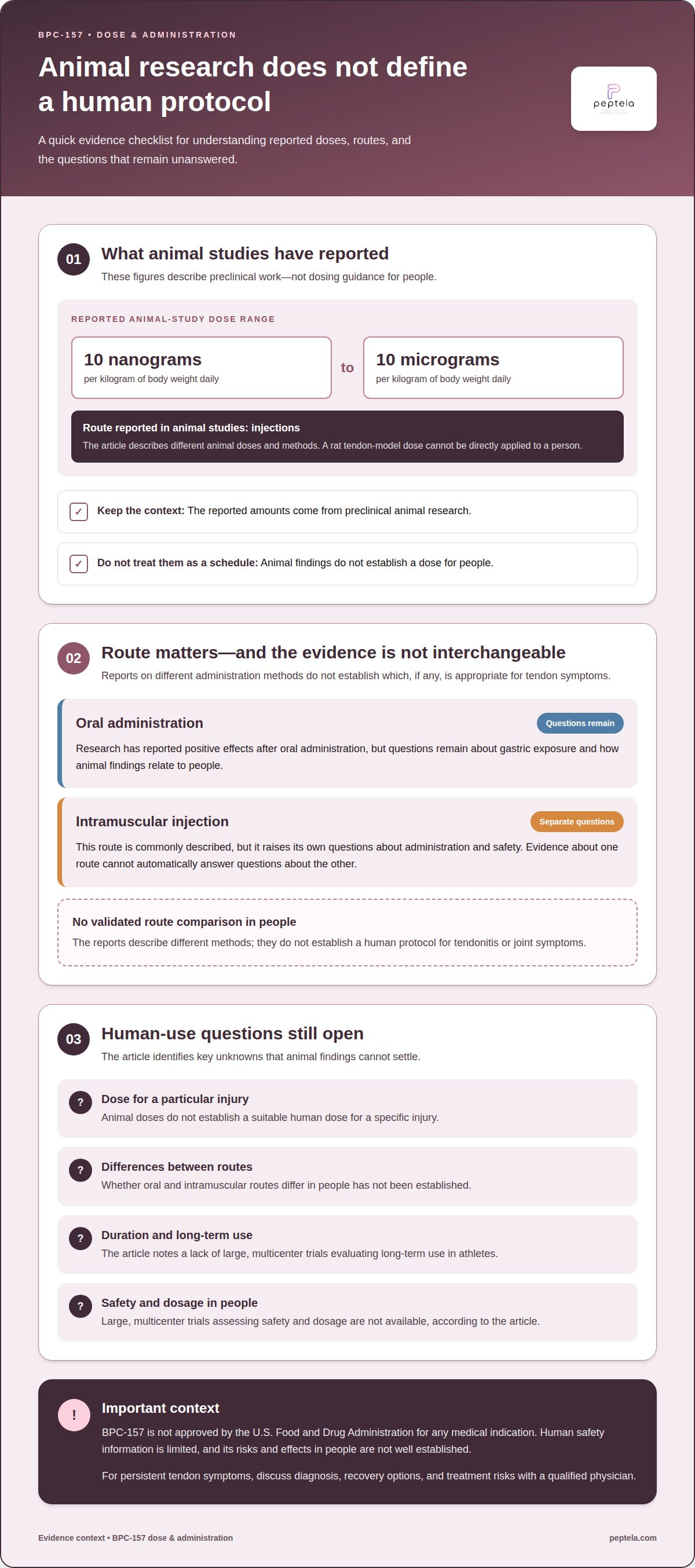
BPC-157 studies have used different routes and animal doses, but human dosing and administration questions remain unanswered. That gap matters because an animal protocol cannot establish a suitable therapy, dose, or route for a person with an injury.
Administration Methods and Animal Dosing
Administration methods describe how a substance enters the body, while animal dosing records the amount used in preclinical work. BPC-157 animal studies have used injections, and reported preclinical doses range from 10 nanograms to 10 micrograms per kilogram of body weight daily. Those findings help define what researchers tested, not what a person should use.
The reported amounts vary substantially, and the studies were conducted in animals. A dose used in a rat tendon model cannot be applied directly to a person with an Achilles injury. Species, study design, and the injury being examined all affect how results should be interpreted. Without human trials assessing dose and route, animal findings do not provide a human dosing schedule.
Route also affects what a study can tell us. An injection in an animal model does not establish whether oral use produces comparable exposure or effects. Nor does a result for one tissue or injury demonstrate a useful dose for another. These distinctions matter when a product label or online discussion presents one amount as a general protocol.
Oral and Intramuscular Administration
Oral and intramuscular administration are distinct routes, and evidence about one cannot automatically answer questions about the other. BPC-157 is commonly administered by intramuscular injection, while research has also reported positive effects after oral administration. These reports describe different methods, not a validated comparison in people.
Oral use raises questions about gastric exposure and how animal findings relate to people. Intramuscular injection raises separate questions about administration and safety. Human dosing and route questions remain unanswered, so neither approach offers an established protocol for tendonitis or joint symptoms. Available reports on different routes also do not tell patients which method, if any, is appropriate.
No large, multicenter trials evaluate BPC-157’s safety, dosage, or long-term use in athletes. That leaves practical questions unresolved: how dose relates to a particular injury, whether routes differ in people, and how long use might continue. A qualified physician can weigh those uncertainties alongside diagnosis, current medicines, and the demands of training or daily activity.
Animal Evidence and the Lack of High-Quality Human Clinical Evidence
Animal studies offer early signals, not clinical proof for people. In rat models of Achilles tendon rupture, BPC-157 improved biomechanical outcomes within 10 to 14 days compared with untreated controls. That finding describes a specific animal model and outcome. It doesn’t establish that the same effect occurs in people with Achilles pain or other tendon injuries.
Other preclinical research examined muscle damage, not chronic tendonitis. Animal muscle-crush studies reported faster muscle-fiber regeneration and myotendinous junction repair within one to two weeks after treatment. These findings help researchers explore possible tissue effects, but muscle-crush models differ from the gradual overload that often underlies chronic tendon problems.
The scale of the evidence base also matters. A 2025 orthopedic review included 36 studies, and 35 were preclinical. That balance means the literature primarily reflects laboratory and animal work, rather than clinical testing in people. A large number of preclinical observations would still not replace well-designed human trials that measure meaningful recovery outcomes.
Human evidence remains limited. No randomized human trial has demonstrated benefit for Achilles tendon, rotator cuff, ACL, meniscus, tennis elbow, plantar fasciitis, or knee arthritis. These examples involve different tissues and conditions, so a result for one cannot stand in for evidence across tendon and joint problems. For patients, the key distinction is between a research signal and a demonstrated clinical effect.
Animal-to-human translation requires proper testing because species, injury models, and measured outcomes differ. A rat Achilles rupture is an acute, controlled injury; chronic tendon symptoms can develop through repeated loading and may involve different tissue changes. Human studies are needed to determine whether any observed effect translates to pain, function, and recovery in people.
Animal findings can guide what researchers study next, but they cannot provide a human treatment protocol. For example, faster repair in a rat model doesn’t establish a dose, duration, or expected outcome for a person. Nor can it show how BPC-157 compares with established care for a specific injury. Those questions require clinical evidence gathered in the relevant patient group.
The practical takeaway is clear: current BPC-157 findings are mainly preclinical, while high-quality human evidence is lacking. When considering claims about tendon or joint healing, separate animal results from human outcomes. A physician can evaluate the diagnosis, symptoms, and established treatment options, then discuss how research limitations affect decisions for a particular injury.
Evidence-Based Recovery Strategies and Provider Counseling
Evidence quality shapes how confidently BPC-157 findings can guide recovery decisions. For tendon and joint problems, animal results, human evidence, and established care should be considered separately.
Evidence Gaps Across Conditions
Evidence gaps mean findings for one condition cannot establish effects for other injuries. No randomized human trial has demonstrated benefit for Achilles tendon, rotator cuff, ACL, meniscus, tennis elbow, plantar fasciitis, or knee arthritis. These conditions affect different tissues and functions, so a claim about one cannot substitute for evidence about another.
This distinction matters when a proposed compound is discussed for a broad range of symptoms. Tendon, ligament, and joint problems may call for different evaluations and recovery plans. The specific diagnosis, symptoms, and impact on daily activities help shape appropriate care.
Preclinical Recovery Evidence
Preclinical evidence includes laboratory and animal studies conducted before human clinical testing. BPC-157 research has examined tendon and ligament recovery, but animal findings don’t establish benefits in people. The models help researchers explore biological questions; they don’t show how a person will respond during physical activity or rehabilitation.
Preclinical studies reported no adverse effects, but that does not establish safety in people. The FDA has identified limited human safety information, including questions about immunogenicity for certain administration routes and consistent characterization of the compound. These issues matter when evaluating claims about recovery.
Human Evidence and Counseling
A 2025 orthopedic sports medicine review screened more than 500 articles published between 1993 and 2024. It included one clinical study of BPC-157 and classified the overall evidence as Level IV or V, levels associated with case reports, case series, and expert opinion. That quality is not the same as strong comparative clinical evidence.
Some patients and athletes have reported pain relief and improved mobility within two to six weeks, but these reports are anecdotal. They cannot determine whether BPC-157 caused the change or predict an individual outcome.
For most musculoskeletal injuries, established first-line approaches include rest, physical therapy, progressive loading, anti-inflammatory management, and activity modification. A qualified physician can assess the injury, other medicines, and treatment risks while discussing these options. Tell your surgeon about BPC-157 use, particularly around an operation. Recovery planning should reflect the diagnosis, not an online claim about a peptide.
Chronic Tendon Conditions
Chronic tendon symptoms call for a clear diagnosis, not simply a search for a faster fix. Repeated pain around the Achilles tendon, elbow, or shoulder can affect training and everyday movement, but similar symptoms may have different causes. A clinician can assess where the pain occurs, which activities aggravate it, and whether the problem involves a tendon, joint, or another structure.
Overuse injuries can develop when repeated activity exceeds the body’s capacity to adapt. For example, a runner with recurring Achilles pain may need an assessment of training demands and physical function before choosing a recovery plan. A useful plan starts with that context: symptoms, activity, previous injuries, and responses to earlier care. One peptide cannot replace this assessment.
Interest in the BPC-157 peptide for chronic tendonitis and joint healing reflects the hope that tissue-repair research might apply to persistent symptoms. But studies in animals don’t show that the same effects occur in people with long-lasting tendon pain. The specific condition matters. Findings about an acute tendon injury cannot establish an outcome for chronic Achilles symptoms, shoulder pain, or another diagnosis.
A sports medicine inquiry involved BPC-157 and recovery from an overuse injury in a 12-year-old athlete. That example underscores why age and individual circumstances matter in treatment decisions. A child’s ongoing pain calls for appropriate medical evaluation, not self-directed use of substances discussed online. The inquiry is not evidence that BPC-157 works for young athletes or chronic tendon conditions.
Administration questions also matter because a product’s route and contents can affect the risks under discussion. Patients should share information about substances they use with the clinician managing their tendon symptoms. If surgery is planned, tell the surgeon about BPC-157 use, particularly around the operation. Open communication helps the care team consider the full treatment picture.
The practical takeaway is to treat persistent tendon pain as a reason to reassess the diagnosis and recovery plan. For example, a clinician may consider symptoms, activity demands, prior treatment, and physical function when discussing options such as activity modification or rehabilitation. Claims about the BPC-157 peptide for chronic tendonitis and joint healing don’t establish it as a treatment. Base decisions on the specific condition and evidence relevant to people.
Peptela Peptides
Peptela’s Peptides offering is a place to discuss peptide care within a personalized, clinician-guided plan. It may be relevant if you’re exploring peptide options and want to review your goals, health history, and questions with in-house licensed clinicians. This offering should not be taken as a claim that BPC-157 is available or suitable for tendon symptoms, or that any peptide will improve healing.
Peptela’s service is 100% online, and no in-person visit is required. Prescription products require an online evaluation with a licensed medical professional, who determines whether a prescription is appropriate. That evaluation provides an opportunity to discuss your current medicines, health factors, and treatment questions. Share any peptide use with the clinician managing an injury, and tell your surgeon before an operation.
Keep product limitations clear. Peptela products have not been evaluated by the FDA and aren’t intended to diagnose, treat, cure, or prevent any disease. Some products are compounded by a licensed pharmacy; compounded products aren’t FDA-reviewed or approved for safety, efficacy, or quality. These distinctions matter when considering any peptide-related claim, especially one about tendon or joint healing.
Peptela’s personalized plans are guided by a fully in-house care team, including in-house licensed clinicians, with 199+ years of combined clinical experience. Products are shipped fast and discreetly, and the pharmacy partner is US-licensed and LegitScript-certified. These service details don’t establish that a particular compound is appropriate for a chronic tendon condition; the substance, its evidence, and your health context remain important.
Peptela uses a subscription model, and customers can cancel anytime. To explore the offering, use Peptela’s online evaluation to discuss your goals and understand relevant product limitations, and contact Peptela with questions before making a decision. This is a conversation about personalized care, not a promise of a specific outcome or a substitute for evaluation of persistent tendon pain.
Frequently Asked Questions
Is BPC-157 Safe?
Safety for human use hasn’t been established. A product label or personal account can’t establish what a particular product contains or how an individual may respond. Before considering use, share the exact product details with a qualified clinician, including the label, route, and any other substances you take. Mention planned procedures and relevant health conditions so these factors can be considered together.
What Does the Research Actually Show?
Research does not establish reliable clinical benefits for people. To assess a claim, identify the population studied, the outcome measured, and whether the study compared treatment with a control. A report about movement, for example, may not answer whether pain changed or tissue healed. These distinctions help you judge whether a finding applies to your diagnosis and goals.
Can BPC-157 help arthritis?
BPC-157 isn’t an established arthritis treatment. If joint symptoms are affecting everyday activities, focus first on identifying the cause rather than assuming they reflect arthritis. Note which movements bring on discomfort, what activities you’ve reduced, and whether symptoms interfere with sleep or routine tasks. Sharing those specifics with a qualified clinician can help guide an evaluation and discussion of appropriate care.
Does BPC-157 work for joint pain?
A dependable pain-relief effect in people hasn’t been established. If you’re tracking joint symptoms, record how they affect a specific activity, such as climbing stairs or reaching overhead, and note changes over time. This gives a clinician more useful context than a general statement that pain feels better. Don’t use a change in symptoms alone to conclude that an injury has healed.
Does the BPC 157 Peptide Work?
There isn’t enough human evidence to call BPC-157 an effective treatment. “Works” should refer to a defined result, such as improved function or reduced pain, measured in people with the same condition. A claim about one outcome doesn’t automatically establish another. When reviewing product claims, look for the specific result and patient group being discussed rather than relying on broad promises.
How Does BPC-157 Work in Injury Recovery?
Proposed biological activity does not provide a practical way to judge whether an injury is recovering. Returning to a sport, for example, depends on function and the demands of that activity, not simply on a theory about cellular effects. A clinician can help assess progress against relevant goals, such as tolerating ordinary movement or gradually returning to training, in light of the specific injury.
How Is BPC-157 Administered?
There isn’t an established protocol for human use. Don’t calculate a personal amount from an animal study, copy another person’s regimen, or combine methods based on online advice. If you’ve already used a product, keep its packaging or label information and tell your clinician what you took and when. That context can support a more informed discussion about your care.
Is BPC 157 Legal?
Regulatory status depends on context, so don’t assume that availability for purchase means a product is approved for medical use or permitted in sport. Athletes should consider the rules that apply to their competition. In the United States, a product’s regulatory status and its use in compounded medication are separate from anti-doping rules; assess each issue separately before deciding.


