

Hormones can shape how your body feels and functions across the day. Scientists have identified over 50 hormones in the human body, and online hormone balance care can help assess whether symptoms may relate to hormone changes through clinical evaluation and testing. Treatment depends on the underlying cause and your individual needs.
Fatigue, mood changes, irregular periods, and shifts in energy can have many causes. Symptoms alone cannot confirm a hormone imbalance. A careful evaluation considers what you’re experiencing alongside your health history and test results.
This guide explains what hormones do, how online care evaluates symptoms, and what testing may involve. It also covers how treatment options are considered alongside sleep, nutrition, movement, and stress management, helping you approach your next steps with greater clarity.
Key Takeaways
- Hormone-related symptoms can overlap with other health concerns, so track patterns and changes rather than relying on symptoms alone.
- Testing may help clinicians assess hormone levels, but results make more sense alongside your health history and symptoms.
- Bioidentical hormone therapy is one possible approach; the form and treatment plan depend on individual health factors and goals.
- At-home testing can be a starting point, while follow-up evaluation helps put results into context.
- Sleep, nutrition, movement, and stress habits can support hormone health and complement a personalized care plan.
1. What conditions are caused by hormonal imbalances?
Hormones are chemical messengers that help coordinate functions such as energy, reproduction, mood, and metabolism. Online hormone balance care evaluates symptoms and health history, then may use testing to investigate whether hormone changes contribute. Possible concerns include thyroid disorders, menstrual changes, menopause symptoms, and metabolic issues, but similar symptoms can have different causes.
More than 50 hormones have been identified in the human body. Their levels can shift during puberty, pregnancy, and menopause, and changes may also relate to health conditions, disrupted sleep, chronic stress, diabetes, or nutrition. A shift is not automatically a disorder; the pattern, timing, and effect on daily life matter.
Symptoms can include fatigue, low energy, digestive changes, reduced sexual drive, mood changes, hair loss, weight gain, and irregular periods. For example, a menstrual cycle shorter than 21 days or longer than 35 days is a change worth discussing with a doctor. Track when symptoms occur and how they change over time.
Weight changes can have several causes, including changes in appetite, activity, sleep, or metabolism. An underactive thyroid, for example, can affect energy and weight, while other health factors can cause similar experiences. Exercise, sleep patterns, and eating habits provide useful context, but weight alone cannot identify a hormone imbalance.
Hormonal changes may affect mood, but anxiety alone does not establish a hormone-related cause. Note whether it occurs alongside changes such as disrupted sleep, menstrual shifts, or hot flashes. Sudden or worsening symptoms, including chronic fatigue or unexplained weight changes, warrant medical attention.
U.S. online hormone care providers vary in the concerns they assess, how they arrange testing, and how clinicians review results and provide follow-up. Compare those parts of the care process rather than assuming every service offers the same evaluation.
To assess an online hormone provider’s medical credentials, identify the clinician responsible for care, their state of licensure, and their stated credentials. Verify these details with the relevant state licensing authority. Look for a clear evaluation process, not a promise of treatment based on symptoms alone.
What rules apply to online hormone prescriptions and telehealth across U.S. states? State requirements govern telehealth practice and prescribing, so the rules depend on where care is provided and the medication involved. A prescription should follow a clinical assessment; online access alone does not establish a diagnosis.
Online hormone balance care involves a remote clinical evaluation that may use symptom review and laboratory testing to investigate concerns such as menstrual irregularities, menopause symptoms, thyroid-related issues, or metabolic changes. Treatment depends on the underlying cause and the person’s needs and preferences.
2. Bioidentical hormone replacement therapy
Bioidentical hormones have a chemical structure similar to hormones the body produces and can act in a similar way. Therapy may involve estrogen or progesterone for symptoms linked with hormone changes, including menopause symptoms. A clinician considers health history, symptoms, and goals before deciding whether hormone therapy is appropriate.
Hormone therapy may be delivered as creams, gels, pills, or pellets. Pellets are one possible form of bioidentical hormone therapy, while other forms offer different ways to take or apply hormones. The choice depends on the treatment plan and personal health factors. Ask how the selected form will be monitored and what follow-up is planned.
“Bioidentical” describes a hormone’s structure. It does not establish that a therapy is risk-free or right for everyone. Hormone therapy has been associated with potential risks, and the specific hormone, dose, health history, and treatment goals all matter. Consult an endocrinologist before starting hormone replacement therapy, and discuss relevant personal and family health history.
Risk profiles vary among therapies. Synthetic hormone supplementation has been associated with breast cancer, cardiovascular disease, and stroke. Conventional hormone replacement therapy has also been associated with osteoporosis, high blood pressure, bleeding, rashes, and weight gain with fluid retention. Review potential benefits and risks with a qualified clinician; not everyone experiences the same effects.
Testosterone replacement therapy requires particular consideration for people who may want children. In men, testosterone replacement can reduce sperm production. Tell the clinician about fertility goals before treatment begins, and discuss how therapy may affect those goals alongside symptoms and test results.
Supplements and other approaches may also come up during a hormone evaluation. A hormone specialist can assess levels and discuss supplement options suited to a person’s needs. Share all supplements and medications you use so the clinician can consider the full treatment picture. Sleep, nutrition, movement, and stress management can support a broader plan, but they do not replace medical evaluation.
Follow-up matters. Regular clinical reviews and laboratory testing help assess whether hormone therapy remains appropriate and beneficial. Changes in symptoms, test results, or health history can help determine whether the plan should continue or be adjusted.
Does insurance cover online hormone therapy, and can prescriptions be filled at a local pharmacy? Coverage is determined by the specific insurance plan and its benefits for the service and medication. If a clinician issues a prescription, pharmacy fulfillment depends on the prescription and dispensing arrangements; a local pharmacy may be an option.
3. At-home hormone testing
An at-home hormone test can provide information for a practitioner’s evaluation and help shape a targeted treatment plan. It is a starting point, not a complete diagnosis. Results need to be considered alongside symptoms, health history, and changes over time. Fatigue and weight gain, for example, can have several explanations, so a test result alone cannot show the whole picture.
Before testing, write down what you’ve noticed and when it happens. Track fatigue, changes in weight, mood shifts, and irregular periods, including whether symptoms follow a pattern. Keeping a symptom diary for 2 to 4 weeks can give a practitioner a clearer view of those changes. Include relevant medications, supplements, and lifestyle details in your notes.
The tests needed before treatment depend on symptoms and the health questions being assessed. An evaluation may consider thyroid, sex, or adrenal hormones; insulin and glucose; vitamin D; and LH and FSH. At-home testing can be a starting point, while a practitioner interprets results alongside your health history and decides what further evaluation may be useful.
Follow the instructions provided with an at-home test and record when you complete it. Collection and handling requirements differ by test, so use its directions rather than applying one method to every hormone. Keep the results with your symptom diary. This can help connect measured hormone levels with concerns such as changes in energy, periods, or weight.
Hormones coordinate functions throughout the body, including chemical signaling and hormone production. A test measures selected hormone levels, but it cannot independently explain why a result falls outside an expected range or how it relates to symptoms. A practitioner considers the results alongside your health context to determine whether a finding needs attention or does not explain the concern.
Testing may lead to additional laboratory evaluation. Plasma hormone concentrations can help identify which hormones are unbalanced, while a broader evaluation may include thyroid, sex, or adrenal hormones; insulin and glucose; vitamin D; and LH or FSH. The panel is tailored to the person’s symptoms and history. Irregular periods, for example, may prompt different questions than persistent fatigue.
Keep a copy of at-home results and note questions for your follow-up discussion. Ask what each measurement means, how it relates to your symptoms, and whether more testing is needed before treatment. A clear review turns test data into practical next steps instead of treating a single number as the diagnosis.
4. Hormone evaluation and laboratory tests
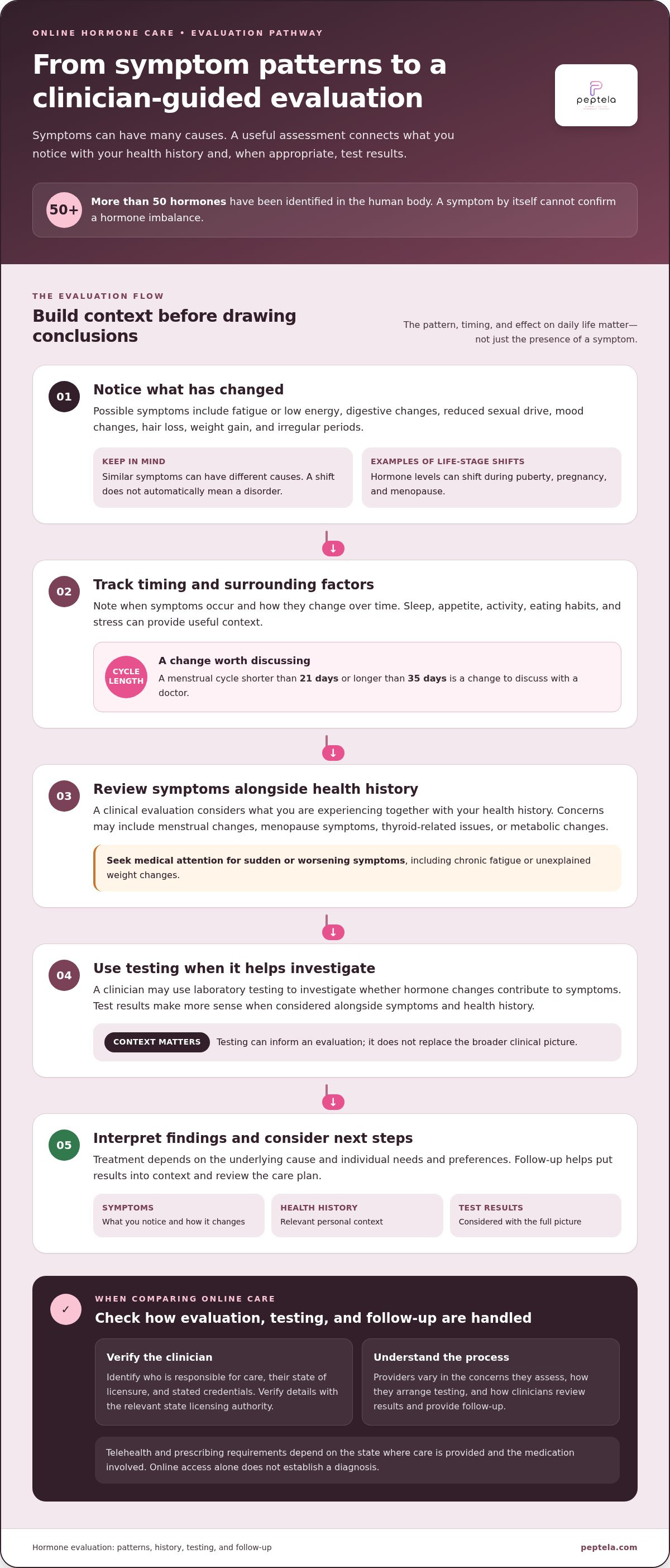
A hormone evaluation connects symptoms with health history, lifestyle, and changes over time. A clinician may ask when your concerns began, whether they vary, and how they affect daily routines. Persistent fatigue alongside menstrual changes, for example, provides different context than fatigue alone. This discussion helps guide which hormone levels and related markers to assess instead of relying on one symptom.
Laboratory testing may examine thyroid, sex, or adrenal hormones; insulin and glucose; vitamin D; and LH and FSH. The tests selected depend on the concerns being evaluated. Someone experiencing irregular periods may need a different focus than someone reporting changes in energy or possible thyroid symptoms. These tests provide measurements for clinical review, not a complete explanation on their own.
Results are interpreted alongside personal health history to assess how the body is functioning as a whole. A hormone level can be considered in relation to symptom timing, relevant health conditions, and lifestyle habits. This context matters because fatigue and mood changes can have multiple possible causes. A tailored review helps clinicians decide whether findings support a hormonal imbalance or suggest another line of evaluation.
Seek medical evaluation for sudden, severe, or worsening symptoms. Examples include chronic fatigue, changing weight, mood swings, or irregular periods. Before an appointment, organize a concise timeline of symptoms and note changes in sleep, activity, or routine. A symptom diary covering 2 to 4 weeks can help capture patterns and give the clinician specific examples to discuss.
Thyroid evaluation may lead to treatment when test results and symptoms indicate a thyroid disorder. Medication may regulate hormone production, and clinicians adjust dosages based on laboratory results and how the patient feels. Follow-up therefore considers measurable levels and lived experience. Note changes after treatment begins, including shifts in energy or other symptoms, to inform the next review.
An evaluation may consider insulin and glucose alongside hormone levels to assess metabolic concerns within the wider health picture. Sex hormone tests and LH and FSH may be relevant to reproductive or menstrual concerns, while adrenal hormone testing can address other clinical questions. No single panel suits every situation; symptoms and health history guide what the evaluation includes.
For a useful follow-up, bring your test results, symptom timeline, medication list, and questions about next steps. Ask what each result means in relation to your symptoms, which findings inform treatment decisions, and whether monitoring is needed. This turns laboratory data into a clearer care plan focused on the concern being evaluated.
5. Lifestyle habits and nutrition
Daily habits can influence hormone regulation, but they do not replace evaluation for an underlying medical condition. Sleep, nutrition, physical activity, stress management, and exposure to endocrine-disrupting chemicals all matter. During menopause, for example, sleep disruption and changing symptoms can affect daily routines. Tracking these patterns can help distinguish lifestyle triggers from concerns that may need clinical attention.
Start with sleep. The Centers for Disease Control and Prevention recommends that adults get at least 7 hours of sleep per night. A consistent bedtime and less screen exposure before bed can support a steadier routine. Excess caffeine can interfere with sleep, so note whether coffee or energy drinks make it harder to fall asleep. Better sleep supports the body’s regulation of cortisol and other hormones.
Movement is another practical habit. Adults can aim for 150 minutes a week of moderate physical activity, such as brisk walking, plus muscle-strengthening activity on 2 days a week. Regular exercise can help manage stress, support insulin sensitivity, and improve sleep quality. Choose an activity that fits your routine, then track how energy and sleep respond over time.
Nutrition works best as a consistent pattern, not a single “hormone-balancing” food. Include fiber-rich choices such as beans, legumes, vegetables, nuts, and seeds. Soluble fiber can bind excess estrogen in the digestive tract, while cruciferous vegetables support the liver’s processing of estrogen. Healthy fats from olive oil, avocado, chia seeds, and fatty fish provide nutrients involved in hormone function.
Pay attention to potential triggers, too. Chronic stress, disrupted sleep, lack of exercise, diabetes, thyroid issues, poor nutrition, and some underlying medical conditions can contribute to hormone changes. Refined sugars, heavily processed foods, excessive caffeine, and alcohol may also disrupt healthy routines. Record what changes alongside symptoms instead of removing several foods at once, making patterns easier to interpret.
Treat supplements with the same care as other parts of a plan. A supplement that suits one person may not suit another, and it can interact with medications or health conditions. Share the product name and dose with a clinician before adding it. Nutrition, movement, and sleep can be valuable supports, while persistent symptoms still call for evaluation to identify their primary cause.
Build a manageable routine: protect sleep, add regular movement, and choose balanced meals. For individualized guidance that connects lifestyle habits with hormone concerns, explore hormone balance care.
Peptela: Tirzepatide Injections
Peptela offers Tirzepatide Injections separately from Hormone Balance care. Hormone symptoms and weight concerns can overlap, but they do not establish the same treatment need. If your evaluation raises questions about weight or metabolic goals, discuss whether Tirzepatide Injections fit your care plan. For concerns centered on hormone symptoms and testing, explore Hormone Balance. Peptela’s personalized plans are guided by an in-house care team, supporting an individualized conversation about your goals and next steps. Treatment choices should follow clinical evaluation, not replace it. To learn more about available care options, visit peptela.com.
Take the Next Step With Clarity
A practical next step is to bring your questions, symptom patterns, and health goals into a conversation about care. Online hormone balance care works best as a collaborative process: your experience helps shape the questions, while clinical guidance helps define the options. You do not need to arrive with a diagnosis or a finished plan. Start with what you want to understand or change.
Peptela offers Hormone Balance, NAD+, and Tirzepatide Injections. These are distinct care options, so the right starting point depends on your concern. A discussion can help you explore whether hormone-focused support fits your needs or whether another offering aligns more closely with your goals.
Take the step that feels useful now. Contact Peptela to discuss your care and explore a personalized path forward. Your questions are a strong place to begin.
Frequently Asked Questions
What are hormones?
Hormones are chemical messengers that help coordinate processes across the body. For example, insulin helps regulate blood glucose, while estrogen and progesterone are involved in reproductive functions. Scientists have identified over 50 hormones, each with roles that can affect multiple systems. Hormone levels also shift during life stages such as puberty, pregnancy, and menopause. Their effects depend on the hormone involved and the body processes it influences.
What are the signs and symptoms of hormonal imbalance?
Common symptoms include fatigue, low energy, mood changes, digestive changes, low sexual drive, weight gain, hair loss, and irregular periods. Menopause symptoms can also reflect normal hormonal shifts. A menstrual cycle shorter than 21 days or longer than 35 days is worth discussing with a doctor. These signs don’t identify a specific cause on their own. Note when symptoms begin, how they change, and whether they occur together.
What conditions are caused by hormonal imbalances?
Hormonal changes are associated with concerns such as thyroid disorders, menstrual irregularities, menopause symptoms, and metabolic issues. The specific condition depends on which hormones or body systems are involved. A thyroid disorder, for example, can affect energy, while menstrual changes may prompt evaluation of reproductive hormones. Similar symptoms can have different causes, so diagnosis relies on clinical assessment and relevant test results, not a symptom list alone.
What kind of doctors treat hormonal imbalances?
Endocrinologists specialize in hormones and conditions involving hormone-producing glands. Gynecologists can assess concerns involving menstrual cycles, menopause, or reproductive hormones. The appropriate clinician depends on the symptoms and health questions being evaluated. Thyroid concerns, for example, point toward an endocrine evaluation, while irregular periods may call for reproductive health assessment. Bring a medication and supplement list, along with a clear symptom record, to make the discussion more useful.
How does online hormone care work from evaluation to follow-up?
Online care begins with a clinician reviewing symptoms, health history, and relevant lifestyle details. Testing is selected to address the clinical questions, and results are considered alongside personal health context before treatment decisions. Prescription products require an online evaluation with a licensed medical professional who will determine if a prescription is appropriate. No in-person visit required. If approved, your treatment is compounded by a US-licensed, LegitScript-certified pharmacy partner, rigorously inspected for quality, and shipped discreetly to your door.
What are the risks and side effects of hormone therapy, including testosterone and menopause treatment?
Risks depend on the therapy and a person’s health history. Synthetic hormone supplementation has been associated with breast cancer, cardiovascular disease, and stroke. Conventional hormone replacement therapy has been associated with osteoporosis, high blood pressure, bleeding, rashes, and weight gain with fluid retention. Testosterone replacement can reduce sperm production in men. Discuss your personal health and fertility goals before starting. Discuss the potential benefits and risks of these products with a healthcare professional before use. These products are not intended to diagnose, treat, cure, or prevent any disease.
When should I see an in-person doctor instead of using online hormone care?
Seek in-person medical care for sudden, severe, or worsening symptoms, such as persistent fatigue, substantial weight changes, or marked mood changes. Heavy bleeding needs urgent attention: soaking a pad or tampon every hour for 2 hours or more is an emergency warning sign. Online care is not emergency care. For an urgent or rapidly worsening concern, prioritize immediate medical assessment rather than waiting for a remote appointment.


