

A treatment plan should fit the person, not just the diagnosis. A personalized health treatment plan is developed by reviewing medical history, current symptoms, test results, lifestyle, mental health, and personal goals. That assessment helps a clinician weigh suitable options and decide what to monitor as treatment begins.
It makes sense to want care that reflects your daily life and accounts for medication side effects and treatment risks. A thoughtful assessment helps clinicians consider these factors when shaping a plan, then revisit it as symptoms, test results, and responses change. The aim is not a one-size-fits-all protocol, but a practical approach grounded in your health needs and priorities. This article explains what personalized health care means, which individual details can shape a plan, how clinicians develop and adjust treatment, and when genetic information may inform medication choices. You’ll learn how to take an active role in decisions while keeping clinical oversight central.
Key Takeaways
- Learn how medical history, symptoms, test results, and personal goals inform individualized care decisions.
- See why treatment plans can change as health needs, symptoms, and responses evolve.
- Understand how clinicians weigh medication history, allergies, and other factors when considering treatment risks.
- Explore how physical assessments and relevant test results can help shape a more complete view of your health.
- Find out how ongoing collaboration can keep a treatment approach aligned with your priorities and daily life.
What Is Personalized Health Care?
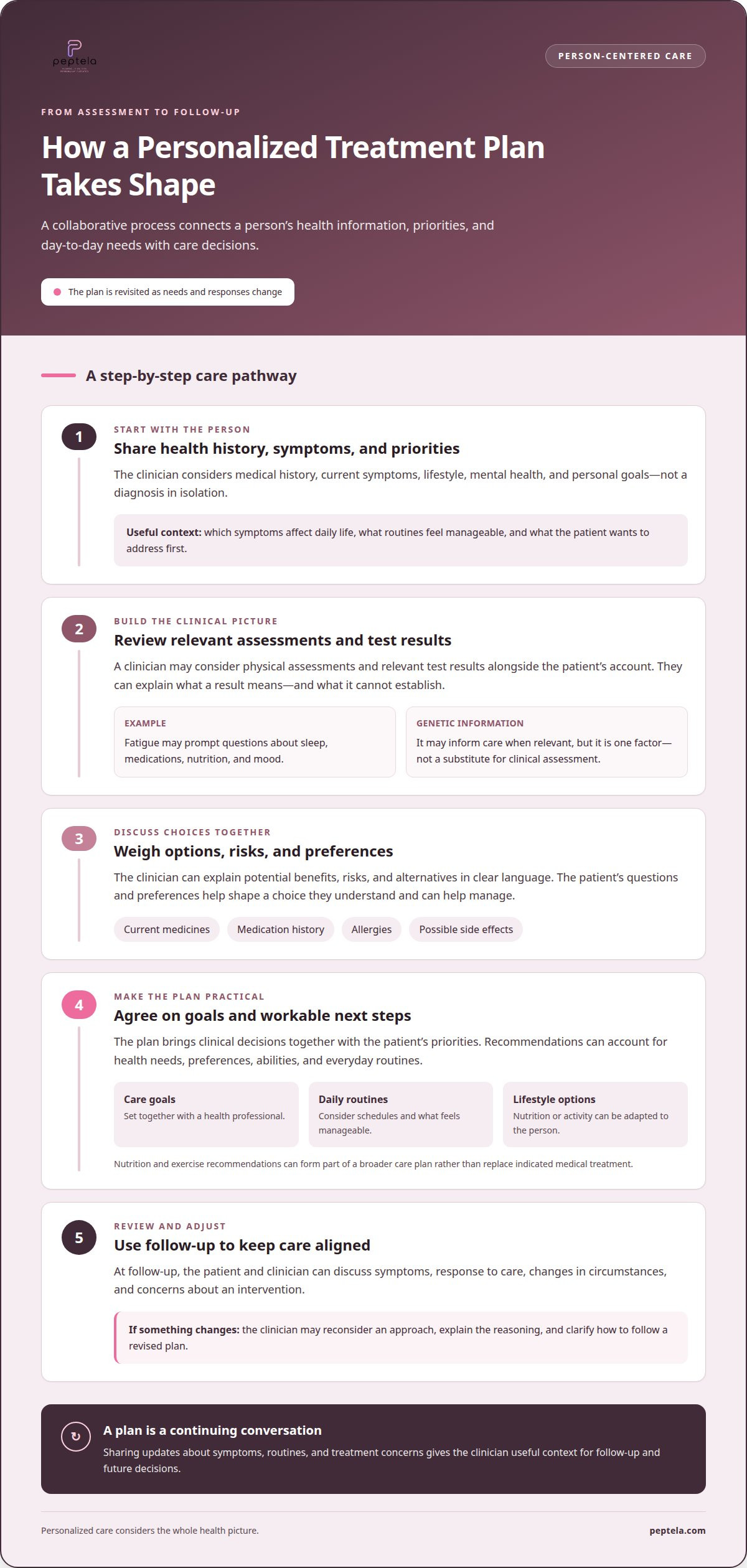
Personalized health care connects a patient’s medical details with decisions about care. A clinician reviews medical history, current symptoms, test results, and health goals rather than treating a diagnosis in isolation. For example, fatigue may prompt questions about sleep, medications, nutrition, and mood. The same symptom can have different causes and context, so assessment starts with the patient’s account and relevant clinical information.
A personalized health treatment plan also considers how health needs fit into daily life. A clinician may ask which symptoms interfere with work, what routines feel manageable, and what the patient wants to address first. Mental health, lifestyle habits, and personal priorities can shape which options are practical. Genetic information may also inform care when relevant to a health question, but it is one factor, not a substitute for clinical assessment.
Assessment works best as a conversation. The clinician can explain what a test result means, what it cannot establish, and how it relates to symptoms. The patient can share concerns, preferences, and questions before decisions are made. In therapy, for example, discussing how symptoms affect sleep or relationships can help the therapist and patient agree on relevant, trackable goals.
Patient education supports shared decision-making. A clinician can explain potential benefits, risks, and alternatives in clear language, then invite the patient to weigh them against personal goals. If medication is being considered, the discussion can cover current medicines, allergies, and possible side effects. The patient’s questions and feedback help shape a choice they understand and can help manage.
How much does personalized healthcare or precision medicine cost in the United States? Cost depends on the case and is determined after a quote request; factors include the evaluation, tests, and therapies involved. Plans using different assessments or treatments may have different costs.
How can you find a qualified personalized medicine provider near you? Look for a clinician whose expertise matches your health concern and who reviews your history, symptoms, and test results before discussing options. In an initial conversation, ask how they explain risks, involve patients in decisions, and communicate between visits.
Connection matters after the first assessment, too. When patients understand the purpose of each next step, they can share useful updates about symptoms, routines, or treatment concerns. For instance, noting when a symptom changes gives the clinician and therapist clearer context for follow-up. This ongoing exchange keeps care grounded in the patient’s experience, not test results alone.
A personalized care plan can draw on a health professional’s review of a person’s concerns and medical history, along with physical assessments. The page recommends setting health goals together with a health professional when developing a personalized care plan. Consulting a healthcare provider can help assess a person’s needs and recommend tailored options such as physical therapy or acupuncture.
Personalized diabetes management can account for a patient’s diet, work schedule, cultural preferences, and access to resources. These details help shape care around the circumstances and preferences the patient brings to discussions with a healthcare provider.
What are Personalized Treatment Plans?
A treatment plan brings clinical decisions together with a patient’s priorities and next steps for care. Its details depend on the health concern, selected interventions, and how the patient and clinician will review progress over time.
Ongoing Monitoring and Follow-Up
Ongoing monitoring is the planned review of a patient’s health and response to care. Follow-up gives the clinician and patient a chance to discuss changes that may affect the plan. A patient might describe a new symptom, difficulty following a recommended routine, or concern about an intervention. These details help focus the next conversation and clarify what needs attention.
Treatment Adjustments
Treatment adjustments are changes made after reviewing the patient’s progress, feedback, and relevant clinical information. A clinician may reconsider an approach if it no longer fits the patient’s needs or circumstances. For example, a patient whose schedule changes can discuss whether the timing or practical steps of a care routine need revisiting. The clinician explains the reasoning and how to follow the revised approach.
Nutrition and Exercise Changes
Nutrition and exercise recommendations can be adapted to a patient’s health needs, preferences, and daily routine. A clinician might discuss a realistic food choice or activity suited to the patient’s physical abilities. These recommendations can form part of a broader care plan rather than replace indicated medical treatment. Follow-up helps determine whether the changes remain workable and relevant.
How do personalized treatment plans compare with standard treatment guidelines? Guidelines describe care options for a health condition, while an individualized plan applies relevant options to a patient’s circumstances. A clinician considers the person’s needs and preferences when discussing which approaches may be suitable.
Does health insurance cover personalized treatment plans and genetic testing? Coverage cannot be determined from the general label alone. Identify the specific service or test, then review the relevant policy terms to understand how coverage applies.
How much does personalized care cost in the United States? The cost depends on the services involved, such as the assessment, tests, and interventions included. A general description of personalized care does not establish the cost of a particular plan.
Follow-up also creates an opportunity to revisit the plan’s practical details. If a patient finds an agreed nutrition change difficult during workdays, that experience can inform a discussion about a more workable option. The focus is whether the plan’s actions remain relevant to the patient’s needs and daily life.
Reducing medication side effects and treatment risks
Choosing a medication involves more than matching a drug to a disease. Clinicians consider the condition, other health conditions, allergies, current medicines, and lifestyle. Patients with the same chronic condition may respond differently to the same medication or therapy. For example, an existing allergy or another medicine can change which options merit consideration. Reviewing these factors helps clinicians weigh potential benefits and risks before choosing an approach.
Pharmacogenomics studies how a person’s genes affect their response to medications. When relevant genetic information is available, clinicians may consider it alongside other clinical details when selecting a medication or therapy, or an appropriate dose or regimen. It does not replace a broader assessment. A genetic result is one piece of evidence, interpreted alongside symptoms, medical history, allergies, and other medicines.
Genetic profiles can also inform decisions about disease prevention, diagnosis, and treatment. The practical question is whether a particular result relates to the decision at hand. For example, a clinician considering a medication can weigh relevant genetic findings alongside the patient’s other health factors. This keeps testing connected to a clinical purpose rather than treating genetic information as a complete picture of wellness.
Medication plans need continued attention after a choice is made. Patients can tell their clinician about new symptoms, side effects, or changes in other medicines. That feedback supports a review of whether the treatment remains appropriate. Consult your healthcare provider before changing medication or a health routine. Stopping, starting, or changing a dose without guidance can disrupt care and complicate assessment.
Personalized treatment plans also consider how interventions work together. A clinician can review the full medication list and identify factors that affect the overall regimen, including underlying conditions and allergies. The discussion can clarify which medicine addresses which concern, what effects to watch for, and when follow-up is needed. Patient engagement makes it easier to raise concerns and understand the reasoning behind a treatment choice.
What are the risks, limitations, and privacy concerns of personalized medicine? Genetic results may not explain every treatment response, and they cannot account for every change in health or environment. Medication side effects and other treatment risks remain possible. Before genetic testing, patients can discuss what information it collects, who may access it, how it may be stored, and how results will inform care.
Personalization supports informed decisions, not certainty. A genetic profile can add context, while clinical evaluation connects that information to a person’s current needs. For instance, a result relevant to one medication may not answer questions about another therapy. Reviewing why each test is being considered and how its result could affect treatment helps keep the plan focused, understandable, and clinically grounded.
Individual health assessments
An individual assessment combines clinical information with a person’s daily context. A clinician may review existing diagnoses, medicines, symptoms, and relevant test results, then identify what needs closer evaluation. For example, recurring fatigue can prompt discussion of sleep, nutrition, exercise, and emotional well-being. Each detail helps distinguish what the patient experiences from what a test alone can show.
Assessment methods depend on the health question. A clinician may use a physical examination, laboratory results, imaging, or wireless health monitoring data to inform prevention, diagnosis, or treatment decisions. These tools answer different questions: imaging can show structures inside the body, while monitoring devices can capture changing health patterns. The clinician interprets results alongside symptoms and medical history, not as isolated findings.
Genomics can help estimate inherited disease risks and inform prevention planning. DNA sequencing may provide genetic information relevant to a particular concern, while proteomics examines protein expressions linked to disease. Neither method gives a complete account of someone’s health. A clinician weighs whether a result is relevant to the assessment and explains how it may, or may not, affect next steps.
Daily lifestyle details add context that clinical measurements may miss. A person’s work schedule, food preferences, access to resources, and current activity can shape which recommendations are realistic. For example, an exercise plan should reflect physical ability and routine. Asking about emotional and social needs can also identify barriers that may affect participation or follow-through.
Prediabetes shows why assessment matters even when symptoms are absent. Almost 80% of American patients with prediabetes are asymptomatic or unaware they may be at risk of developing the condition. Peptela experts use relevant assessments to understand the person’s health status and discuss appropriate prevention steps, rather than relying only on how someone feels.
A useful assessment connects findings to an outcome the patient values. One person may prioritize understanding a test result; another may want to improve daily energy or make activity more manageable. The clinician can translate those priorities into clear goals, identify what information can guide decisions, and determine what needs follow-up. This makes assessment a practical starting point, not simply a collection of measurements.
When genomic or monitoring tools are used, the clinician also considers their limits. A genetic risk estimate does not establish that a disease is present, and a device reading needs interpretation in context. Discussing what each result can answer helps the patient understand the assessment and take part in decisions about the next step.
Individualized care plans can benefit people with chronic conditions, including diabetes, hypertension, asthma, and heart disease, by aligning next steps with their individual needs.
Personalized treatment plan development
Developing a care plan means translating clinical priorities into coordinated actions the patient can understand and discuss. The clinician identifies the main concern, considers suitable interventions, and explains why each proposed step is included. For example, a plan addressing persistent pain might distinguish symptom support from goals such as staying active at work.
The clinician and patient then clarify what matters most. A patient may want to focus on sleep, daily function, or managing a specific symptom. Those priorities help shape the order of decisions and define what progress means to that person. Clear goals also make later conversations more specific: the patient and clinician can discuss whether the approach addresses the concern that prompted care.
Next, the plan brings together the parts of care that apply to the patient’s needs. Depending on the situation, it may include medication, counseling, nutrition advice, physical therapy, or stress-management strategies. For example, a plan for lower back pain could combine manual therapy, strengthening exercises, and acupuncture. Each intervention should have a clear role and fit the clinical context.
Practical considerations make a plan more usable. The care team can account for language preferences, cultural values, family dynamics, work routines, and access to resources. A patient who cannot attend an activity during work hours may need a different arrangement. If a proposed step feels difficult, the team can break it into manageable actions and encourage the patient to explain what is getting in the way.
A written care plan can make responsibilities and priorities easier to follow. It may record:
- The concern being addressed and the patient’s preferred goals.
- The agreed interventions and how they relate to those goals.
- The person responsible for each part of care, where relevant.
- The information that will help the team discuss progress at follow-up.
Which healthcare professionals can create a personalized treatment plan? A physician or another qualified health professional can develop one within their expertise and clinical role. Depending on the needs involved, a care team may include a therapist, dietitian, or physical therapist, each contributing relevant guidance to the overall approach.
Coordination matters when a plan involves several types of care. The clinician can connect recommendations, clarify how they fit together, and identify questions to discuss before making changes. For instance, a patient considering a new activity alongside existing treatment can raise it during clinical follow-up.
Development is complete when the patient understands the agreed priorities, the purpose of each intervention, and how progress will be discussed. That shared understanding gives the next conversation a clear starting point and keeps the care plan connected to the patient’s goals.
Peptela
Peptela offers personalized, clinician-guided care for people considering options related to their health goals. Its offerings include Tirzepatide Injections, Hormone Balance, and Peptides. Prescription products require an online evaluation with a licensed medical professional who determines whether a prescription is appropriate. A personalized assessment considers health history, current medications, and potential risks or contraindications, helping clarify whether an option fits your needs and how it relates to your broader care.
Make Your Next Care Decision With Clarity
Your next step can be a focused conversation about what matters most to you. Bring your questions, the outcomes you hope to prioritize, and any concerns about treatment risks or medication side effects. A personalized health treatment plan should support informed choices, with clinical evaluation guiding which options fit your needs and when follow-up is appropriate.
Peptela offers clinician-guided care and options including NAD+. If you’re considering whether this approach aligns with your health priorities, discuss your goals and questions with the care team. Contact Peptela to discuss your care and take a thoughtful next step toward care shaped around you.
Frequently Asked Questions
What is personalized medicine?
Personalized medicine uses information about an individual to guide decisions about disease prevention, diagnosis, and treatment. This may include genetic profile, biomarkers, lifestyle, environmental factors, and behavioral traits. For example, clinicians can consider whether a relevant genetic finding affects a medication decision. Genetic information is one input among several, not a standalone explanation of a person’s health or a guarantee of how treatment will work.
What is a personalized health treatment plan?
A personalized health treatment plan is a clinician-guided approach that sets care priorities around an individual’s needs and goals. It may address current conditions and medicines alongside mental or social needs and future care wishes. For example, a patient managing several health concerns can work with a clinician to clarify which concern to address first and how different parts of care fit together.
How are personalized treatment plans created using medical history, symptoms, and test results?
Clinicians interpret these details together, looking for context that can guide decisions. A history of prior treatments, for instance, can help explain why a current symptom needs a different evaluation. Patients can describe when symptoms began, what changes them, and how they affect daily activities. Clinicians then consider relevant test results alongside that account, rather than treating one measurement as the whole picture.
What tests and genetic information are used to personalize treatment?
Testing depends on the clinical question. Assessment may involve laboratory tests, imaging, wireless health monitoring, or DNA sequencing. Proteomics examines protein expressions linked to disease, while pharmacogenomics focuses on how genes affect medication response. These tools serve different purposes, so clinicians select relevant tests and interpret results in context. A test can inform a decision, but it does not replace clinical judgment or explain every aspect of health.
What steps should I take to get a personalized treatment plan?
Start by identifying the main health concern or goal you want to discuss. Gather a current medication list and relevant test results, then describe your symptoms and how they affect daily life. In the clinical discussion, share your preferences and ask how options, risks, and follow-up fit together. Agree on a care plan with clear priorities, then discuss how progress will be reviewed and when adjustments may be considered.


