
Women in the United States live longer than men, yet they spend more years in poor health. The life expectancy gap reached 5.8 years in 2021, according to the National Center for Health Statistics, while women spend 25 percent more years in poor health on average. That contrast is central to understanding women's health and longevity: living longer is only part of the picture.
It makes sense to focus on the years when health changes, not just on lifespan. This article explains how aging and hormonal transitions relate to cardiovascular, bone, mental, and cognitive health, and why preventive care and timely screenings matter. You’ll gain a clearer view of how risks can shift with age and how prevention can support health over time.
Key Takeaways
- Understand how changes in bone density and muscle strength can affect balance, falls, and fracture risk as you age.
- Recognize how perimenopause and menopause can shape health needs over time, and why support should be individualized.
- Learn how cardiovascular, mental, and cognitive health connect to women’s well-being across different life stages.
- See how preventive care and age-appropriate screenings can help identify health concerns earlier and guide next steps.
- Explore how clinician-guided options may fit into a broader, personalized approach to women’s health.
Bone density, muscle loss, and fracture risk
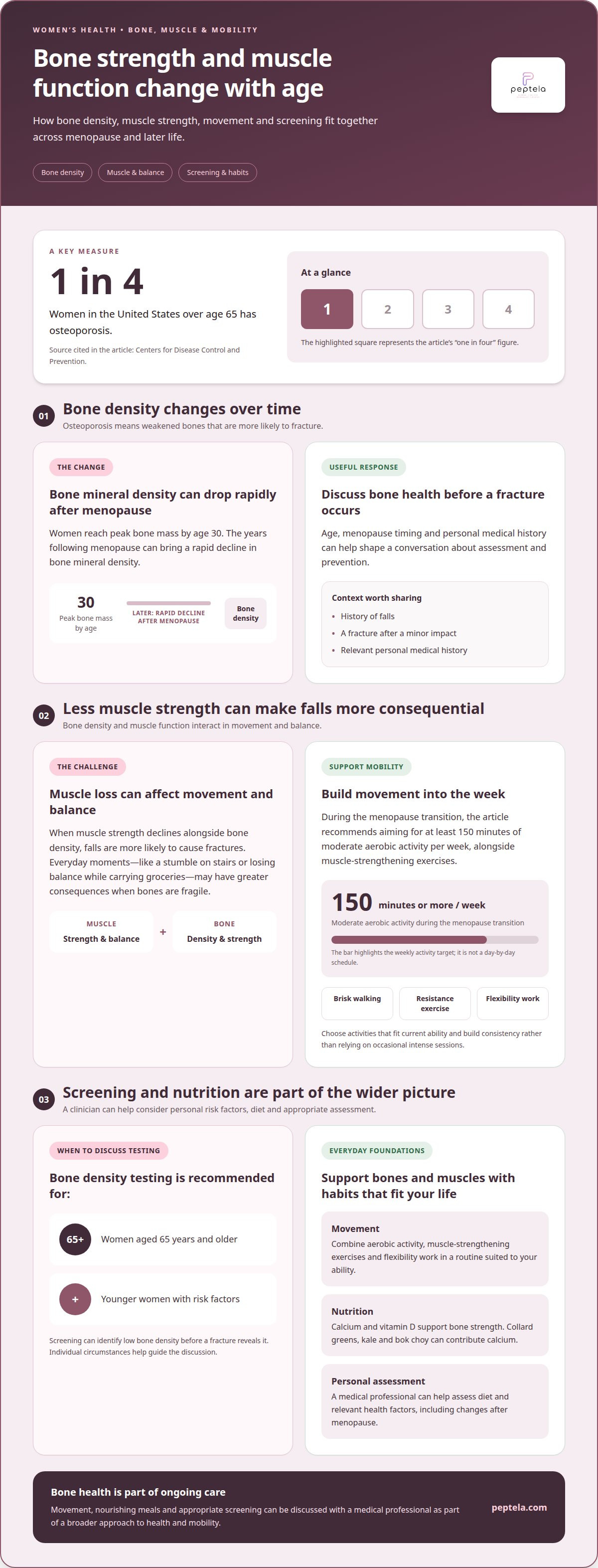
Bone strength and muscle function change with age, especially around menopause. Understanding how these changes interact can help you discuss screening, movement, and nutrition during a medical visit.
Bone Density and Osteoporosis
Bone density measures the minerals packed into bone, while osteoporosis describes weakened bones that are more likely to fracture. Women reach peak bone mass by age 30, and bone mineral density drops rapidly in the years following menopause. In the United States, one in four women over age 65 has osteoporosis, according to the Centers for Disease Control and Prevention. These changes make prevention and timely assessment relevant well before a fracture occurs.
Muscle Loss and Fracture Risk
Muscle loss is a decline in muscle mass and strength that can make movement and balance more difficult. When muscle strength declines alongside bone density, falls are more likely to cause fractures. A stumble on the stairs or losing your balance while carrying groceries can have greater consequences when bones are fragile. Maintaining strength and stability helps protect mobility as well as bone health.
Exercise can support both bones and muscles. During the menopause transition, women should aim for at least 150 minutes of moderate aerobic activity per week, alongside muscle-strengthening exercises. Brisk walking is one example of moderate aerobic movement; resistance exercises provide a separate opportunity to challenge muscles. Flexibility work can round out a fitness plan. Choose activities that fit your current ability, and build consistency into the week rather than relying on occasional intense sessions.
Nutrition matters, too. Calcium and vitamin D support bone strength, and calcium-rich greens such as collard greens, kale, and bok choy can contribute to your intake. Try adding cooked greens to a grain bowl or serving them with beans. Food choices are one part of a broader plan; a medical professional can help assess your diet and relevant health factors, including changes after menopause.
Screening can identify low bone density before a fracture reveals it. Bone density testing is recommended for women aged 65 years and older, or for younger women with risk factors. Age, menopause timing, and personal medical history can shape which concerns deserve discussion. A history of falls or a fracture after a minor impact is also useful context to share during that conversation.
Bone-supporting habits are part of a wider approach to health. Walking can combine aerobic activity with time outdoors, while strength training supports the muscles you use in everyday tasks. Both can fit into a routine that also supports cardiovascular fitness. Aim to make movement, nourishing meals, and appropriate screening part of ongoing care rather than waiting for mobility or independence to change.
Female biology and hormonal life stages
Hormone patterns shift throughout reproductive life, and perimenopause can unfold over several years. Pregnancy history and reproductive conditions can also provide useful context for later health discussions.
Pregnancy complications such as preeclampsia are recognized as early predictors of cardiovascular risk later in life. A history of PCOS, endometriosis, or pregnancy complications can help frame conversations about symptoms and prevention.
Hormonal Balance and Epigenetic Impact
Hormonal balance describes how hormones interact and change across life stages; epigenetics describes influences on how genes are expressed without changing DNA itself. Together, these ideas help explain why the same transition can feel different from person to person. Perimenopause can begin from the mid-30s through the 50s and last years, or as long as a decade. Tracking changes in sleep, mood, cycles, and energy can give a clinician useful context.
Proactive Hormone and Vitality Support
Proactive support means noticing changes early and considering them alongside sleep, stress, and overall health. Perimenopausal signs often begin between ages 35 and 45, making that period a useful time to discuss persistent changes. A simple record of cycle patterns, sleep disruption, hot flashes, or shifts in concentration can make a visit more focused. This approach supports shared decisions rather than treating one symptom as the whole picture.
PCOS and endometriosis are distinct reproductive health conditions, so discuss each history specifically. PCOS can involve changes in menstrual cycles, while endometriosis can involve pelvic pain. Note how symptoms change over time and affect daily life. These details can guide a discussion about current concerns, reproductive history, and appropriate evaluation without assuming every symptom has the same cause.
Menopausal Hormone Therapy (MHT)
Menopausal hormone therapy is one option in menopause care, not a complete longevity plan. Its potential role depends on symptoms, health history, risks, and contraindications, so clinical evaluation matters before making treatment decisions. Discuss the symptoms you want to address, relevant health conditions, and other medicines. Hormone therapy is not suitable for everyone; personalized assessment can help weigh potential benefits against risks.
Pregnancy History and Later Health
Pregnancy history, including complications and outcomes, is part of a woman’s health timeline. Preeclampsia is recognized as an early predictor of cardiovascular risk later in life, so mention it when discussing prevention and heart health. Details such as a previous diagnosis, when it occurred, and any ongoing concerns provide useful context. This history does not determine your future, but it can inform individualized medical conversations.
For women exploring clinician-guided options, Peptela’s Hormone Balance support can be part of a personalized discussion about hormone-related concerns. It complements, rather than replaces, assessment of symptoms, reproductive history, and treatment risks.
Why is cardiovascular health such a major focus in women’s longevity?
Cardiovascular disease is a leading cause of death among women. The life expectancy gap between women and men in the United States reached 5.8 years in 2021, according to the National Center for Health Statistics. This gap describes population averages, not an individual forecast. Heart health deserves attention because risks and symptoms can change across a woman’s life.
Healthy aging is shaped by several factors, including cardiovascular and metabolic health, reproductive history, and access to timely care. Blood pressure, blood sugar, and cholesterol are useful topics in a heart-health discussion. So are changes in exercise tolerance or unexplained fatigue. Considering these factors together gives a fuller picture than focusing only on weight or one symptom.
Heart attack symptoms in women can include fatigue or shortness of breath before chest pain occurs. This can make a heart concern harder to recognize if you expect chest pain to come first. New or persistent symptoms that affect your usual activities warrant prompt medical attention. Describe when they began and what brings them on to help clarify the concern.
Heart and bone health call for different considerations, so a care plan should address both rather than treating them as interchangeable. For cardiovascular health, discuss blood pressure, metabolic concerns, tobacco use, and family history. For bone health, keep your personal history and recommendations from previous discussions in view. A clinician can use these details to help prioritize follow-up.
Daily habits can support overall health without promising a specific lifespan. A consistent sleep routine, nutritious meals, movement suited to your current ability, and ways to manage stress are practical areas to review. For example, note whether poor sleep or ongoing stress coincides with changes in energy or daily activity. These observations can make health discussions more specific.
Heart disease remains a leading cause of death among women in the United States. Cause-specific death rates can change over time as prevention, diagnosis, treatment, and population health change. The figures here do not establish a trend in those rates, so the life expectancy gap should not be interpreted as evidence that a particular cause has risen or fallen.
Social, economic, and racial disparities can affect longevity by shaping access to preventive visits, diagnostic evaluation, and ongoing care. Transportation, time away from work, and access to a regular source of care can influence whether concerns receive timely attention. These conditions shape health opportunities; they do not determine an individual woman’s outcome.
A useful next step is to discuss your symptoms, reproductive history, and known cardiovascular risks with a medical professional. Mention changes such as shortness of breath, unusual fatigue, or reduced ability to complete familiar activities. Specific examples can help guide evaluation and make preventive care more responsive to your needs.
Cardiovascular disease, including heart disease, is a leading cause of death among women. Cause-specific death rates can change as prevention, diagnosis, treatment, and population health change.
Mental health and cognitive decline
Emotional wellness and cognitive health are connected aspects of aging, but they are not interchangeable. Nearly two-thirds of people with Alzheimer’s disease are women. This makes brain health an important topic in women’s care, but it does not mean every memory lapse signals disease. Misplacing keys, for example, is different from persistent confusion that disrupts familiar daily tasks.
Look for patterns rather than judging by one difficult afternoon. A written note can capture when memory concerns began, how often they occur, and whether they affect tasks such as following a recipe or managing appointments. Persistent sadness, anxiety, or memory concerns are reasons to speak with a healthcare provider. Sharing examples adds practical detail and can help distinguish a temporary feeling from a concern that needs evaluation.
Older women experience higher rates of depression than older men, while women are more likely to seek treatment such as therapy and medication. This difference highlights the value of describing emotional symptoms clearly. Persistent low mood, reduced interest in usual activities, or anxiety that interferes with daily life are useful details to raise during a care discussion.
Social connection is another practical part of emotional health. Regular contact with a friend, family member, or community group can keep support within reach. A weekly walk with a neighbor or a scheduled call offers a concrete way to stay connected. These routines do not replace professional care when symptoms persist, but they can make it easier to notice changes and ask for support.
Brain health also belongs in broader wellness conversations. Omega-3 fatty acids support heart and brain health, so foods containing them can be considered within an overall eating pattern. A clinician can help discuss nutrition alongside existing health conditions and medications. No single food or supplement should stand in for assessment of new or worsening cognitive symptoms.
Staying active can support social and mental routines as part of overall well-being. Choose manageable activities, such as a walk or group class, and build them into your week. A familiar activity can add structure, and doing it with someone else may also support social connection. What matters is whether the routine fits your daily life and is sustainable.
Bring specific observations to a medical visit: changes in sleep, mood, concentration, or memory; when they began; and how they affect daily tasks. An example, such as difficulty following a familiar route, is more useful than saying only, “I feel different.” A clear record can guide evaluation and next steps, supporting emotional wellness as your health needs change with age.
Preventive care and health screenings
Preventive care can help identify health changes before they disrupt daily life. A screening schedule may include breast, colorectal, and skin screening, as well as general well-woman care. These visits also give you time to discuss changes in weight, sleep, mood, memory, or menstrual patterns. Mention symptoms even when they seem unrelated; a complete picture helps guide which concerns need attention.
A well-woman exam is advised every year, regardless of symptoms. It provides a regular opportunity to review your health history, discuss changes, and consider appropriate screenings. An annual visit does not mean every test happens yearly. Screening timing depends on the test, age, personal history, and family history, so keep a record of previous exams and recommendations.
For breast screening, mammograms are advised every 1-2 years after age 40, or sooner with a family history. Colorectal screening is advised to begin at age 45, with colonoscopies repeated every 10 years unless a provider recommends more frequent screening. These milestones make preventive planning more concrete. If symptoms arise between scheduled tests, raise them rather than waiting for the next screening date.
Skin checks are another useful habit. Women are more likely than men to use daily sunscreen, attend regular dermatology check-ups, examine their skin, and have suspicious spots assessed. Melanoma rarely kills when caught early. Notice spots that change in appearance and seek medical assessment rather than relying on observation alone. Consistent sun protection and attention to new or changing marks support a practical skin-care routine.
Prevention also means connecting the dots across different aspects of health. Estrogen changes around menopause can coincide with shifts in sleep or other symptoms, while weight changes may be relevant to a broader health review. Mention when a change began and how it affects daily activities, including concentration or memory. A clear timeline can focus a medical conversation and support decisions based on your individual history.
Screening works best as part of an ongoing relationship with preventive care, not as a single powerful test. Keep track of exam dates, family history, and questions that arise between visits. That simple record can help you discuss which screenings fit your age and health background, then follow the recommended schedule. If menopause-related symptoms raise questions about estrogen, explore clinician-guided Hormone Balance support as part of a personalized health discussion.
Peptela
Peptela offers personalized, clinician-guided care for women considering how health priorities may change with age. If you’re exploring hormone-related support, weight management, or peptide options, its offerings include Hormone Balance, Tirzepatide Injections, and Peptides. These options are not a substitute for preventive screenings or evaluation of new symptoms. A clinician-guided discussion can consider your health history, current concerns, potential risks, and contraindications before treatment decisions. This context connects individual options with the broader picture of women’s health and longevity, rather than treating one concern as the whole plan. If you’d like to discuss your goals and possible next steps, contact Peptela.
Make your next health decision personal
Your next step can begin with one question: what would help you feel more informed about your health right now? You might want to clarify a symptom, understand a screening recommendation, or organize questions for a future medical conversation. Choose the issue that matters most to you today.
As your needs change, revisit your priorities and the information guiding them. A note about a new concern, a change in your daily routine, or a goal you want to discuss can help keep decisions grounded in your experience. This is a practical way to make women's health and longevity a personal, evolving conversation rather than a fixed checklist.
You don’t need to address every aspect of health at once. Take the next informed step that fits your priorities, and let your care plan develop with you.
Frequently Asked Questions
Why do women live longer but spend more years in poor health?
Living longer and living well measure different aspects of health. A person may survive a disease yet manage pain, fatigue, or limitations with daily tasks for years. This distinction matters because longevity planning should consider function, independence, and quality of life, not lifespan alone. For example, discuss whether a health concern affects walking, concentration, work, or activities you value.
At what age should one consider a Women’s Longevity assessment?
There is no universal age or single standard assessment that suits every woman. Consider a broader health review when a new concern affects daily life, family history raises questions, or you want to organize preventive care. Prepare by listing current medications, past diagnoses, and the main health questions you want addressed. This can make the conversation useful at different stages of adulthood.
Why does women’s health need a life-course approach?
A life-course approach considers how earlier health experiences inform later care. A concise personal health record can help connect the details: include past diagnoses, surgeries, medications, family history, and major reproductive events. For instance, a medication you took years ago may be relevant when evaluating a current symptom. Reviewing your timeline helps frame questions without considering today’s concern in isolation.
Why is midlife an important turning point for women’s health?
Midlife can bring overlapping changes, so it helps to identify the issue that most affects your daily life. Before a medical discussion, note what changed, how it affects your routine, and what outcome matters most to you. You might, for example, prioritize uninterrupted sleep or maintaining focus at work. Clear priorities keep the conversation practical and centered on your needs.
How do menopause and hormone changes affect women's long-term health?
Hormone changes can affect symptoms and body systems in different ways, and their effects vary among individuals. Rather than assuming every new concern is caused by menopause, note when it began and whether other changes happened at the same time. This timeline can help a clinician consider menopause alongside other possible explanations and decide what evaluation or care is appropriate.
What screenings and preventive care do women need at different ages?
Screening recommendations depend on factors such as age, personal and family history, previous results, and current symptoms. One useful distinction: screening looks for concerns in people without related symptoms, while a new symptom may call for diagnostic evaluation. Keep prior results and follow-up instructions together, and tell your clinician if a symptom develops between routine screenings.
What are the benefits and risks of hormone therapy for menopause and longevity?
Hormone therapy may help some people with menopause-related symptoms, but it is not a general strategy for extending life. Before considering it, clarify which symptoms you want to address and share relevant health conditions, medications, and treatment history. A clinician can assess potential benefits, risks, and contraindications, then discuss whether treatment and follow-up fit your circumstances.
Which lifestyle changes have the strongest evidence for extending women's healthy lifespan?
No single habit guarantees a longer, healthier life, and the most useful changes are those you can maintain. Discuss physical activity, food choices, sleep, social connection, and smoking with a healthcare professional, especially if a condition affects what feels manageable. Start with one specific adjustment, such as adding movement to an existing routine, and build on it as it fits your life.


