

More testing does not automatically mean better longevity care. Clinician-guided longevity care connects relevant health information with personalized decisions and follow-up. The goal is to support healthspan, the years lived in good health, alongside overall well-being.
It makes sense to want clear answers about what testing can tell you and what happens next. A thoughtful program considers your health history, goals, and current needs, then uses appropriate assessments to guide care rather than treating every result as a reason to intervene.
Here, you’ll learn what longevity medicine involves, what a clinician-guided program may include, and how testing, clinical judgment, and follow-up fit together. You’ll also see why meaningful progress depends on interpreting results in context, discussing potential risks and options, and adjusting the plan as your needs evolve.
Key Takeaways
- Longevity care focuses on supporting healthspan and complements, rather than replaces, traditional medical care.
- Meaningful outcomes are easier to assess when goals reflect your priorities and progress includes functional measures and your own experience.
- A physician-led program should explain why each test matters and how results could influence care.
- Follow-up helps clinicians interpret results in context, review potential risks, and adjust recommendations as your needs change.
- Clear communication about your goals, medications, and concerns helps make care more personalized and informed.
What Is Longevity Medicine?
Longevity medicine aims to support healthspan, not lifespan alone, through prevention, assessment, and personalized care. It complements primary care and remains medical care, not a guarantee against chronic disease.
Whole-Person Care and Longevity Medicine
Whole-person care considers physical health alongside habits, priorities, and daily function. In longevity medicine, that means interpreting a measure such as a lab result alongside your medical history and lived experience. A result alone does not describe your overall health. Connecting these details can make conversations with clinicians more relevant to your goals.
Longevity Medicine, Biohacking, and Wellness
Longevity medicine uses clinical assessment to guide health decisions; biohacking and wellness can include self-directed experiments or general lifestyle practices. The distinction matters because a wearable trend or supplement routine is not a diagnosis. How do longevity care programs compare with primary care, concierge medicine, and functional medicine? Primary care addresses broad health needs, concierge medicine describes an access model, and longevity medicine centers on healthspan. Functional medicine emphasizes a systems-based approach.
Interventions, Tests, and Their Limitations
Longevity programs may combine tests, lifestyle changes, nutraceuticals, and medical interventions, each with a different purpose. Nutraceuticals are products such as dietary supplements; medical interventions require clinical assessment. A continuous glucose monitor, for example, collects data, but a clinician needs to interpret it in context before it informs care.
What are the risks and limitations of longevity tests, supplements, and treatments? Tests can produce results that need clinical interpretation, while supplements and treatments may carry risks, interactions, or contraindications. Medical history, current medicines, and the reason for testing all matter. More data alone does not establish a diagnosis or show that an intervention is appropriate.
Medication and health records also shape decisions. A clinician reviewing a proposed supplement alongside prescription medicines can assess possible interactions and whether further evaluation is needed. Before sharing health information, understand how the program handles records, test results, and data access. Clear processes help you know what information informs care and how it is used.
Does insurance cover longevity care or related testing in the United States? Coverage varies by service, the clinical reason for testing, and the terms of a person’s plan. A test used to evaluate a medical concern may be handled differently from one pursued for general wellness. Review the expected billing pathway for each service before proceeding.
Educational content can explain concepts and support informed conversations, but it does not diagnose or replace medical care. For example, discuss a concerning result with a qualified clinician who can consider your symptoms, history, and next steps. Longevity care works best as a complement to primary care, especially when chronic conditions or new symptoms need attention.
Meaningful health outcomes and sustained behavior change
Meaningful progress starts with goals that matter in daily life, not a score alone. Someone might prioritize walking comfortably, keeping up with family, or maintaining independence. Clinicians can connect these priorities with measurable indicators and revisit them over time. This makes the plan personal while keeping expectations grounded in observable changes and the person’s own experience.
Behavior change also needs to fit real routines. A clinician and patient can identify one practical adjustment, such as scheduling regular exercise or building a consistent bedtime routine. They can discuss obstacles, decide what support would help, and review whether the change feels manageable. If a plan repeatedly clashes with work, caregiving, or mobility, those details matter when adapting it.
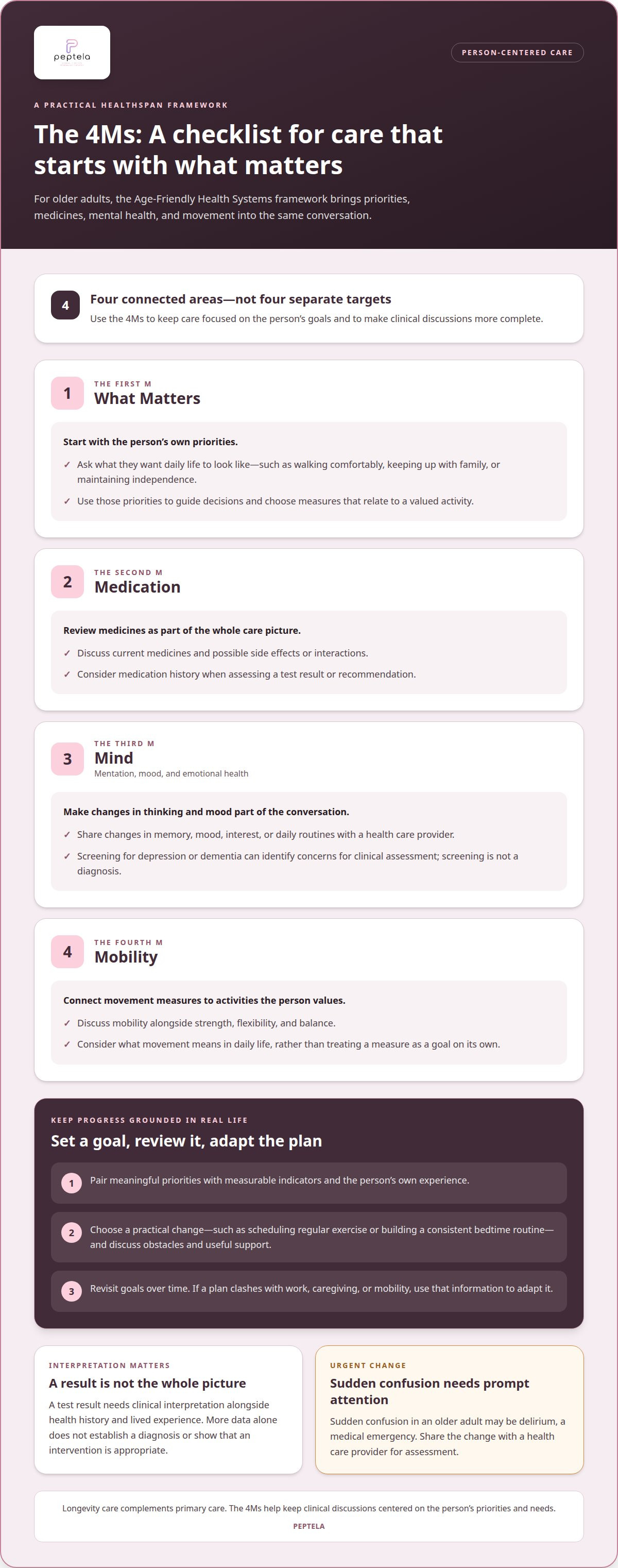
For older adults, Age-Friendly Health Systems organize care around the 4Ms: What Matters, Medication, Mind (Mentation), and Mobility. These areas offer a useful way to consider priorities, medicines, cognitive and emotional health, and movement together. A health system that uses the 4Ms can help keep care focused on the person’s goals rather than treating each concern in isolation.
Finding care that follows this framework starts with recognizing the Age-Friendly Health Systems name and asking how the 4Ms shape clinical conversations. What Matters should guide decisions, while Medication reviews consider side effects and interactions. Mind and Mobility bring attention to cognition, mood, strength, and balance. These areas can help patients and care teams make discussions more complete.
Mental health deserves attention alongside physical measures. Depression can affect motivation, social connection, and daily routines, so clinicians need to hear about changes in mood or interest. Screening for depression and dementia can support timely conversations about changes in health. Screening is not a diagnosis; it helps identify concerns that warrant clinical assessment.
New confusion calls for a different response than gradual memory concerns. Sudden confusion in an older adult may be delirium, a medical emergency. Share changes in memory or mood with a health care provider, who can assess the context and next steps. Clear reporting helps distinguish an urgent change from an ongoing concern.
Clinical protocols can connect health priorities without reducing a person to separate targets. A plan might consider movement, mental well-being, medication effects, and the patient’s priorities together. Strength, flexibility, and balance are practical topics to raise with a care team. The right measures depend on the goal: tracking mobility, for example, should relate to an activity the patient values.
Progress reviews help turn intentions into sustainable routines. At each follow-up, patients and clinicians can discuss what changed, what felt difficult, and whether the goal still fits. A missed exercise session is not a verdict; it can prompt a practical conversation about timing, access, symptoms, or support. Ongoing adjustment keeps care connected to living well, not simply collecting data.
Choosing a physician-led longevity program
A thoughtful program starts with clinical assessment, clear goals, and a plan for follow-up. Before committing, understand how the clinician’s recommendations connect to your health history and priorities.
Assessing a Program Before Purchase
Assessment before purchase means understanding how a program evaluates your needs and decides what care may fit. This matters because wellness goals, physical symptoms, and chronic disease concerns may call for different approaches. A clinician-guided program should explain the purpose of its assessments, how results inform decisions, and which concerns require primary care or other medical attention.
Look for clear explanations of the evidence and limitations behind proposed interventions. A test, for example, should connect to a clinical question, not simply add data. Understand what follow-up includes, how clinicians review risks and contraindications, and what happens if results need further evaluation. Educational material can support your understanding, but it does not replace an individual medical assessment.
Initial Consultation and Baseline Surveys
An initial consultation establishes the clinical context for later decisions. The clinician reviews your health history, current medications, symptoms, previous results, and goals. You can describe what proactive wellness means in daily life, such as improving energy for regular activity or addressing a specific health concern.
Baseline surveys capture starting points, including reported symptoms, routines, and priorities. These details help distinguish meaningful change from day-to-day fluctuation. Share relevant medical records and mention supplements or over-the-counter medicines. The clinician can then consider whether additional assessment is appropriate and explain what each proposed test could clarify.
Program Structure and Progress Monitoring
A 12-week quarterly program offers a defined period for setting goals, following recommendations, and reviewing progress. Its value depends on how clinicians structure check-ins, interpret new information, and respond when a plan needs adjustment. Ask how progress measures relate to your goals, rather than treating every survey or result as an outcome by itself.
A full-year program spans a longer period, allowing more time for continued monitoring and reassessment. The difference is duration and the opportunities it creates for follow-up, not an automatic promise of better results. In either format, clarify which visits, assessments, and progress reviews are included before making a decision.
Monitoring can combine patient-reported changes with relevant clinical measures. For example, someone tracking physical activity might record consistency alongside a clinician-selected functional assessment. Regular reviews can identify barriers, revisit priorities, and distinguish a temporary setback from a pattern worth discussing.
Program Costs in the United States
How much does clinician-guided longevity care cost in the United States? Program costs depend on the services, testing, clinician access, and length of care involved. The price depends on the case and is provided after a quote request; testing scope and follow-up needs can affect the total.
Before purchasing, request a clear explanation of what the quoted amount covers and which services may be billed separately. Ask how the program handles additional evaluation if a result raises a concern. Comparing the scope of care, not just the program label, helps you understand what you’re paying for.
During an initial longevity medicine consultation, a clinician reviews your history, medicines, symptoms, and goals, then discusses appropriate assessments and potential next steps. The conversation should leave you with a clear understanding of the proposed plan, its limitations, and how follow-up will work.
Proportionate testing and follow-up of results
Longevity medicine programs use tests to answer clinical questions, not simply to collect more data. The right assessment depends on your health history, goals, and what a result could change.
Advanced Laboratory Testing and Imaging
Testing can include continuous glucose monitoring, VO₂ max testing, advanced lipid panels, body composition analysis, and strength assessments. DEXA scans may also help assess body composition. These tools measure different aspects of health, so a program should connect each test to a specific reason for using it.
What services and tests are included in longevity medicine programs? Depending on the program and a patient’s needs, they may include clinician review, laboratory testing, imaging, functional assessments, and follow-up. The purpose is to guide preventive care and decisions, not to order every available test.
Before testing, clinicians should explain which decision a result could inform. A lipid panel, for example, can provide information about blood fats; its relevance depends on the person’s broader health context. Imaging also needs a clear rationale. A DEXA scan or other assessment should answer a question relevant to care, rather than serve as a stand-alone measure of overall health.
Biomarkers and Trend Monitoring
Biomarkers are measurable indicators from tests, such as glucose readings, that clinicians interpret alongside other health information. Tracking trends can add context that a single result cannot provide. For example, fasting glucose readings of 82, 88, and 95 over several years may show a pattern, even when each value falls within a reference range.
Trends do not explain their own cause. Clinicians consider factors such as medical history, symptoms, medicines, and changes in daily routines before deciding whether a pattern affects care. Repeating a test makes sense when the result could clarify a clinical question or help assess a treatment decision. Timing and test choice should serve that purpose.
A large panel isn’t automatically more useful. A 60-marker panel, for example, can flag results that prompt people to pursue supplements without coordinated clinical guidance. A proportionate approach prioritizes findings that connect to a patient’s health goals and medical context. It also leaves room to explain normal, uncertain, or abnormal findings and what each means for next steps.
Follow-up completes the testing process. The clinician reviews results with you, explains whether they change the plan, and discusses appropriate next steps. This partnership keeps measures tied to decisions and outcomes. If results do not support a proposed treatment or raise a new concern, the plan can reflect that information rather than continue by default.
Clinical decision-making and provider communication
Clinical decisions become easier to understand when the reasoning is part of the conversation. Bring one primary concern, such as a change in sleep or a symptom during exercise. Describe when it occurs and how it affects daily life. Specific examples give the clinician useful context beyond a broad goal like “more energy.”
A clear discussion can follow a simple path: define the concern, review relevant information, then consider options together. If a recommendation involves a lifestyle change, ask how it relates to your priorities and how you’ll know whether it fits. For example, a plan that conflicts with caregiving responsibilities may need a different approach to remain practical.
Research can inform care without answering every personal question. Ask what evidence supports a proposed intervention and whether it addresses the outcome you care about. A clinician should distinguish established approaches from emerging ones, explain uncertainty in plain language, and describe possible risks and contraindications. This context helps you make an informed choice rather than rely on a broad promise.
Before agreeing to a procedure or making an irreversible payment, make sure informed consent is provided in language you understand, with time to ask questions or decline. You might ask what alternatives exist, what the known risks are, and what happens if you decide not to proceed. These questions keep your preferences part of the decision.
Follow-up should connect to a specific goal, not just a calendar reminder. Clinicians may assess whether results meet SMART goals at 3 or 6 months before considering hormone therapy if indicated. In that conversation, clarify what progress would mean for you and whether symptoms or daily routines have changed. A measure is useful only if it helps guide the discussion.
Between visits, keep a concise record of relevant changes. For example, note when a new symptom began, what was happening at the time, and any medication or supplement changes. Share that information with your care team so they can review it alongside your history. If another clinician is involved, clarify who will coordinate information and communicate next steps.
Digital tools, including AI systems, can help organize information, but they do not replace clinical judgment. If a summary includes a prediction or recommendation, ask how the clinician interprets it and what information supports the decision. The key takeaway is simple: you should understand the reason for a recommendation, its limits, and how your priorities shaped the plan.
Peptela
Peptela offers personalized, clinician-guided care for people considering support with longevity and women’s health goals. Its offerings include Tirzepatide Injections, Hormone Balance, and Peptides. A clinician can consider your health history, current medications, symptoms, and goals when evaluating whether an option may fit. Each intervention requires appropriate medical assessment, including consideration of potential risks and contraindications. These offerings are not a substitute for primary care or emergency medical attention. If you’re weighing a treatment option or want to understand how it relates to your goals, contact Peptela to start a conversation.
Make Your Next Health Decision With Purpose
Your next step does not need to be a sweeping change. Start by naming the health priority you want to address and the questions you need answered. That gives a clinician a useful place to begin and keeps recommendations connected to what matters in your daily life.
Clinician-guided longevity care is a collaborative process. You bring your experience and priorities; a clinician helps put potential options in medical context. Take time to consider whether a proposed plan fits your needs and what you want to understand before moving forward.
If you’re ready to discuss a personalized care plan, contact Peptela to discuss your care. A thoughtful conversation can help you clarify your priorities and choose a next step that feels right for you.
Frequently Asked Questions
Do longevity clinics need to be in-person or can they be fully telehealth?
A longevity program can be fully telehealth when its services suit remote care. Peptela’s platform is 100% online. No in-person visit required. If approved, your treatment is compounded by a US-licensed, LegitScript-certified pharmacy partner, rigorously inspected for quality, and shipped discreetly to your door.
What credentials do I need to open a longevity clinic?
There is not one universal credential for opening a longevity clinic. Clinical staff must be licensed in the state where they practice, and corporate-practice-of-medicine rules vary by state. Credentials and business structure depend on the services offered and who provides them. Prospective operators need to understand the rules that apply to their specific setup.
Before the ten criteria: what does “longevity clinic” mean?
A “longevity clinic” describes a practice focused on healthspan and healthy aging, but the label alone does not define a standard set of services. One practice may emphasize laboratory testing; another may focus on lifestyle or medical interventions. The useful distinction is what the program actually assesses, recommends, and follows over time.
How can I verify a clinic and its doctors?
Look up each clinician through the relevant state licensing board’s public license search. Confirm that the name and professional role match, and review any listed license status or disciplinary information. Then compare the clinician’s stated scope with the services offered. Clear explanations of who makes medical decisions help you understand how the program is organized.
What is clinician-guided longevity care?
Clinician-guided longevity care means a clinician reviews health decisions rather than leaving them to self-directed wellness choices alone. Prescription products require an online evaluation with a licensed medical professional who will determine if a prescription is appropriate. Medication is offered as a subscription service which you can cancel at any time.
What is the evidence that longevity interventions improve health or lifespan?
Evidence varies by intervention and measured outcome; findings about one approach don’t establish longer lifespan for everyone. Benefits outlined on Peptela.com are based on 3rd party studies. The above statements have not been evaluated by the Food and Drug Administration. These products are not intended to diagnose, treat, cure, or prevent any disease.
What credentials and qualifications should a longevity care clinician have?
A longevity care clinician should hold an active license appropriate to their professional role and state of practice. Their training should match the care they provide. Ask how they handle questions outside their expertise and coordinate with your primary care team. These details clarify who is responsible for each part of your care.
How do I choose a reputable longevity clinic near me?
Assess how the clinic explains its services, clinician roles, and the basis for recommendations. Ask how you’ll receive and discuss results, and what follow-up looks like if your needs change. For online programs, understand how care is delivered remotely. Actual product packaging may appear differently than shown.


