

A birthday tells you how long you’ve lived, but not the whole story of how your body is aging. Longevity medicine considers chronological age alongside health indicators that may reflect biological aging. Its aim is to support a longer lifespan and better quality of life along the way.
It makes sense to want care that reflects your health, goals, and changing needs rather than relying on age alone. This guide explains what longevity medicine involves and how a personalized care plan may consider hormones, weight management, GLP-1 medications, and cellular senescence. These options aren’t one-size-fits-all; understanding their role and clinical oversight can help you make informed decisions.
You’ll learn how clinicians approach assessment and treatment planning, what shapes individual recommendations, and why evidence matters. Understanding longevity medicine can help you weigh your options with greater confidence.
Key Takeaways
- Distinguish chronological age from biological aging indicators, and understand why biomarkers should not guide treatment on their own.
- See how a personalized care plan can connect your health goals with clinical evaluation and practical lifestyle considerations.
- Learn what clinicians consider when discussing hormone-related care, including menopausal hormone therapy.
- Understand how GLP-1 medications may fit into weight management and why medical evaluation matters before treatment.
- Explore cellular senescence and senolytics, and how these topics differ from established approaches to personalized care.
What is Longevity Medicine?
Longevity medicine combines clinical assessment with health measures to inform care focused on lifespan and quality of life. It considers current health and aging-related changes, rather than treating age alone as a complete picture.
Hormonal Changes Across Aging
Hormone patterns change over time. Menopause involves changes in reproductive hormones and the end of menstrual cycles, while andropause describes age-related testosterone changes in some men. Experiences vary from person to person. A physician considers symptoms, health history, and relevant clinical findings before discussing options such as menopausal hormone therapy. Treatment discussions should address a person’s specific concerns, not a general goal of “optimization.”
Omics and Aging Measurement
Omics approaches examine broad sets of biological information. Genomics studies genes, while metabolomics examines small molecules involved in metabolism. Genetics can reveal inherited predispositions, but cannot describe every aspect of current health. Epigenetic testing detects chemical changes to DNA through known markers and may help track cellular aging. In longevity medicine, these measurements are most useful when clinicians explain what they assess and how results may inform care.
Hallmarks and Biological Clocks
Hallmarks of aging group biological processes associated with changes in cells and tissues. Biological clocks use selected markers to estimate aspects of aging, rather than diagnose disease. Cardiometabolic aging considers cardiovascular and metabolic health; inflammatory aging examines inflammation-related signals. Each offers a different perspective, so clinicians interpret findings alongside symptoms, medical history, and function rather than relying on one result.
Biological Age and Aging Biomarkers
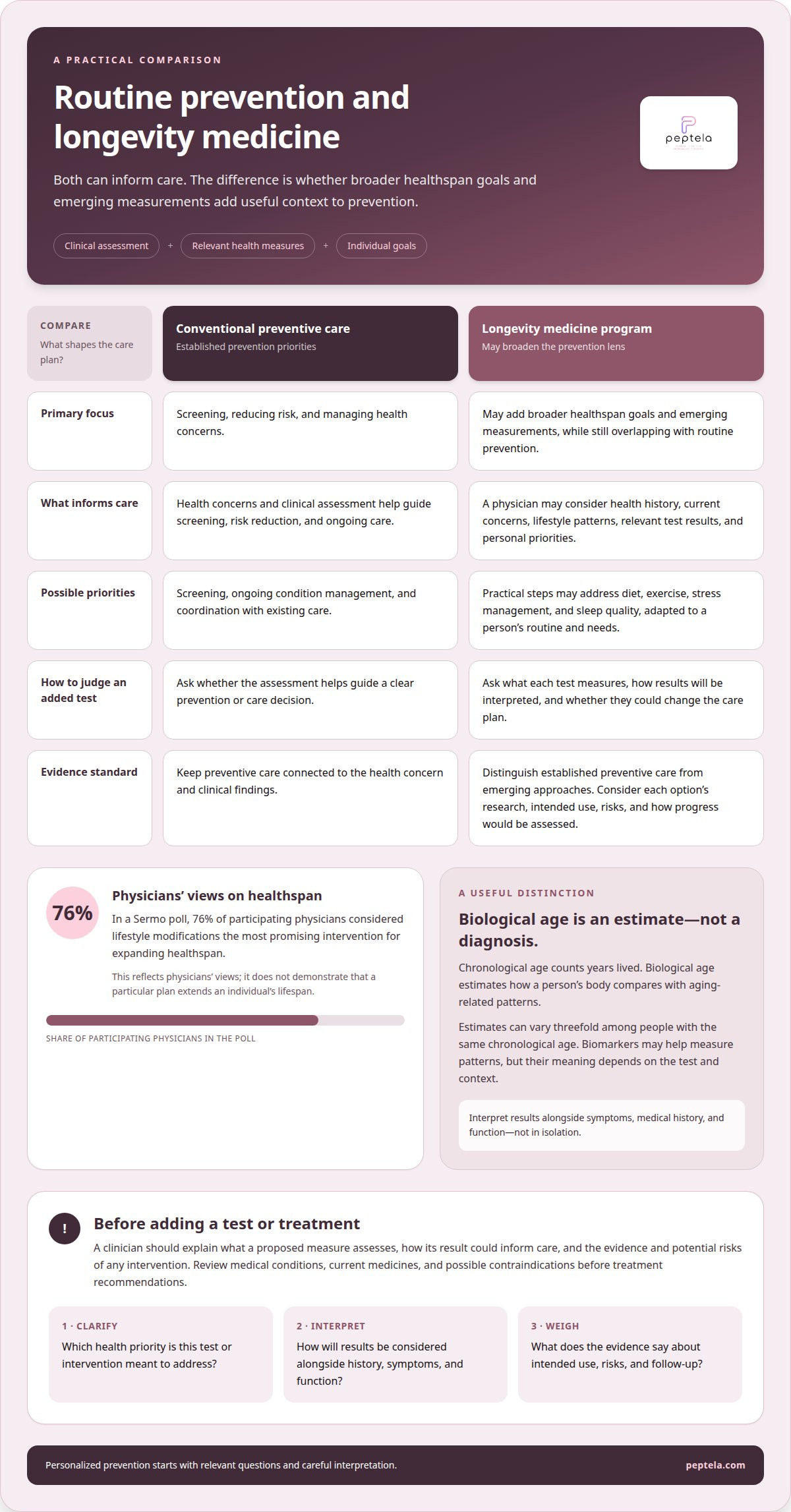
Chronological age counts years lived; biological age estimates how a person’s body compares with aging-related patterns. Estimates can vary threefold among people with the same chronological age. Two people who are 80, for example, may have different health indicators and physical function. Biomarkers can help measure patterns, but their meaning depends on the test and context. Northwestern Medicine advises against using biological age alone to determine or change treatment unless a healthcare professional advises otherwise.
How much do longevity medicine clinics and programs cost in the United States? Costs depend on the program’s scope, testing, and proposed treatments. The price is determined by what the plan includes and the clinical services involved.
What are the risks and side effects of common treatments and supplements? They vary by treatment and health history and may include side effects or interactions with medicines. Before recommending an option, a clinician should review medical conditions, current medications, and potential contraindications.
How can someone find a reputable clinic? Look for physician involvement, clear explanations of evidence and risks, and careful interpretation of test results. A responsible program explains how each result could inform care and avoids presenting a biological-age score as a diagnosis or promise.
Longevity medicine and personalized care plans
A personalized plan turns health priorities into practical steps, using clinical assessment to guide prevention. Longevity medicine isn’t simply about adding tests or treatments; it’s about deciding which actions are relevant to your health and goals.
Personalized Preventive Health Assessments
A preventive assessment may bring together health history, current concerns, lifestyle patterns, and relevant test results. A physician uses this information to identify priorities instead of treating every measurement as equally useful. For example, results may prompt a closer look at metabolic health, sleep, or cardiovascular risk. Ask how each proposed test could affect the care plan and how its results will be interpreted alongside your existing care.
Healthspan Interventions and Preventive Care
Healthspan is the number of years a person lives in good health. Personalized interventions may address diet, exercise, stress management, and sleep quality, with steps adapted to a person’s routine and needs. Preventive primary care also supports screening, ongoing condition management, and coordination with existing care. Someone with a demanding schedule, for example, might start with a realistic sleep goal and review it with a clinician.
Healthy aging develops across the life course, rather than through a single test or short program. In a Sermo poll, 76% of participating physicians considered lifestyle modifications the most promising intervention for expanding healthspan. That result reflects physicians’ views; it doesn’t demonstrate that a particular plan extends an individual’s lifespan. Sustainable habits and clinical follow-up can keep prevention connected to daily life.
Evidence for Longevity Treatments
How does this approach compare with conventional preventive care? Conventional care focuses on screening, reducing risk, and managing health concerns. A longevity medicine program may add broader healthspan goals and emerging measurements, while still overlapping with routine prevention. The practical question is whether each additional assessment or intervention informs a clear decision.
Evidence for treatments intended to extend lifespan or healthspan varies by intervention. A clinician should distinguish established preventive care from emerging approaches and explain the research, intended use, potential risks, and how progress would be assessed. Consider each proposed treatment on its own evidence and relevance to your health, not on the appeal of “optimization” alone.
Preparing to Start a Program
Before starting, write down your health priorities, diagnoses, current medicines, and supplements. Share this information during the clinical evaluation so potential interactions and contraindications can be considered. Ask which findings could change the plan, what evidence supports each recommended step, and what follow-up involves. Keep routine primary care in the picture: a new program should fit alongside it, not replace needed evaluation.
As your circumstances or priorities change, revisit whether each part of the plan still fits. A follow-up discussion can help clarify what to continue, adjust, or set aside, keeping care aligned with your needs rather than adding interventions by default.
Hormone therapy
Hormone therapy is a clinical decision, not a general aging intervention. A useful discussion connects symptoms, health history, testing, and the person’s treatment priorities.
Blood Work and Hormone Testing
Blood work can provide information about hormone levels, but results need context. Before interpreting them, a clinician considers symptoms, medical history, medicines, and the reason for testing. A laboratory value alone, for example, may not explain changes in sleep or energy. Ask which result could influence care, when testing should happen, and how results fit the broader clinical picture.
Testing is one part of patient care, not a stand-alone diagnosis or prescription. Hormone levels can vary, and the meaning of a measurement depends on the hormone assessed and the clinical question. A physician may also review other health factors that can resemble or contribute to a patient’s concerns. This helps distinguish a targeted therapy discussion from treatment based on a single number.
Menopause and Hormone Optimization
Menopause involves changes in reproductive hormones and can bring symptoms that affect daily life. Menopausal hormone therapy (MHT) may be discussed for symptoms; the decision depends on personal health factors, potential benefits, and risks. “Hormone optimization” should mean addressing a defined concern through an individualized plan, not pursuing a target level without a clinical reason.
Bioidentical hormones are described as having the same molecular structure as hormones produced in the body. The term alone does not establish that a therapy is appropriate or risk-free. Patients should discuss the specific hormone, formulation, intended use, and monitoring plan with a clinician. Compounded products also warrant careful discussion; they should not be presented as FDA-approved or superior to approved alternatives.
Every hormone therapy discussion should include possible side effects, contraindications, and relevant medical history. The appropriate evaluation depends on the proposed therapy and the person’s circumstances. For example, a clinician may consider existing conditions, current medicines, symptoms, and past treatment experiences before weighing options. Patients should understand what changes to watch for and how follow-up will guide care.
Lifestyle factors such as sleep, nutrition, and activity can also be part of care, with or without therapy. They don’t replace evaluation when symptoms need medical attention. Peptela offers clinician-guided Hormone Balance care for people exploring hormone-related options, with decisions grounded in health history and clinical assessment.
Hormone replacement therapy generally replaces hormones such as estrogen and testosterone, whose production may decline with age. This describes what the therapy is intended to replace; it does not establish that treatment is needed or suitable for a particular person. The discussion should remain tied to a defined concern and individual assessment.
Before considering a plan, patients can ask which hormone is being considered, what goal it is meant to address, and how the clinician will assess whether the approach remains appropriate. A clear conversation connects proposed treatment with symptoms, health history, potential benefits and risks, and follow-up, rather than treating age-related changes alone as a reason to pursue a target.
Weight management and GLP-1 medications
Weight management can be part of preventive care, but it isn’t a measure of health on its own. A clinical plan considers medical history, goals, daily habits, and whether medication is appropriate.
GLP-1 medications act on pathways involved in appetite and blood sugar regulation. Clinicians consider the specific medication, its intended use, health history, and other medicines before discussing treatment. A patient’s needs and response shape ongoing care. Medication is not a substitute for individualized nutrition, physical activity, sleep, or follow-up.
Weight-related care looks beyond a single measurement. A physician may assess metabolic health, relevant conditions, current medicines, eating patterns, and how weight affects daily function. For example, a patient’s plan may combine medication review with realistic nutrition and exercise goals. Monitoring helps the care team discuss changes, tolerability, and whether the approach still fits the patient’s needs.
Medication management involves more than choosing a drug. It can include reviewing contraindications, discussing possible side effects, considering interactions, and planning clinical follow-up. Patients should share their full medication and supplement list, along with relevant health conditions. Dose changes or stopping treatment call for clinical guidance, not adjustments based only on short-term progress or wellness goals.
Are longevity treatments FDA-approved, and what regulations apply in the United States? There is no single approval that covers every treatment marketed for longevity. FDA status depends on the specific product and formulation; compounded drugs should not be described as FDA-approved or superior to approved alternatives.
Evidence also needs to match the claim. Evidence about a medication’s use for a particular health indication does not, on its own, show that it extends lifespan or prevents age-related disease. A clinician should explain the intended use, known risks, and relevant evidence for the specific treatment. Patients can then weigh those details against their goals and other care options.
Age management should stay connected to a person’s health needs, not just the number of years lived. A specialized plan may consider weight-related health concerns alongside exercise, nutrition, and other clinical priorities. The aim is informed care, not a promise to slow aging. Clear goals make it easier to assess whether each part of a plan remains useful.
Before starting medication, patients can prepare a current list of prescriptions and supplements, note relevant health conditions, and identify their treatment goals. During evaluation, the clinician weighs these details, potential contraindications, and follow-up needs. This step-by-step review helps patients understand the role of medication, the alternatives, and what ongoing monitoring involves.
Dr. Scott Brandt has 15 years of clinical focus on regenerative medicine and hormone management. Lifestyle management for longevity may include changes to diet and exercise, stress management, and practices to improve sleep quality.
Cellular senescence and senolytics
Cellular senescence describes a state in which a cell stops dividing but remains biologically active. Senescent cells can release signals that influence nearby cells and tissue environments. This process has biological roles, so eliminating every senescent cell is not a straightforward goal. Research examines when these cells accumulate, which tissues they affect, and how those changes relate to tissue function.
Senolytics are treatments studied for their potential to target senescent cells. Researchers investigate whether selectively removing certain cells could affect a relevant health outcome. The questions are specific: which cells are targeted, in what context, and with what measurable effect? A change in a biomarker alone doesn’t establish improved function, longer lifespan, or better healthspan. Those outcomes need separate assessment.
Senolytic therapy typically uses intermittent dosing to clear existing senescent cells while allowing normal cellular processes to continue. This describes an approach under study, not a self-treatment schedule or general recommendation. The treatment substance, dosing approach, and monitoring all matter. Clinical evaluation should consider the person’s health history, potential risks, possible interactions, and contraindications before any treatment decision.
Biomarkers can help researchers study biological aging, but each marker answers a limited question. A focused assessment distinguishes what a test measures from what it can predict. For example, a change in a cellular marker may indicate a biological response without showing whether a person feels better or functions differently. Researchers therefore assess health outcomes separately from laboratory measurements.
Research also examines how senescent cells differ across tissues and why their effects may vary. In a Sermo poll, senolytics received 11% of participating physicians’ votes as a promising intervention for expanding healthspan. The poll reflects physician opinions, not evidence that treatment extends lifespan or improves healthspan. That distinction helps separate interest in a research area from demonstrated clinical outcomes.
Before considering a senolytic, discuss the proposed treatment’s evidence, intended outcome, possible side effects, interactions, and monitoring plan with a qualified clinician. Clarify which findings would guide the decision and how progress would be assessed. Also consider whether established care better addresses the health concern. Research interest alone does not establish that a treatment is appropriate for an individual.
Peptela
Peptela provides personalized, clinician-guided care for people considering options related to hormones, weight management, or longevity goals. Its offerings include Hormone Balance, Tirzepatide Injections, and Peptides. Each option calls for an individual review of health history, goals, potential risks, and relevant medical factors. These treatments are not interchangeable, and an option that suits one person may not suit another.
Peptela’s care plans offer a way to consider these options in relation to individual priorities. Treatment decisions should account for potential risks and contraindications, alongside the person’s health history and clinical needs.
Choose your next step with clarity
Your next step doesn’t need to be a sweeping plan. Start with the health priority that matters most to you, then discuss how it fits your medical history, current care, and personal goals. That keeps longevity medicine grounded in decisions you can understand and revisit with clinical guidance.
Peptela offers Tirzepatide Injections, NAD+, and Hormone Balance. These offerings address different care interests, and a clinician-guided discussion can help clarify which options may be relevant to your situation. Treatment decisions should account for potential risks and contraindications, not just expected benefits.
If you’re ready to talk through your goals and possible next steps, contact Peptela to discuss longevity care. You can take an informed, thoughtful approach to your health, one decision at a time.
Frequently Asked Questions
Why is Age Management So Important?
Age management can help people address health priorities as their needs change, with the aim of supporting function and quality of life. It isn’t about stopping aging or chasing a biological-age score. For example, someone concerned about maintaining strength may discuss activity, nutrition, sleep, and relevant preventive care with a clinician, then revisit those priorities as health and circumstances evolve.
What is longevity medicine and what treatments does it include?
Longevity medicine combines preventive care, lifestyle measures, and selected therapies based on clinical needs. Options discussed in this article include hormone-related care, GLP-1 medications for weight management, and investigational approaches such as senolytics. Peptela offers Tirzepatide Injections, NAD+, and Hormone Balance. Prescription products require an online evaluation with a licensed medical professional who will determine if a prescription is appropriate. The above statements have not been evaluated by the Food and Drug Administration. These products are not intended to diagnose, treat, cure, or prevent any disease.
Which longevity medicine tests and biomarkers are clinically validated?
There isn’t one biological-age test that can establish a person’s overall health or direct treatment. A test’s clinical value depends on what it measures and the question it helps answer. Northwestern Medicine advises against using biological age alone to determine or alter medical treatment unless a healthcare professional advises otherwise. Ask how a proposed result will inform care, rather than treating a score as a diagnosis.
Which lifestyle interventions have the strongest evidence for healthy aging?
Lifestyle care can address movement, diet, stress management, and sleep quality. A Sermo poll found that 76% of participating physicians considered lifestyle modifications the most promising intervention for expanding healthspan; this reflects physician views, not proof that one routine extends lifespan. A practical starting point is to identify a change that fits your daily life, such as building regular movement into the week, then discuss progress with a clinician.


