

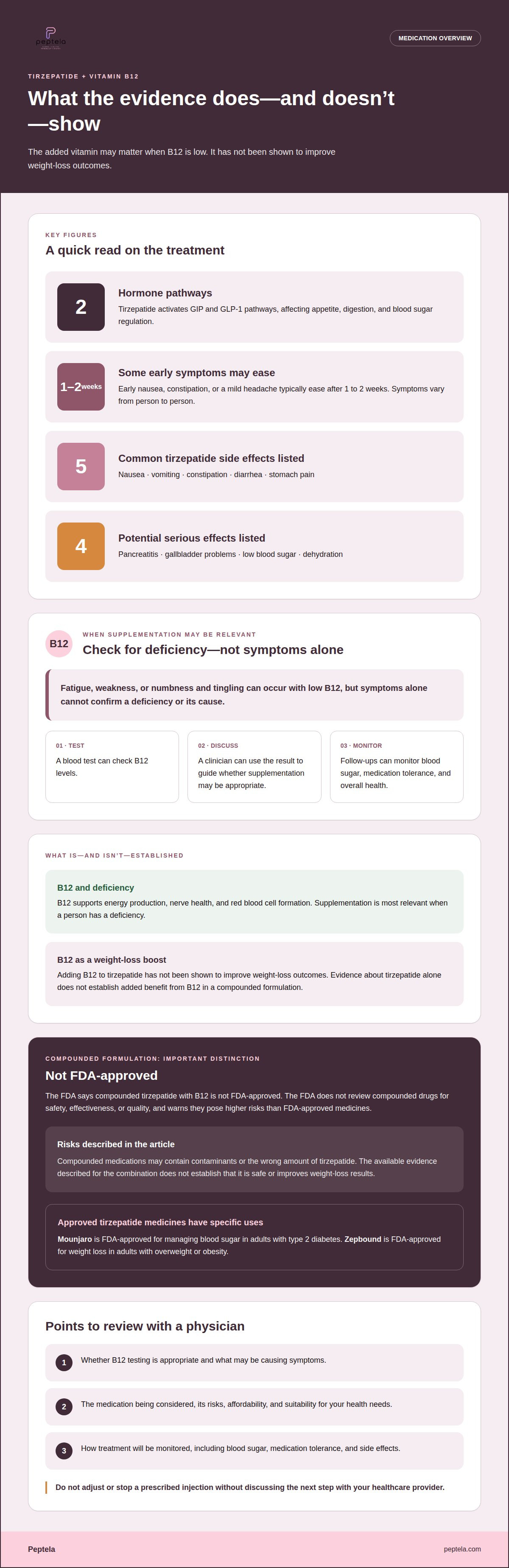
B12 isn’t automatically needed with tirzepatide. The potential benefits of compounded tirzepatide with vitamin B12 are most relevant when someone has a B12 deficiency; adding B12 hasn’t been shown to improve weight-loss outcomes. The U.S. Food and Drug Administration says compounded tirzepatide with vitamin B12 isn’t FDA-approved.
It makes sense to wonder whether the added vitamin could address fatigue or other signs of low B12. But symptoms alone can’t confirm a deficiency, and a blood test can help determine whether B12 supplementation may be appropriate.
This article explains why B12 may be included, what supplementation may mean for someone with a deficiency, and why it isn’t a proven weight-loss boost. You’ll also learn what to discuss with a physician about testing, treatment options, and the risks of compounded medication, so you can make a clear, informed decision about your care.
Key Takeaways
- B12 may help address deficiency-related symptoms, but adding it to tirzepatide hasn’t been shown to improve weight-loss outcomes.
- A blood test can help identify low B12 levels; symptoms alone don’t confirm a deficiency.
- Compounded tirzepatide with B12 isn’t FDA-approved, and compounded medications can carry risks.
- Learn which side effects and treatment considerations to discuss with a physician before making changes.
- Explore why the right approach to B12 depends on whether a deficiency is present and what may be causing it.
What Are Tirzepatide + B12 Weight Loss Injections?
These injections combine tirzepatide with vitamin B12, but the added vitamin doesn’t establish a separate weight-loss effect. Understanding what tirzepatide does, and what remains uncertain about the combination, can help you discuss treatment choices with a clinician.
Effects on Blood Sugar and Weight
Tirzepatide activates GIP and GLP-1 hormone pathways, affecting appetite, digestion, and blood sugar regulation. It can improve insulin sensitivity and blood sugar control while helping reduce appetite and food cravings.
These effects can support weight loss, but they don’t make outcomes identical for everyone. B12 supports energy production, nerve health, and red blood cell formation; adding it doesn’t establish that tirzepatide works better. Appetite changes may become noticeable within days, while the overall response depends on the person and treatment.
Treatment Safety and Unknown Risks
The U.S. Food and Drug Administration says compounded tirzepatide with B12 isn’t FDA-approved. The FDA doesn’t review compounded drugs for safety, effectiveness, or quality, and warns that they pose higher risks than FDA-approved medicines.
Compounded medications may contain contaminants or the wrong amount of tirzepatide. There’s no evidence that combining tirzepatide and B12 improves weight-loss outcomes or establishes the combination’s safety. Common tirzepatide side effects include nausea, vomiting, constipation, diarrhea, and stomach pain. Potential serious effects include pancreatitis, gallbladder problems, low blood sugar, and dehydration.
Clinical Evidence for Compounded Tirzepatide With B12
Clinical evidence for tirzepatide doesn’t automatically show that a compounded tirzepatide-B12 combination has the same effects. The available evidence described for this combination doesn’t establish that it is safe or improves weight-loss results.
That distinction matters: evidence about tirzepatide alone cannot confirm the added value of B12 in a compounded formulation. The potential benefits of compounded tirzepatide with vitamin B12 are therefore not established as a combined weight-loss effect. If B12 deficiency is suspected, testing can help determine whether supplementation is appropriate.
B12 is involved in energy production, but supplementation is most relevant when a person has a deficiency. Fatigue, weakness, or numbness and tingling can occur with low B12, but symptoms alone don’t confirm the cause. A blood test can check B12 levels, giving a clinician information to guide next steps rather than assuming the added vitamin is needed.
Tirzepatide can also cause decreased appetite, heartburn, fatigue, or dizziness. Early nausea, constipation, or a mild headache typically ease after 1 to 2 weeks, though symptoms vary. Regular follow-ups with a healthcare provider allow monitoring of blood sugar, medication tolerance, and overall health during treatment.
Advice to consult a physician about treatment alternatives
A physician can help you weigh a compounded injection against approved options, considering your health needs and treatment goals. Discuss the product, its risks, affordability, and how your health will be monitored.
Compounded Treatment and Approved Alternatives
Compounded tirzepatide with B12 combines tirzepatide and vitamin B12, while Zepbound and Mounjaro are FDA-approved tirzepatide medicines. Mounjaro is approved for managing blood sugar in adults with type 2 diabetes; Zepbound is approved for weight loss in adults with overweight or obesity.
That distinction matters: compounded products aren’t FDA-approved, and evidence for the approved medicines doesn’t establish that adding B12 improves results. Eli Lilly advises people using compounded tirzepatide-B12 products to contact their physicians about advice and alternative treatments. Ask how each option fits your diagnosis, medications, and goals for blood sugar or body weight.
FDA Approval, Legality, and Compounding
FDA approval and whether a medicine may be compounded are separate issues. According to the U.S. Food and Drug Administration, compounded tirzepatide with B12 isn’t FDA-approved. FDA and a federal court confirmed that mass compounding of tirzepatide must stop; compounders can no longer legally make copycat GLP-1 drugs now that the drugs are no longer in short supply.
So, a compounded version isn’t an FDA-approved substitute for Zepbound or Mounjaro. The circumstances for compounding matter, and a physician can explain how current rules relate to your treatment. Don’t assume a combined injection has the same review of safety, effectiveness, and quality as an approved medicine.
Prepare for a focused consultation by noting why you’re considering treatment, what medication you use, and any side effects you’ve experienced. If you take tirzepatide for diabetes, bring recent blood sugar information when available. Mention fatigue or other symptoms that prompted interest in B12; symptoms alone can’t establish a deficiency, and a blood test can assess B12 levels.
Affordability can also shape a treatment decision. Don’t assume a compounded injection will cost less overall. Discuss potential out-of-pocket expenses and compare them with your medical needs and the treatment’s suitability, rather than relying on an advertised price to determine whether a formulation is right for you.
During treatment, regular follow-ups give your healthcare provider a chance to monitor blood sugar, medication tolerance, and overall health. Report side effects and changes in appetite or weight, and discuss whether the plan should continue or change. Don’t adjust or stop a prescribed injection without discussing the next step with your healthcare provider.
Advice for people using compounded GLP-1 medications
If you use compounded tirzepatide, keep the prescriber involved in decisions about the product, dose, and follow-up. A clear plan helps you track treatment and respond promptly to side effects or changes in blood sugar.
Compounded tirzepatide with vitamin B12 is not FDA-approved, according to the U.S. Food and Drug Administration. Compounded medications can contain contaminants or the wrong amount of tirzepatide. Ask the prescribing clinician to identify the dispensing pharmacy and explain how the formulation, label, and instructions match your prescription. You can also ask the pharmacy directly about its licensing and who to contact with medication questions.
Before using an injection, compare the label with the instructions you received. If the medication name, concentration, or directions differ, pause and contact the prescribing clinician or dispensing pharmacist before injecting. Don’t estimate a dose or change the amount based on someone else’s instructions. Compounded products may have different preparation and directions, so follow your own prescription.
Follow the prescribed schedule. The treatment guidance in this article advises giving tirzepatide/B12 injections on the same day each week, starting at a low dose, and increasing gradually to limit the likelihood and severity of side effects. Your prescriber determines the dose and adjustment schedule based on your response and tolerance. Don’t accelerate an increase because appetite or weight changes seem slow.
Keep a simple record of injection days, dose instructions, symptoms, appetite, and weight changes. For example, note nausea or constipation after an injection and share the pattern at follow-up. Reported side effects include nausea, vomiting, diarrhea, decreased appetite, and constipation. Seek prompt medical guidance for concerning symptoms, including severe stomach pain or signs of dehydration.
Tell your clinician about diabetes, insulin use, other medications, and relevant health conditions before treatment. Tirzepatide can affect blood sugar, so follow the monitoring plan provided for your situation. Regular follow-ups let a healthcare provider review blood sugar, medication tolerance, and overall health, then adjust care as appropriate.
Food and activity can support a broader care plan. Guidance may include nutrient-rich, high-protein foods and limiting processed carbohydrates and sugars. Light to moderate activity might include walking, strength training, or yoga. These steps don’t replace prescribed care. Discuss dietary changes with your clinician, especially if diabetes or another condition affects your nutritional needs.
If you’re unsure about a pharmacy, dose, or injection instruction, contact the prescribing clinician or dispensing pharmacist before your next dose. Bring the medication packaging and your symptom notes to the conversation. These details can help them address your questions without relying on assumptions about the product or its effects.
Compounded tirzepatide formulations containing B12
A compounded formulation combines tirzepatide with vitamin B12 in one medication. The ingredients have different roles: tirzepatide acts through GIP and GLP-1 hormone pathways, while B12 supports red blood cell formation, nerve health, and energy production. Including both ingredients does not establish that B12 adds weight-loss effects.
The reason to add B12 matters. A patient with a confirmed deficiency may benefit from B12 supplementation for symptoms such as fatigue. For someone without a deficiency, B12 supplementation may not make much difference to body mass index or body fat. The combination itself has no evidence showing improved weight-loss outcomes.
Fatigue alone doesn’t identify low B12 levels. Other possible deficiency symptoms include weakness, numbness or tingling in the hands or feet, and changes in memory or concentration. A blood test can check B12 levels and help a clinician decide whether supplementation may be appropriate. This separates treating a documented deficiency from adding B12 without evidence of need.
Some factors can raise the likelihood of low B12. These include following a vegan or vegetarian diet, being over age 50, using metformin or proton pump inhibitors long term, and having a gastrointestinal disorder. These factors don’t confirm a deficiency; they give a clinician context when considering symptoms and test results.
B12 is water-soluble, and excess amounts are excreted naturally, but that fact doesn’t establish the safety of a combined compounded injection. The U.S. Food and Drug Administration does not review compounded drugs for safety, effectiveness, or quality. Compounded tirzepatide with B12 is not FDA-approved, and compounded medicines may contain contaminants or the wrong amount of tirzepatide.
Formulation details matter because a combined product contains both an active medication and an added vitamin. Don’t infer the amount of either ingredient from the phrase “with B12.” Follow the specific prescription and instructions from the prescriber and dispensing pharmacy. If the label or directions differ from what you were told, resolve the discrepancy before using the injection.
B12 injections are available by prescription, and the right approach depends on the patient’s levels and clinical context. If testing shows low B12, discuss supplementation options separately from decisions about tirzepatide. If levels are not low, adding B12 should not be treated as a proven way to increase energy, change digestion, or improve weight loss.
Potential benefits for people with B12 deficiency
For someone with a confirmed B12 deficiency, supplementation may improve related symptoms such as fatigue. That potential benefit is tied to addressing low B12, not to evidence that combining B12 with tirzepatide enhances weight loss. Evidence does not establish an added weight-loss effect from the combined formulation.
A clinical assessment helps distinguish a deficiency from symptoms with other possible causes. A provider can review test results, health history, and current prescriptions before recommending supplementation. This keeps the decision about B12 grounded in the individual’s needs rather than assuming a combined injection is appropriate.
Blood testing can assess B12 levels, and methylmalonic acid testing may help detect early deficiency. A provider can interpret results alongside symptoms and medical history, then consider whether supplementation is suitable. The results also give the conversation a clear starting point.
The reason for low B12 can shape the care plan. Eating patterns, long-term use of certain medications, and gastrointestinal disorders can affect deficiency risk. A provider can weigh these factors when discussing next steps, rather than treating the vitamin as an automatic addition to weight-loss medication.
B12 supplementation and tirzepatide have distinct purposes. If fatigue improves after prescribed B12 supplementation, that alone doesn’t show the vitamin changed tirzepatide’s effects on appetite or body weight. Keep these outcomes separate when discussing your response to treatment.
Route and dosing should follow an individual prescription, not a general online schedule. A provider can consider test results and absorption concerns when discussing oral supplements or B12 injections. Don’t add an injection or change prescribed medication without discussing it with the clinician managing your care.
Track changes that matter to you, such as fatigue or weakness, and share them at follow-up. If symptoms persist after starting prescribed B12, tell your provider rather than changing the dose yourself. A clinical review can help determine whether the plan needs reassessment.
For some users with a confirmed B12 deficiency, prescribed supplementation may help address symptoms related to the deficiency. This is distinct from evidence of any added weight-loss benefit with tirzepatide, which the available evidence does not establish.
Peptela: Tirzepatide Injections
Peptela offers Tirzepatide Injections within personalized, clinician-guided care. If you’re weighing treatment, consider how your goals and health history fit into the decision. Any concern about B12 deficiency can be discussed separately from whether tirzepatide is appropriate for you.
A clinician-guided conversation can clarify your options and what follow-up may involve. Sharing your questions and relevant health information gives the care team context to discuss a plan suited to your needs.
Choose a next step that fits your health goals
Let your next conversation focus on what you want care to address and what information could guide that choice. Separate questions about B12 from broader treatment goals, so each decision reflects your individual needs.
Before deciding what to discuss with a clinician, consider your priorities, health history, and questions. A thoughtful, personalized approach can help you move forward with greater clarity.
Your care decisions can be deliberate and personal, guided by the information that matters to you.
Frequently Asked Questions
Can I take tirzepatide without B12?
Yes, B12 isn’t automatically required with tirzepatide. The two ingredients have different roles, and adding B12 hasn’t been shown to improve tirzepatide’s weight-loss effects. If you have fatigue, weakness, or tingling, discuss B12 testing with a healthcare professional rather than assuming you need a combined injection. A test can help guide whether B12 supplementation belongs in your care plan.
Compounded Tirzepatide Plus Vitamin B12 May Contain ‘Impurities’ - What Does That Mean?
“Impurities” means unwanted substances in a medicine, while a compounded product may also contain a different amount of an ingredient than intended. The U.S. Food and Drug Administration doesn’t review compounded drugs for safety, effectiveness, or quality. A preprint on impurities in compounded tirzepatide with B12 was dated March 10, 2026; that date alone doesn’t establish the findings or risk of a particular vial.
What Are the Risks of Combining Tirzepatide with Vitamin B12 Injections?
Available information doesn’t establish that combining tirzepatide and B12 injections is safe or improves weight-loss outcomes. The U.S. Food and Drug Administration says compounded tirzepatide with B12 isn’t FDA-approved. Tell your prescriber about all injections and medicines you use, including insulin, and discuss your health history before treatment. A clinician can assess risks, monitor treatment, and help determine whether B12 is appropriate for you.
What Are the Risks?
No one can infer safety from the presence of B12. Compounded medicines aren’t reviewed by the U.S. Food and Drug Administration for safety, effectiveness, or quality, and compounded products may contain contaminants or the wrong amount of tirzepatide. Tirzepatide can also cause side effects, including nausea, vomiting, diarrhea, constipation, and stomach pain. Discuss personal risks, other medications, and monitoring with a healthcare professional.
Is There a Link Between Tirzepatide and Vitamin B12 Levels?
There’s no strong evidence that tirzepatide directly causes vitamin B12 deficiency. Still, low B12 can occur for other reasons, including some gastrointestinal conditions or long-term use of metformin or proton pump inhibitors. If symptoms such as weakness or numbness concern you, ask a healthcare professional whether testing makes sense. Symptoms alone can’t identify low B12 or its cause.
What Results Can You Expect?
Results vary, and adding B12 hasn’t been shown to improve weight-loss outcomes from tirzepatide. Tirzepatide can reduce appetite and affect blood sugar, but an individual response depends on factors such as treatment tolerance and health context. If you’re tracking progress, discuss changes in appetite, weight, and side effects at follow-up. Don’t use a promised weekly result to decide whether treatment is working.
What are the side effects of tirzepatide compounded with B12?
Reported tirzepatide side effects include nausea, vomiting, constipation, diarrhea, decreased appetite, and stomach pain. More serious possible effects include pancreatitis, gallbladder problems, low blood sugar, and dehydration. The safety of the combined compounded product has not been established, so its full risk profile is uncertain. Tell your healthcare provider about symptoms, especially severe or persistent ones, and follow their guidance on next steps.
What is compounded tirzepatide with vitamin B12, and how is it formulated?
It’s a compounded medication made by combining tirzepatide with vitamin B12 in a formulation prepared by a compounding pharmacy. The specific ingredients and amounts depend on the prescription and product. It isn’t FDA-approved, and the U.S. Food and Drug Administration doesn’t review compounded drugs for safety, effectiveness, or quality. Read the dispensing instructions carefully and ask the prescriber or pharmacist about anything unclear.


