

Hair shedding during medical weight loss is often temporary, and regrowth may follow as your weight and nutritional status stabilize. Hair loss typically normalizes about six to nine months after weight stabilizes and nutritional status improves. Understanding how to prevent hair thinning during medical weight loss starts with supporting your body, not blaming yourself or stopping treatment on your own.
Noticing more hair in your brush while working toward better health can feel unsettling. Rapid weight loss, changes in eating patterns, and nutrient deficiencies can contribute to shedding, so the right response depends on what is causing it.
This article explains why shedding can happen, how to care for your hair gently, and what recovery may look like as your body adjusts. You’ll learn why adequate nutrition matters, when sudden or persistent hair loss calls for medical evaluation, and how to approach supplements without guessing. Thoughtful support and realistic expectations can help you protect your overall well-being while giving your hair time to recover.
Key Takeaways
- Hair shedding during weight loss can be linked to rapid change, stress, or inadequate nutrition; identifying the trigger helps guide next steps.
- Prioritize adequate calories and protein, and discuss possible nutrient testing with a healthcare provider rather than guessing which supplements to take.
- Reduce heat styling, harsh chemical treatments, and tight hairstyles, and detangle gently to limit extra strain on shedding hair.
- Hair loss often normalizes six to nine months after weight stabilizes and nutritional status improves, though recovery timelines vary.
- Seek medical evaluation for sudden or extreme shedding, bald spots, scalp discomfort, or hair loss that continues after underlying triggers are addressed.
Can you regrow your hair after losing it from taking weight loss medications?
Yes. Hair often regrows when weight-loss-related shedding is temporary and its triggers improve. If shedding continues six to nine months after those triggers have been addressed, see a dermatologist for evaluation.
Nutritional and Medical Causes
Hair loss can follow physical stress, inadequate nutrition, or an underlying medical issue. Rapid weight loss may change eating patterns, and too little iron or protein can contribute to shedding. Hormonal changes, including pregnancy, childbirth, and menopause, can also affect hair. Identifying the likely cause matters because nutrition support alone may not address thyroid problems or other medical factors.
Testing Nutrient and Thyroid Levels
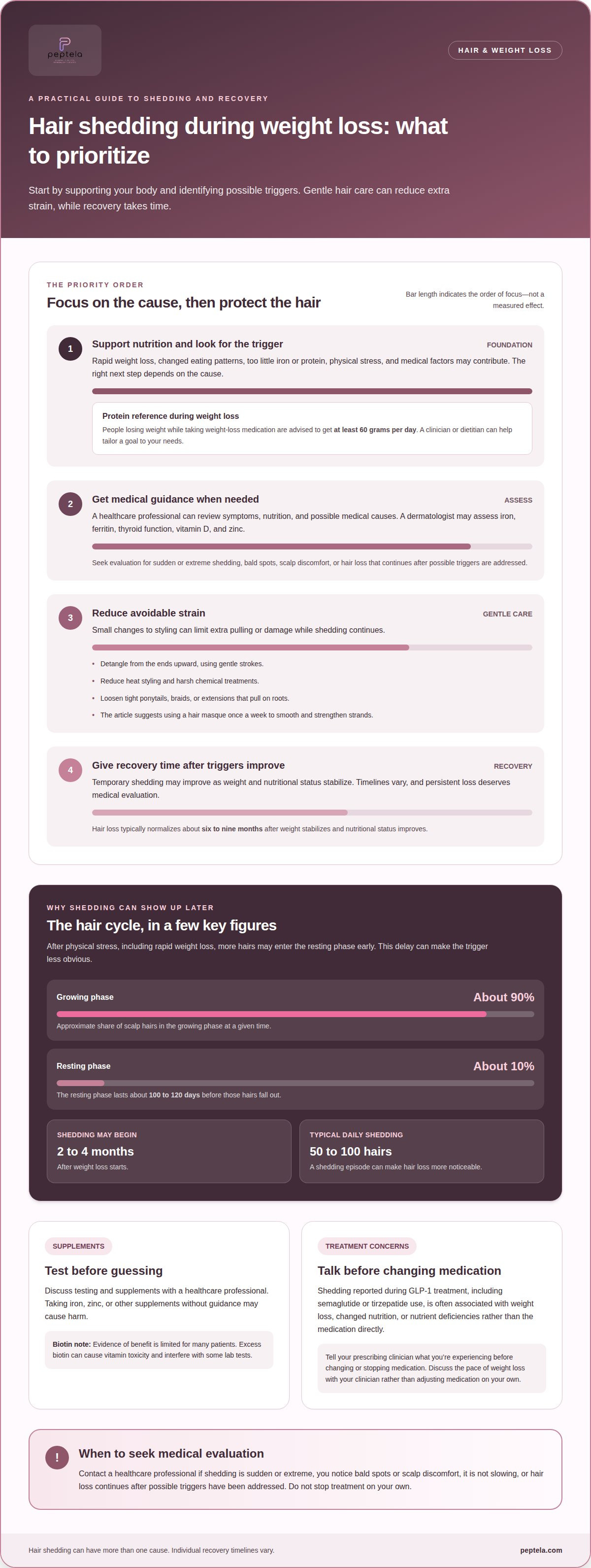
Testing can help identify nutrient deficiencies or thyroid changes that may contribute to shedding. During an evaluation, a dermatologist may assess iron, ferritin, thyroid function, vitamin D, and zinc. Ferritin reflects stored iron, so it may be checked if shedding continues. Rather than taking supplements based on guesswork, discuss which tests suit your symptoms and health history. The results can guide follow-up care.
Protein Intake During Weight Loss
Adequate protein supplies building blocks the body uses to maintain tissues, including hair. People losing weight while taking weight-loss medication are advised to get at least 60 grams per day. Including a protein source at every meal can help make intake more consistent, especially when appetite or meal size changes. A clinician or dietitian can help tailor a protein goal to your needs and overall nutrition.
Follow-up matters when weight loss changes what you can eat. Attend routine appointments and take prescribed supplements as directed, so your care team can monitor your nutritional status. If shedding feels extreme, is not slowing, or raises concern about another cause, discuss it with a healthcare provider. They can review your symptoms, nutrition, and test results together.
Recovery takes time after a trigger improves. Hair loss typically normalizes about six to nine months after weight stabilizes and nutritional status improves. Managing stress and correcting identified deficiencies may support recovery, but do not add iron, zinc, or other supplements without guidance. Excess supplementation can cause harm, and biotin may interfere with some lab tests. Sudden shedding, bald spots, or scalp discomfort also call for medical evaluation.
Gentle hair care during shedding
Hair shedding after rapid weight loss may begin two to four months after weight loss starts. Shedding reported during GLP-1 treatment, including semaglutide or tirzepatide use, is often associated with weight loss, changed nutrition, or nutrient deficiencies rather than the medication directly. Knowing how to prevent hair thinning during medical weight loss starts with understanding these possible triggers.
Side effects during weight-loss treatment do not automatically mean you need to stop. Tell your prescribing clinician what you’re experiencing before changing or stopping medication. They can assess your symptoms and discuss your treatment plan, including concerns about shedding.
A hair’s growth cycle helps explain the delay. About 90% of scalp hairs are in the growing phase at any given time, while about 10% are in the resting phase. After physical stress, including rapid weight loss, more hairs may enter that resting phase early. The resting phase lasts about 100 to 120 days before those hairs fall out, so shedding can appear well after the initial change. This timing can make the cause less obvious.
Some daily shedding is part of the cycle. About 50 to 100 scalp hairs per day is typical; a shedding episode can make hair loss more noticeable. Try these lower-stress care habits:
- Detangle from the ends upward, using gentle strokes.
- Reduce heat styling and harsh chemical treatments while shedding continues.
- Loosen tight ponytails, braids, or extensions that pull on the roots.
- Use a hair masque once a week to smooth and strengthen strands.
The pace of weight loss matters, too. Your individual plan should account for your health and treatment. Discuss the pace with your clinician rather than adjusting medication on your own.
For practical guidance on how to prevent hair thinning during medical weight loss, focus on gentle styling and discuss treatment concerns with your clinician. These steps can reduce avoidable strain, but they cannot identify every underlying cause. If shedding feels extreme, is not slowing, or comes with scalp symptoms, seek medical evaluation to assess nutrition, weight changes, or another condition.
Hair regrowth after weight stabilization
Hair often regrows when temporary shedding triggers improve. Hair loss typically normalizes about six to nine months after weight stabilizes and nutritional status improves.
Biotin and Hair Regrowth
Biotin is often marketed as a hair-supporting vitamin, but evidence of benefit is limited for many patients. Taking supplements without identifying a deficiency may not address the cause of hair loss. Excess biotin can cause vitamin toxicity and interfere with some lab tests. Ask a healthcare provider about testing before adding biotin, especially if you have blood work planned.
Expected Regrowth and Its Timeline
Regrowth means new hair begins growing after shedding slows and physical stress improves. Noticeable regrowth may begin about six months after nutrition and overall health stabilize. Some people find their hair looks fuller within six months to a year. These are general timelines, not a day-by-day forecast; the underlying trigger and nutritional recovery affect the pace.
Nutrition remains important after weight loss slows. Adequate calories and protein support the body as it adjusts, while iron or other nutrient deficiencies may need evaluation. If shedding persists, a healthcare provider may consider testing iron, ferritin, thyroid function, vitamin D, or zinc. Addressing an identified cause is more useful than adding supplements without knowing what is low.
Over-the-counter minoxidil at 2% or 5% is a treatment option for some types of hair loss, but its effects on telogen effluvium are uncertain. Discuss its potential benefits and risks with a healthcare provider before using it. It does not replace evaluation for a deficiency or another medical cause.
Track shedding and regrowth over time rather than judging progress from one wash or styling session. If shedding continues beyond six to nine months after the triggers are corrected, see a dermatologist for evaluation. Persistent loss can have causes beyond weight change, and an assessment can help distinguish temporary shedding from another pattern of hair loss.
Think of recovery as gradual, not as a sudden change. Hair recovery often takes a few months after the underlying problem is addressed, and many people experiencing shedding after weight loss find their hair looks noticeably fuller again within about six months to a year. These timeframes describe a broad course, not a promise that everyone will see the same result at the same point. A fuller appearance can signal improvement, although the pace varies from person to person.
Evidence for low-level laser therapy for hair loss is limited. This is not a guaranteed route to recovery or proof that it addresses the reason shedding began. If you’re considering this approach, discuss the evidence and whether it suits your situation with a healthcare provider. Keeping expectations realistic and focusing on whether the underlying problem has been addressed can help put changes in perspective. Slower progress does not mean recovery is impossible.
Why do weight loss drugs cause rapid hair loss?
Hair shedding reported during weight-loss treatment does not, by itself, show that medication directly caused it. Weight change, nutrition, surgery, and other health factors can overlap, so the timeline and clinical context matter.
Telogen Effluvium During Rapid Weight Loss
Telogen effluvium is one possible diagnosis when shedding follows physical stress, such as rapid weight loss. The term describes a pattern of shedding, not proof of a single cause. A clinician may consider how quickly weight changed, whether eating patterns shifted, and whether another health event occurred. These details help distinguish a possible treatment association from other explanations.
Shedding can continue while weight loss is active. That ongoing pattern makes it useful to consider whether the body is still adjusting to changes in intake or weight, rather than judging cause from the medication start date alone. People using GLP-1 medication should raise extreme or persistent shedding with a healthcare provider, especially when it does not seem to be slowing.
Telogen Effluvium After Weight-Loss Surgery
After weight-loss surgery, hair changes may have a nutritional contribution. Shedding that begins more than six months after surgery may point to nutrition as a factor, and hair loss continuing more than one year after surgery may also indicate nutritional involvement. These time markers are reasons to look more closely, not a diagnosis on their own.
Post-surgical follow-up can help put hair changes in context with eating and recovery. Tell your care team when shedding began and whether it has continued, and discuss how your nutritional status is being monitored. This is especially relevant if your intake has changed or you are concerned about meeting nutritional needs after surgery.
Medication use is only one part of an assessment. A clinician may also consider recent illness, emotional stress, hormonal changes, and other health conditions. Pregnancy, childbirth, and menopause, for example, can contribute to hair loss independently of weight treatment. Sharing these events and when they occurred can help avoid attributing every episode of shedding to a weight-loss drug.
If shedding feels extreme, continues without easing, or comes with bald spots or scalp discomfort, seek medical evaluation. A clinician can assess whether the pattern fits telogen effluvium or suggests another cause. Do not stop or change prescribed medication solely because shedding began; discuss your concerns and treatment plan with the prescribing clinician.
Addressing underlying causes of hair loss
Start by mapping when shedding began against changes in your health and treatment. Record when weight loss started, when you noticed hair changes, and whether stress, illness, or a major life event occurred around that time. This timeline gives a clinician useful context for assessing possible causes instead of assuming weight loss explains every change.
Managing stress is one way to support overall well-being during treatment. Choose a practical routine you can maintain, such as a brief walk, a regular bedtime, or a quiet break during a demanding day. These habits do not identify the cause of hair loss, but they can help address stress as one possible contributor.
Hair loss patterns also provide useful context. Note whether thinning is spread across your scalp or concentrated in a particular area, and whether it is steady or comes in waves. Share these observations, your health history, and your current medication list during a medical evaluation. This helps the clinician consider causes beyond weight change.
Keep routine follow-up appointments during obesity treatment. Use them to discuss changes in appetite, eating patterns, weight, and hair, rather than waiting until several concerns build up. If your clinician has prescribed supplements, follow the instructions and bring the product details to appointments. Ongoing review can help connect changes in nutritional status with your overall treatment plan.
Hair concerns can affect how you feel day to day. If repeatedly checking your hair increases stress, use a simple tracking method, such as a brief weekly note, instead of counting every strand. A consistent record can show whether the pattern is changing and give you a clearer account to share at your next appointment.
Understanding how to prevent hair thinning during medical weight loss means looking at the whole picture, not just one suspected trigger. Bring your timeline and observations to a clinician, keep planned follow-up appointments, and discuss changes before adjusting treatment. This can help identify which factors deserve attention and shape a response around your individual health needs.
Peptela
Peptela provides personalized, clinician-guided care, including Tirzepatide Injections, an option relevant to medical weight management. Hair shedding can have several causes, so weight-loss treatment should not be presented as a hair-loss treatment or a way to guarantee regrowth.
If you’re considering weight-loss care or already taking medication, it may be worth discussing how treatment, changes in food intake, and shedding relate. Peptela’s fully in-house care team, including in-house licensed clinicians, can guide conversations about its offerings and personalized plans. This is separate from evaluating hair loss itself: a dermatologist or other appropriate healthcare professional can assess persistent shedding, scalp symptoms, or possible nutrient and thyroid issues.
Personalized care matters because weight-loss plans and health histories differ. A discussion may consider your goals, current treatment, and relevant health factors before considering whether an offering fits. Tirzepatide Injections relate to weight management, while NAD+, Hormone Balance, and Peptides are other Peptela offerings. Their mention here does not mean they prevent hair shedding or promote hair regrowth.
Share the timing of weight changes and shedding, any notable changes in eating, and the supplements you take during a clinical discussion. These details can help frame questions about treatment and overall care. If you have sudden shedding, bald spots, or scalp itching, burning, tenderness, or pain, seek medical evaluation rather than relying on a weight-management plan to address those symptoms.
Peptela’s personalized plans are guided by an in-house care team with 199+ years of combined clinical experience. Clinical guidance can help you understand how available offerings relate to your broader goals, while decisions about hair loss still depend on its underlying cause. Treatment choice also requires consideration of relevant risks, contraindications, and your medical history.
If you’d like to discuss whether Peptela’s offerings fit your weight-management goals, contact Peptela at your convenience.
Frequently Asked Questions
Will My Hair Grow Back?
It can, but regrowth depends on what caused the hair loss. A useful way to track change is to take occasional photos in similar lighting and from the same angles. This gives you a clearer view over time than checking your hair repeatedly from day to day.
Does Rapid Weight Loss Make It Worse?
A rapid pace of weight loss can contribute to increased shedding, so discuss your progress with the clinician overseeing your treatment. Mention changes in appetite or difficulty maintaining your eating plan. Do not adjust prescribed medication on your own; your clinician can review your goals and treatment approach in light of your broader health.
When should someone see a dermatologist for their hair loss?
A dermatologist can assess persistent or unexplained hair loss and distinguish different patterns. During an examination, they may perform a pull test, gently pulling several dozen hairs to assess shedding. Before the visit, write down when you first noticed changes, the medications you take, and any family history of hair loss.
When Does Shedding Usually Start?
There is no single start date that applies to everyone. The gap between a change in weight or eating and noticeable shedding can make the connection easy to miss. Keep a simple record of when treatment began, when your eating pattern changed, and when you first noticed extra hair in your brush or shower.
When Should You Seek Care for Hair Loss?
Arrange an evaluation if hair loss concerns you, keeps changing, or does not fit the pattern you expected. Bring a current medication and supplement list, along with notes about recent health changes. These details help a clinician consider the full picture rather than focusing on weight treatment alone.
When should I call the doctor?
Contact the clinician managing your treatment if you are unsure about continuing medication or notice a concerning change. Explain what changed and when it began. Do not make medication changes based only on hair shedding; your clinician can review treatment decisions alongside your symptoms and health history.
Why Does Hair Shedding Happen with Obesity Treatment?
Hair shedding reported during obesity treatment does not establish that the medication itself caused it. The timing of treatment, changes in weight or eating, and other health events can all matter. Sharing those details with your clinician can help clarify whether the timing suggests a connection or whether another explanation deserves attention.
What causes hair thinning during medical weight loss?
More than one factor may contribute, and the pattern of thinning can offer useful clues. A clinician may ask whether hair loss is diffuse or concentrated in particular areas, and whether close relatives have experienced similar changes. A brief symptom log can help organize these observations before an appointment.


