

Sulfur burps after starting a GLP-1 often improve after a few weeks or with a dosage adjustment. Managing nausea and sulfur burps on GLP-1 treatment starts with understanding that nausea can occur when you begin the medication or increase the dose, but it isn’t a reliable measure of whether it’s working.
The unpleasant smell can have a digestive cause: bacteria may produce hydrogen sulfide as they break down sulfur-containing foods. Slower stomach emptying on GLP-1 medication can also leave food in the stomach longer, which may contribute to burping.
Here, you’ll learn what can affect how long symptoms last, which eating and drinking habits may help, and when persistent or uncomfortable symptoms need medical attention. You’ll also learn why nausea alone can’t show how well your treatment is working.
Key Takeaways
- Notice whether sulfur-rich foods or fizzy drinks seem to trigger burping, and consider how meal size and eating pace affect your symptoms.
- Nausea alone can’t tell you whether your GLP-1 medication is working; pay attention to when symptoms begin, including after a dose increase.
- Hydrogen sulfide can contribute to the sulfur smell, while slower stomach emptying may play a role in digestive symptoms.
- Contact your care team about persistent or uncomfortable symptoms, especially with vomiting, severe bloating, pain, or trouble tolerating food.
- Learn what may influence symptom duration and when a clinician can help review your treatment plan.
How long do sulfur burps last?
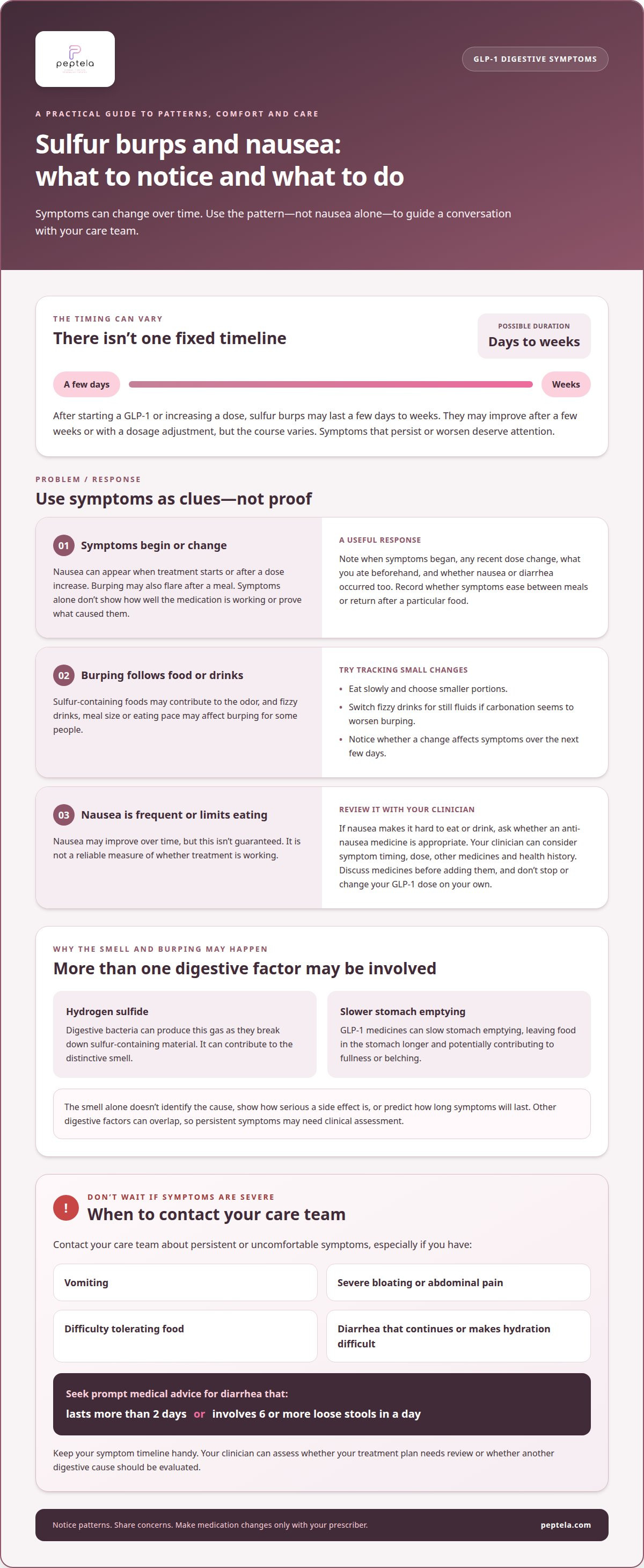
After starting or increasing a GLP-1 dose, sulfur burps may last a few days to weeks. They may improve after a few weeks or with dosage adjustments, but their course varies. Nausea commonly appears when treatment begins or the dose rises; it may improve over time, though this isn’t guaranteed. Symptoms that persist or worsen deserve attention.
There isn’t one timeline for every person taking Ozempic or another GLP-1 receptor agonist. Dose changes, digestive sensitivity, meal patterns, and conditions affecting stomach movement can shape the experience. Slower emptying may leave food in the stomach longer, contributing to fullness or belching. Hydrogen sulfide can create the distinctive odor, but its presence doesn’t predict how long symptoms will last.
Managing nausea and sulfur burps on GLP-1 treatment starts with noticing patterns, not expecting a fixed end date. Record the date symptoms began, any recent dose increase, meals that preceded burping, and whether nausea or diarrhea occurred too. For example, note whether symptoms ease between meals or return after a specific food. This timeline can help your prescriber assess whether symptoms align with treatment or need another explanation.
Some symptoms may ease while others continue. Burping could become less frequent even if nausea remains after a dose increase. Or symptoms may flare briefly after a meal, then settle. These changes don’t prove the medication is working, and they don’t establish that the GLP-1 caused every digestive issue. Avoid increasing, lowering, or stopping a dose on your own.
Small adjustments may help you track changes. Eat slowly, choose smaller portions, and switch fizzy drinks for still fluids if carbonation worsens burping. Note whether these changes affect your symptoms over the next few days. If side effects remain bothersome, your prescriber can review your dose and symptom timeline. The best next step depends on the pattern and severity of symptoms, as well as your treatment plan.
Don’t wait for symptoms to resolve on their own if they’re severe. Contact your care team about persistent or uncomfortable burping, especially if it occurs with vomiting, severe bloating, abdominal pain, or difficulty tolerating food. Diarrhea that continues or makes it hard to stay hydrated also needs medical attention. A clinician can assess whether your symptoms call for treatment changes or evaluation for another digestive cause.
Is nausea a sign the medication is working?
No. Nausea isn’t a reliable measure of whether a GLP-1 medication is working or affecting weight. It can occur when treatment starts or after a dose increase, then improve as the body adjusts. A person can experience benefits without nausea, and symptoms alone can’t show how well treatment is working. Managing nausea and sulfur burps on GLP-1 treatment starts with tracking symptoms, not treating them as proof of a result.
GLP-1 receptor agonists slow stomach emptying. Food may remain in the stomach longer, contributing to fullness, nausea, or belching. Sulfur-smelling burps may occur alongside other digestive symptoms. Tirzepatide acts on both GLP-1 and GIP receptors, but burping or nausea still doesn’t confirm a medication’s effect. Note whether symptoms began after starting treatment, changing a dose, or eating a particular meal. That timeline gives your clinician useful context.
Rates need careful interpretation. A 2026 survey of people who had already taken a GLP-1 found that 17% reported sulfur burps or gas. That is a survey result, not a rate from medication trials. Trial results can differ by medication and the specific digestive symptom measured, so don’t apply a single figure to every GLP-1 or assume it predicts your experience.
If nausea is frequent or makes it hard to eat and drink, ask your clinician whether an anti-nausea medication is appropriate. They can consider symptom timing, your dose, other medicines, and your health history before recommending a next step. Before adding an over-the-counter or prescription medicine, discuss it with your care team. Don’t stop your GLP-1 medication without speaking to your prescriber.
Persistent or uncomfortable burping also deserves attention, especially with vomiting, severe bloating, abdominal pain, or difficulty tolerating food. Seek prompt medical advice for diarrhea lasting more than two days or six or more loose stools in a day. These details can help your clinician assess whether symptoms need more than routine adjustments. Note when symptoms started, whether your dose changed, and how they affect eating or drinking.
Causes and uncertainty around sulfur-smelling burps
A rotten-egg smell can come from hydrogen sulfide, a gas produced when digestive bacteria break down sulfur-containing material. The smell alone doesn’t identify the cause or show whether an adverse effect is serious. Food, digestion, and existing gastrointestinal conditions can all play a role, so this symptom by itself doesn’t establish a diagnosis.
Nausea and sulfur burps can occur with semaglutide, tirzepatide, and other GLP-1 medications. Experiences vary, and symptoms alone can’t reliably show which medication is responsible or compare how well each works.
Mounjaro contains tirzepatide, which can slow stomach emptying. Food may remain in the stomach longer, potentially contributing to belching and discomfort. Zepbound also contains tirzepatide and has the same effect on both GLP-1 and GIP receptors. This mechanism offers one explanation for symptoms during weight loss treatment, but it doesn’t prove that every sulfur burp comes from the medication.
Other digestive factors can overlap. Chronic constipation and conditions that affect stomach movement, including diabetic gastroparesis, may influence how food moves through the digestive tract. Reflux, irritable bowel syndrome, and small intestinal bacterial overgrowth are also possibilities when symptoms persist. Bloating, diarrhea, or abdominal discomfort alongside sulfur burps can help a clinician decide whether further evaluation is needed.
Timing can offer useful clues. Symptoms that begin after starting a GLP-1 medication or after a dose increase may be related to treatment, but timing alone cannot confirm the cause. A food pattern, constipation, reflux, or another digestive issue may contribute at the same time. Note when burps occur, whether meals or dose changes precede them, and which other symptoms appear.
Persistent burps with bloating, diarrhea, or abdominal discomfort deserve medical review, especially if symptoms interfere with eating or drinking. A clinician may consider the medication schedule, digestive history, and symptom pattern before deciding whether evaluation is needed. Don’t assume that a sulfur smell means a specific condition, and don’t change or stop a GLP-1 medication without discussing it with the prescriber.
GLP-1 medications can slow stomach emptying, but it is not established that they increase the likelihood of sulfur burps by keeping sulfur-rich food in the stomach longer. Gastric motility disorders, including diabetic gastroparesis, and chronic constipation may affect digestion. Whether these conditions, preexisting SIBO, IBS, GERD, or gastroparesis risk factors increase the likelihood of sulfur burps during GLP-1 treatment is unclear.
In gastroparesis, stomach muscles move food too slowly, which can cause burping, bloating, early fullness, and discomfort after eating. Persistent sulfur burps accompanied by bloating, diarrhea, or abdominal discomfort may warrant medical evaluation. A clinician can decide whether testing for SIBO, including breath testing, is appropriate.
Hydrogen sulfide production in the digestive tract
Hydrogen sulfide is a gas that can give burps a rotten-egg smell. Digestive bacteria may produce it while fermenting sulfur-containing foods in the gut. Meat, dairy, and cruciferous vegetables such as broccoli can provide these food sources. The smell may be noticeable, but it can’t identify the exact cause by itself.
GLP-1 treatment can affect digestion by slowing stomach emptying. When food remains in the stomach longer, digestive symptoms such as nausea, fullness, belching, and bloating may occur. Sulfur-containing material moving through the digestive tract can also be fermented by intestinal bacteria. This is one possible explanation for sulfur-smelling burps, not proof that gas has built up or that one food is responsible.
Digestive side effects may appear early in treatment or after a rapid dose increase. A dose change can coincide with nausea, diarrhea, or more frequent burping as the body adjusts. Record when symptoms start, whether your dose recently changed, and whether symptoms follow particular meals. These details can help distinguish a possible treatment effect from other causes, including constipation or another digestive condition.
Probiotics are sometimes considered for digestive symptoms, but they aren’t a guaranteed fix for GLP-1-related burping or nausea. Products vary, and a probiotic may not address slowed stomach emptying or hydrogen sulfide production. Before adding one, discuss your symptoms and current medicines with your clinician, particularly if you have an existing digestive condition or persistent symptoms.
A small study involving 10 healthy adults found that bismuth subsalicylate reduced hydrogen-sulfide release from stool samples. The study didn’t measure burps or include people taking GLP-1 medicines, so it can’t establish that the product relieves these symptoms during treatment. Don’t use that finding as a reason to self-treat. Ask your clinician before using an over-the-counter product, especially if nausea or diarrhea continues.
Focus on the pattern, not just the odor. Note dose changes, meals containing meat or broccoli, and symptoms such as bloating or diarrhea. If these effects persist, interfere with eating, or occur with vomiting or abdominal pain, seek medical advice. Your clinician can review your treatment schedule and consider whether another digestive cause needs evaluation. Don’t adjust or stop your medication without guidance.
How long sulfur burps may last
After starting or increasing a GLP-1 dose, sulfur burps may last a few days to weeks. They often improve after a few weeks or with dosage adjustments. Nausea commonly appears when treatment begins or the dose rises. It may improve as the body adjusts, but its course varies. Symptoms that persist or worsen deserve attention.
There isn’t one timeline for every person taking Ozempic or another GLP-1 receptor agonist. Dose changes, digestive sensitivity, meal patterns, and conditions affecting stomach movement can shape the experience. Slower emptying may leave food in the stomach longer, contributing to fullness or belching. Hydrogen sulfide can create the distinctive odor, but its presence doesn’t predict how long symptoms will last.
Look for a pattern rather than expecting symptoms to end on a set date. Record when they began, any recent dose increase, meals that came before burping, and whether nausea or diarrhea occurred too. For example, note whether symptoms ease between meals or return after a particular food. This timeline can help your prescriber assess whether symptoms align with treatment or need another explanation.
Some symptoms may ease while others continue. Burping could become less frequent even if nausea remains after a dose increase. Or symptoms may flare briefly after a meal, then settle. These changes don’t prove the medication is working, and they don’t establish that the GLP-1 caused every digestive issue. Avoid increasing, lowering, or stopping a dose on your own.
A few small steps may help as you monitor changes: eat slowly, choose smaller portions, and switch fizzy drinks for still fluids if carbonation worsens burping. Note whether these adjustments affect symptoms over the next few days. If side effects remain bothersome, your prescriber can review your dose and symptom timeline. The best next step depends on the pattern and severity of symptoms, as well as your treatment plan.
Don’t wait for symptoms to resolve on their own if they’re severe. Contact your care team about persistent or uncomfortable burping, especially if it occurs with vomiting, severe bloating, abdominal pain, or difficulty tolerating food. Diarrhea that continues or makes it hard to stay hydrated also needs medical attention. A clinician can assess whether your symptoms call for treatment changes or evaluation for another digestive cause.
Peptela
Peptela offers personalized, clinician-guided care for people considering GLP-1 treatment or seeking help understanding their options. If nausea or sulfur burps are affecting your experience, the first priority is a clinical discussion about symptom timing, medication dose, other medicines, and relevant health history. These details can help guide an individualized conversation, rather than treating every digestive symptom as the same.
GLP-1 treatment is one part of Peptela’s offerings, alongside Tirzepatide Injections, NAD+, Hormone Balance, and Peptides. Those options aren’t interchangeable, and they aren’t all intended to address nausea or sulfur burps. A clinician-guided plan can help clarify which offering may fit your goals and health context, while keeping symptom evaluation separate from assumptions about what a treatment can do.
Consider reaching out if you’re exploring GLP-1 care, have questions about treatment options, or want to understand how your symptoms fit into a broader care plan. Bring the details that shape your experience: when nausea or burping started, whether your dose changed, and whether symptoms affect eating or drinking. If symptoms are persistent or severe, seek medical advice promptly. Peptela’s care is not a substitute for urgent medical evaluation.
Personalized care also means recognizing when a treatment question needs a clinician’s review. A discussion can take your goals, medical history, current medications, and digestive symptoms into account before outlining possible next steps. It can also help distinguish questions about treatment suitability from symptoms that need a separate assessment. Don’t stop or change a prescribed medication without discussing it with your prescriber.
Peptela’s offerings include different types of support, but no option should be assumed to prevent or resolve sulfur burps. For example, Tirzepatide Injections are a GLP-1-related offering, while NAD+, Hormone Balance, and Peptides address other areas of the company’s care. A careful conversation can keep your goals and symptoms in view without promising a particular result.
If you’d like to discuss your options or your next steps, contact Peptela.
Frequently Asked Questions
How common is GLP-1 nausea, and when does it happen?
Nausea is a recognized effect, but how often it occurs varies by medication and dose. It is commonly reported when treatment starts or after a dose increase, so note whether it begins after either change. Trial percentages can’t be compared directly across medications or studies. If nausea affects your routine, keep a brief record of meals, medication timing, and symptoms to make a clinical discussion more specific.
How common is burping on GLP-1s?
Burping or gas occurs for some people taking GLP-1 medications, but a single survey or trial figure can’t predict an individual’s experience. Rates may depend on which medication and symptom a study measures. Track whether your burping is occasional or frequent, and whether it happens after meals or independently. That pattern is more useful for understanding your own experience than comparing it with someone else’s.
What can you try at home?
Change one habit at a time so you can tell what helps. Chew thoroughly, finish chewing before talking, and avoid gum or hard candy if they seem to increase swallowed air. A gentle walk after a meal may also help some people. Note each change and your symptoms, and ask a clinician before trying an over-the-counter medicine or supplement.
What causes the rotten-egg smell?
The rotten-egg odor is associated with hydrogen sulfide, which digestive bacteria can produce while breaking down sulfur-containing material. The smell doesn’t identify a specific food or condition by itself. To look for a pattern, note what you ate and whether the odor occurs with other digestive changes. This information can help make a discussion about the symptom more focused.
What if you also have diarrhea?
Track how long diarrhea lasts and how many loose stools occur each day. Contact a doctor promptly if it lasts more than two days or reaches six or more loose stools in a day. Also note whether you have vomiting or difficulty drinking fluids. Don’t stop or adjust your GLP-1 medication on your own; share the symptom pattern with your prescriber.
Why do GLP-1 medications cause nausea and sulfur burps?
These symptoms can occur during GLP-1 treatment, but nausea and sulfur burps don’t always have the same cause. Medication timing, dose changes, meals, and a person’s digestive history can all provide useful context. The sulfur odor is linked to hydrogen sulfide, while nausea is a separate symptom. Looking at when each begins can help clarify what to discuss with your clinician.


