

Your daily protein target isn’t a one-size-fits-all number. A practical way to estimate a daily protein goal for women on tirzepatide is to aim for 1.2 to 1.6 grams of protein per kilogram of goal body weight each day during active weight loss. Revisit the estimate as your weight and goals change.
Different rules of thumb can make it hard to choose a target. The goal isn’t to chase the highest figure: body size, activity, and health factors such as kidney function all affect what may suit you.
This guide explains how to convert goal weight from pounds to kilograms and use it to estimate a daily target. You’ll also learn how to adjust that estimate over time, spread protein across meals, and find practical ways to include it in your day. A clear starting point can simplify planning while leaving room to tailor your approach to your needs.
Key Takeaways
- Estimate a starting protein target from your goal weight, then revisit it as your weight and needs change.
- Spread protein across several meals so it feels more manageable when your appetite is lower.
- Plan protein alongside fiber-rich foods and fluids to support a more balanced eating routine.
- Choose protein sources that fit your appetite, and avoid assuming that a higher target is always better.
- Health factors, including kidney function and activity level, can shape the target that makes sense for you.
Should my protein target go down as I lose weight?
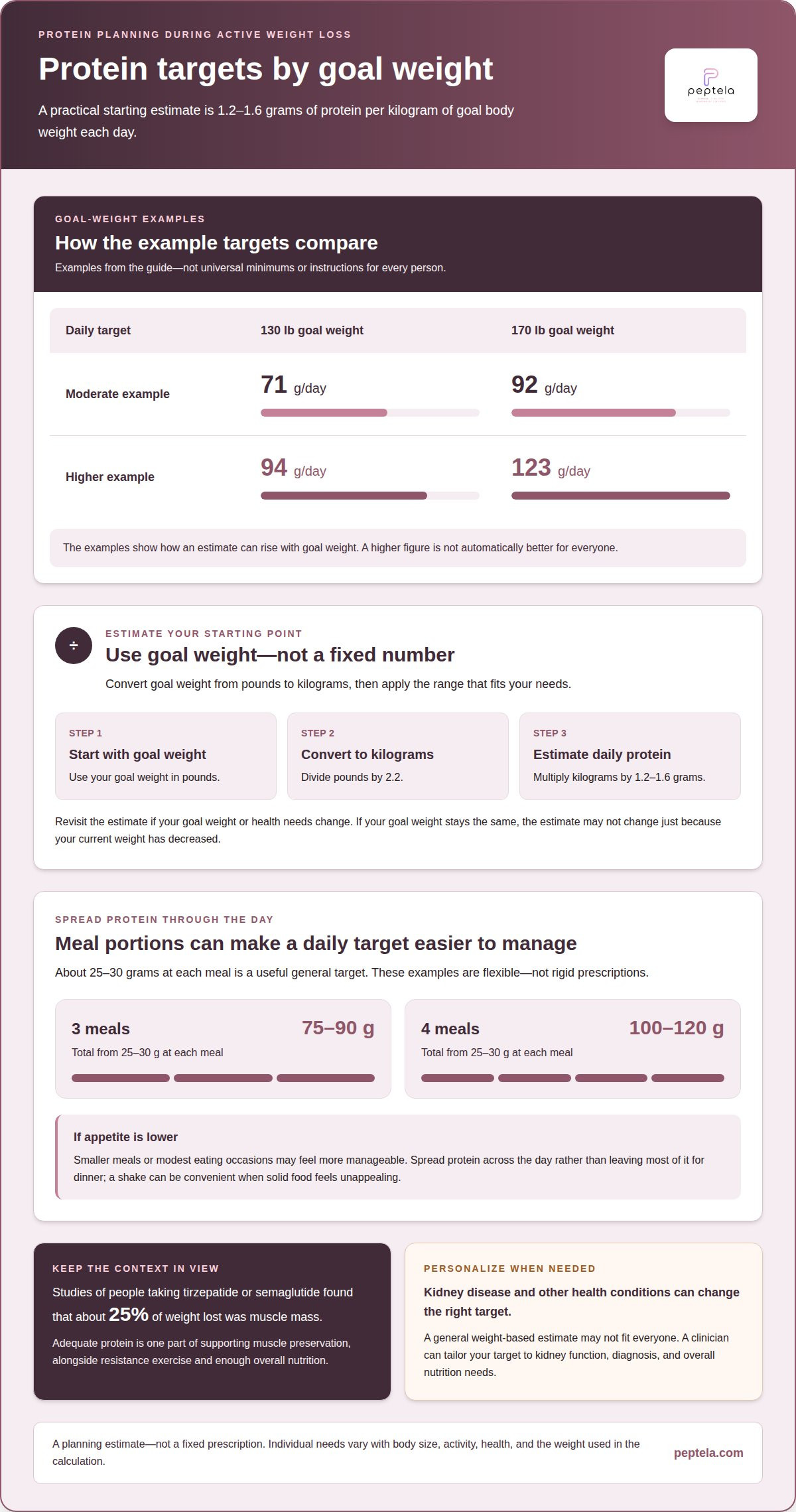
There isn’t one protein target for everyone taking tirzepatide or another GLP-1 medication. A practical starting estimate for a daily protein goal for women on tirzepatide is 1.2 to 1.6 grams per kilogram of goal body weight each day during active weight loss. This range gives you a way to plan, not a fixed prescription. Needs vary with body size, activity, health conditions, and the weight used in the calculation.
Weight loss can include losses of both fat and lean tissue. Studies of people taking tirzepatide or semaglutide found that about 25% of weight lost was muscle mass. Adequate protein is one part of supporting muscle preservation, alongside resistance exercise and enough overall nutrition. It is a nutrient to plan deliberately, especially when medication-related appetite changes make meals smaller.
Some recommendations use a goal-weight approach rather than current body weight. For a goal weight of 130 pounds, examples range from 71 grams daily at a moderate target to 94 grams at a higher target. At 170 pounds, the examples are 92 and 123 grams daily. These examples show how the estimate can rise with goal weight; they are not universal minimums or instructions for every person.
As your weight changes, revisit the calculation instead of automatically keeping the same number. Convert your current goal weight in pounds to kilograms by dividing by 2.2, then apply the chosen grams-per-kilogram target. If your goal weight stays the same, the estimate may not change simply because your current weight has decreased. The American College of Lifestyle Medicine and American Society for Nutrition note that, for people with obesity, it remains unclear whether actual, adjusted, or ideal body weight, or fat-free mass, best estimates protein needs. Actual weight can overestimate requirements.
Kidney disease and other health conditions can change the right protein target. Kidney function, the specific diagnosis, and your overall nutrition needs all matter, so a general weight-based estimate may not fit. If a condition affects your kidneys or nutrition, your clinician can personalize your target and reassess it as your health or weight changes.
You don’t need to lower protein automatically with every pound lost. Recalculate when your goal weight or health needs change, and include vegetables and other nutrient-rich foods in your overall eating plan. A tailored estimate can help you plan for weight loss while keeping muscle preservation in mind.
Protein distribution across meals
Aim for about 25 to 30 grams of protein at each meal. For many women taking tirzepatide, splitting protein across 3 to 4 meals can make a daily target easier to reach. Three meals at that amount provide 75 to 90 grams; four provide 100 to 120 grams. Your individual daily target may differ, so use meal portions to work toward it rather than treating them as a rigid prescription.
Smaller portions may feel more manageable if tirzepatide affects your appetite. Instead of two large meals, try three smaller meals, or divide eating into 4 to 5 modest occasions. Some people prefer five or six small eating occasions throughout the day. These are options, not rules. Keep dietary protein present across the day, even when each portion is modest.
For example, you could have Greek yogurt for breakfast, chicken at lunch, and another protein-rich food at dinner. A shake can be convenient when solid food feels unappealing. The key is to spread protein across the day instead of leaving most of it for dinner. Eating a protein source earlier also gives you more chances to meet your target if your appetite changes later.
Some recommendations describe protein intake above 1.2 grams per kilogram daily, distributed across meals, to help preserve lean mass during GLP-1 therapy. That doesn’t mean every meal must look identical. A 25-gram breakfast, a smaller protein-containing snack, and a more substantial dinner can suit your routine. With obesity or changing appetite, a flexible pattern may be easier to maintain than forcing large portions.
For a simple planning step, divide your estimated daily target among your usual meals, then adjust portions to suit your appetite. If you eat three meals, spread the amount across all three; if you prefer four, choose smaller portions more often. Zepbound and tirzepatide can affect appetite, so build a routine that works on lower-appetite days, too. Shakes can fill a gap, but choose foods that suit your preferences and tolerance.
For women taking tirzepatide, about 25 to 30 grams per meal is a useful general target. Distribute it across 3 to 4 meals when that fits your appetite and daily needs. Smaller, more frequent meals are another option; the best pattern is one you can follow consistently.
Daily protein goals while taking GLP-1 medications
During active weight loss, a general protein range for adults taking GLP-1 medications is 1.2 to 1.6 grams per kilogram of body weight daily. For someone weighing 150 pounds, one example target is 82 grams a day. This can help frame a daily plan while losing weight, but it isn’t a universal prescription. Tirzepatide and medicines such as Wegovy act on GLP-1 receptors; individual needs still vary.
Protein is only one part of a balanced dietary pattern. Fiber also matters, particularly if constipation becomes an issue during treatment. For women ages 18 to 50, the listed daily fiber recommendation is 25 to 28 grams; for women 51 and older, it is 22 grams. Vegetables, fruit, beans, and whole grains can contribute fiber alongside protein-rich foods.
If constipation develops, consider your overall routine rather than increasing protein alone. A day of chicken, yogurt, and shakes may provide protein but little fiber if it lacks vegetables, fruit, or whole grains. Add fiber-containing foods as tolerated and pay attention to fluids. Nausea or reduced appetite can also make eating and drinking less consistent.
For women in the United States, the listed recommendation for total fluid is 91 ounces daily. About 80% comes from beverages, while food supplies roughly 20% to 30% of daily water. These figures describe total fluid intake, not a required amount of plain water. Soups, yogurt, fruits, and vegetables also contribute fluid, so consider the full day.
Pair protein with a fiber-containing food at meals. Greek yogurt with fruit, or chicken with vegetables and whole grains, are practical examples. If nausea makes a full meal difficult, smaller portions and regular sips may feel more manageable than forcing a large serving. Track what you tolerate and note changes in constipation, appetite, or fluid intake.
Protein targets and hydration needs are separate parts of your plan. A receptor agonist may affect appetite, so check whether your meals still include protein, fiber, and fluids. If constipation persists or nausea interferes with eating or drinking, discuss your symptoms with a healthcare professional. The right adjustment depends on your symptoms, health history, and what foods and fluids you can manage.
How can you include more protein in your diet?
When tirzepatide lowers your appetite, a large plate can feel difficult to finish. Start with a small protein portion, then add vegetables or whole grains as appetite allows. If solid food is unappealing, a shake can provide 30 to 40 grams of protein. Smaller servings of cottage cheese or Greek yogurt are other practical options.
High-protein choices vary in portion size and protein content. A 100-gram serving of cottage cheese contains 12 grams, while a 156-gram container of nonfat Greek yogurt contains 16 grams. One cup of edamame provides 19 grams, and one cup of cooked lentils provides 18 grams. Choose options that suit your appetite and eating preferences.
For a more substantial meal, 174 grams of cooked chicken breast contains 56 grams of protein. A 100-gram serving of salmon provides 20 grams, while two large eggs provide 12 grams. Two scoops of whey protein powder, weighing 39 grams, contain 30 grams of protein. These examples can help you estimate intake without requiring one specific food at every meal.
More protein isn’t automatically better. Prolonged intake above approximately 2 grams per kilogram of body weight daily is generally not recommended. The University of Kansas Medical Center notes that people with poor kidney function may have difficulty getting rid of excess protein components. Kidney health and your overall target therefore matter when choosing a high-protein plan.
These guidelines don’t identify a single symptom that confirms inadequate protein intake. A practical sign to watch for is a repeated gap between your estimated target and what you can manage to eat. Note your portions for a few typical days, including shakes and snacks, then look for an easy addition, such as yogurt or eggs. If appetite makes it consistently difficult to eat enough, discuss the pattern with a healthcare professional.
Keep the rest of your plate in view, too. The daily recommendation for whole grains is about 3 ounces or more; whole-grain toast alongside eggs is one example. Lentils can contribute both protein and fiber, while vegetables add variety to meals. Adjust portions to your appetite rather than trying to force a large serving. With a few manageable choices, you can build protein intake steadily and keep meals balanced.
How to calculate a daily protein goal
Use goal body weight as a practical starting point during active weight loss. First, divide your goal weight in pounds by 2.2 to convert it to kilograms. Then multiply that result by 1.2 to 1.6 grams of protein. This gives an estimated daily range, not a personalized prescription. It also makes the calculation easy to repeat as your goal changes.
For example, a goal weight of 190 pounds converts to roughly 86 kilograms. The corresponding examples are 103 grams daily at a moderate target and 138 grams at a higher target. Those figures illustrate the calculation, not a requirement to choose the higher number. Your health, activity, and ability to eat enough overall all matter.
Age and activity can influence the target. Adults aged 65 and older have a listed protein recommendation of 1.0 to 1.2 grams per kilogram daily to maintain lean mass and function. Strength training can also affect needs; a listed range for people doing strength training is 1.2 to 1.7 grams per kilogram daily. Body weight determines the calculation’s starting point.
For comparison, the general adult protein RDA is approximately 0.8 grams per kilogram daily. That baseline differs from the 1.2 to 1.6 grams per kilogram range suggested during active weight loss with GLP-1 medications. Mounjaro is a brand name for tirzepatide, and the medication doesn’t replace the need to consider your overall calorie intake or other nutrition needs.
For people with obesity, the weight used in the calculation can change the result. A calculator may default to adjusted body weight at a BMI of 30 or higher. Its adjusted-weight formula uses 25% of the difference between actual and ideal body weight. This approach recognizes that actual weight may overestimate protein needs for some people.
Once you have an estimate, compare it with what you typically eat. Check food labels and serving information, then add the grams of protein from meals and snacks. For instance, Greek yogurt can contribute 16 grams per 156-gram container. A calorie-focused plan should still include enough protein and other nutrients; avoid cutting food so far that meeting your target becomes difficult.
Recalculate if your goal weight changes, then discuss the estimate in light of your age, activity, kidney health, and other conditions. The calculation gives you a useful starting point; those factors help determine whether it fits your needs.
Peptela: Tirzepatide Injections
Peptela offers Tirzepatide Injections for women considering clinician-guided care. If you’re weighing this option or already taking tirzepatide, you can include questions about appetite, nutrition, and protein in a broader discussion of your health goals. A protein estimate is a useful planning tool, but it doesn’t determine whether a prescription is appropriate for you.
Prescription products require an online evaluation with a licensed medical professional, who determines whether a prescription is appropriate. The evaluation considers your health information and treatment needs. Tirzepatide may not be suitable for everyone, so the clinician also considers relevant risks and contraindications before making a decision.
Peptela’s service is 100% online, and no in-person visit is required. Its fully in-house care team includes in-house licensed clinicians who guide personalized plans. If you’re already using tirzepatide, you can raise changes in appetite or difficulty meeting nutrition goals as part of your ongoing care discussions. These details help put protein planning in context without treating one target as right for everyone.
Product disclosures matter, too. Peptela’s products have not been evaluated by the FDA and are not intended to diagnose, treat, cure, or prevent any disease. Some products are compounded by a licensed pharmacy; compounded products are not FDA-reviewed or approved for safety, efficacy, or quality. Prescription decisions follow the online evaluation described above.
Tirzepatide Injections are shipped fast and discreetly through a US-licensed, LegitScript-certified pharmacy partner. The service uses a subscription model, and customers can cancel anytime. These details explain how care is delivered; the medical evaluation determines whether a prescription is appropriate for your individual circumstances.
If you’re considering treatment, use your protein estimate as one discussion point alongside your medical history, current medications, and nutrition concerns. Tell your clinician if appetite changes make it difficult to eat or drink. This gives the care team useful context for discussing treatment considerations and your day-to-day eating plan.
If you’d like to explore Peptela’s Tirzepatide Injections, contact Peptela.
Frequently Asked Questions
How much protein should I eat on Mounjaro or Zepbound?
Mounjaro and Zepbound are brand names for tirzepatide, so the brand name alone doesn’t determine your protein needs. Consider your goal weight, activity, and health history when interpreting a target. If you have kidney disease or another condition affecting nutrition, a general weight-based estimate may not fit. Discuss your usual eating pattern and health details with a clinician to identify an approach that suits you.
How much protein should I eat on tirzepatide?
Consider your protein intake alongside your overall food intake, not in isolation. If your appetite varies, review your pattern across several typical days rather than judging it from one meal. Note recurring difficulties eating enough and any health condition that affects nutrition. This information can make your target more practical and show when a general estimate needs individual adjustment.
How much protein do you need daily on GLP-1s?
There isn’t one daily amount that suits everyone using a GLP-1 medication. Age can affect the context: adults aged 65 and older have a listed recommendation of at least 1.0 to 1.2 grams per kilogram daily to maintain lean mass and function. Activity, health conditions, and the weight used in a calculation also shape an individual estimate, so a broad guideline may need adaptation.
How much protein should women eat daily while taking tirzepatide?
Women don’t have one universal protein requirement simply because they take tirzepatide. Your estimate depends on factors such as body size, activity, age, and health conditions. For example, strength training may affect what amount is appropriate, while kidney disease can call for a different approach. Focus on an individualized daily pattern rather than assuming every woman taking the medication needs the same amount.
Should protein goals be based on current weight, ideal weight, or lean body mass?
For people with obesity, it remains unclear whether actual weight, adjusted or ideal weight, or fat-free mass gives the best estimate of protein needs. Actual body weight can overestimate requirements. These methods can produce different targets, so the calculation method matters as much as the resulting number. A clinician can consider body composition, health history, and activity when deciding which estimate is most relevant.
What protein target helps preserve muscle during tirzepatide-related weight loss?
Protein is one part of a muscle-preservation plan, not the only factor. Resistance training 2 to 3 times per week is recommended to help preserve lean mass during GLP-1-assisted weight loss. Pairing an appropriate protein intake with strength-focused activity gives the plan more context. Health conditions and ability to exercise matter too, so adjust activity and nutrition to your individual circumstances.


