

Weight loss can affect muscle as well as fat, so preserving strength takes a plan beyond medication alone. How to prevent muscle loss on tirzepatide starts with consistent resistance training and enough protein to support your body while your weight changes. Building or maintaining muscle is a realistic goal to work toward, even as you focus on weight loss.
It makes sense to wonder whether the number on the scale could come at the expense of strength. The key to how to prevent muscle loss on tirzepatide is to pair treatment with habits that support muscle, rather than relying on weight loss alone. This guide explains how protein intake, resistance training, and the pace of weight loss relate to muscle retention. You’ll also find practical ways to adapt your routine and learn why individualized, clinician-guided care can help you make decisions that fit your health and daily life.
Key Takeaways
- Prioritize adequate protein during weight loss, and build meals around protein-rich foods that fit your needs.
- Include progressive resistance training to support strength and muscle retention; adapt exercises to your ability and routine.
- Weight lost during GLP-1/GIP treatment can include both fat and lean mass, so the scale alone doesn’t tell the whole story.
- Pay attention to appetite and gastrointestinal side effects, since they can make it harder to eat enough and stay active.
- Personalized, clinician-guided care can help align tirzepatide treatment with your nutrition, activity, and health needs.
Protein intake targets during weight loss
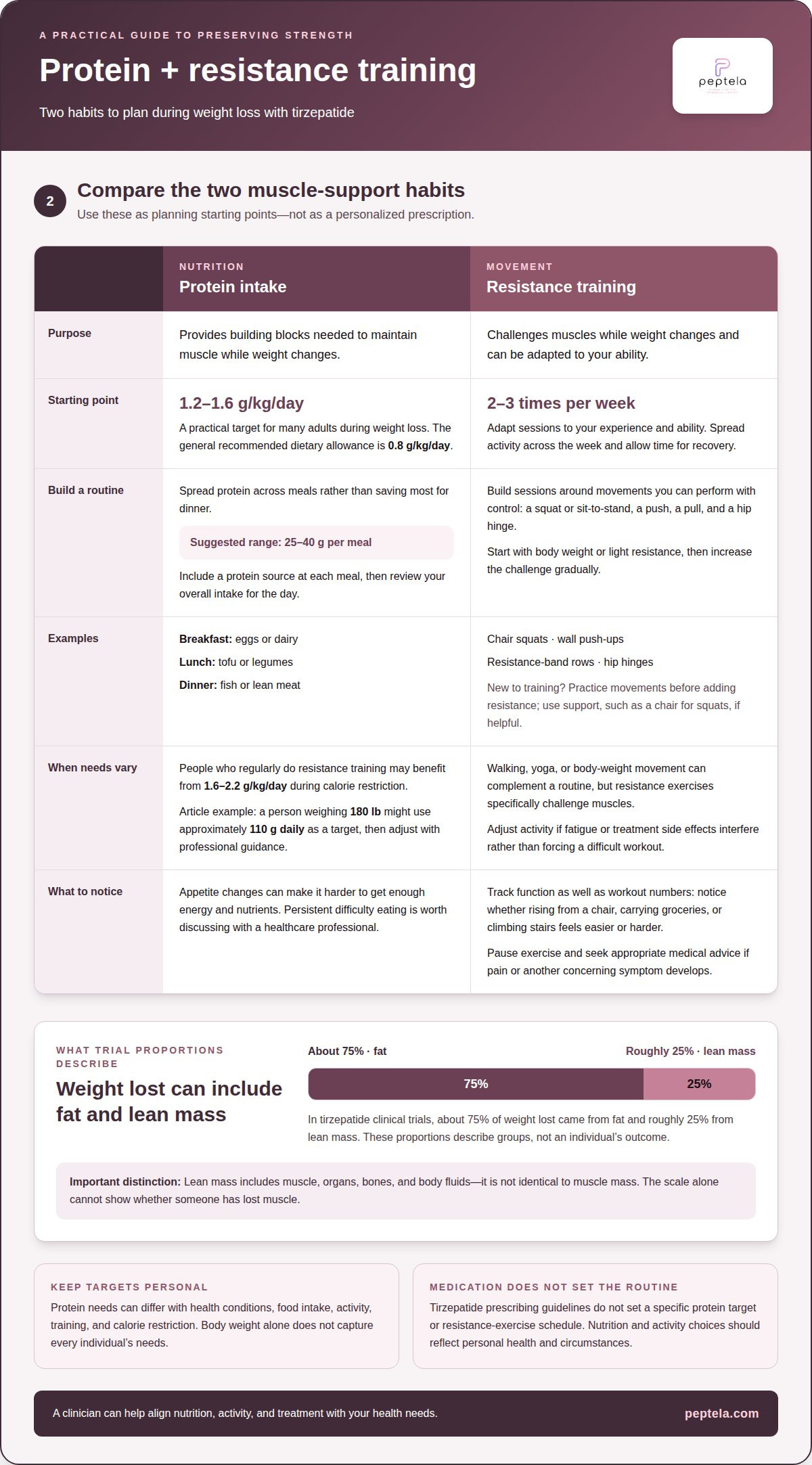
During weight loss, protein helps supply the building blocks needed to maintain muscle. A practical target for many adults is 1.2-1.6 g/kg/day. By comparison, the general recommended dietary allowance is 0.8 g/kg/day. These figures are starting points, not a personalized prescription. Health conditions, food intake, and activity can affect individual needs.
Tirzepatide prescribing guidelines don’t set a specific protein target or resistance-exercise schedule. Nutrition and activity choices are separate from medication dosing and should reflect each person’s health and circumstances.
Calorie intake matters alongside protein. When appetite falls and meals become too small, it may be difficult to get enough energy and nutrients. A calorie deficit can support weight loss, but severe restriction can make it harder to meet nutrition needs and maintain strength. Aim for regular meals that include protein, and discuss persistent difficulty eating with a healthcare professional.
Try distributing protein across meals instead of saving most for dinner. A commonly suggested range is 25-40 g per meal. For example, include eggs or dairy at breakfast, tofu or legumes at lunch, and fish or lean meat at dinner. These options make protein intake easier to spread throughout the day, even when larger meals feel difficult.
Needs can differ with training and calorie restriction. People who regularly do resistance training may benefit from 1.6-2.2 g/kg/day during calorie restriction. A 180 lb person might use approximately 110 g daily as an example target, then adjust with professional guidance. Body weight alone doesn’t capture every individual’s needs, so consider health history and eating patterns, too.
Protein supplements can help fill a gap when food alone doesn’t meet someone’s needs. They aren’t essential and shouldn’t routinely replace balanced meals. Compare the protein per serving with your daily target and consider whether the product suits your dietary needs. A clinician or dietitian can help assess supplement use, especially if a medical condition affects nutrition.
A practical first step is to include a protein source at each meal, then review your overall intake for the day. If appetite changes make adequate intake difficult, tell the clinician managing your treatment. Consistent nourishment, paired with resistance exercise, supports a thoughtful approach to preserving muscle during weight loss.
Resistance training frequency and exercises
Resistance training challenges muscles while weight changes. Aim for resistance training 2-3 times per week, adapting sessions to your experience and ability. Examples include chair squats, wall push-ups, resistance-band rows, and hip hinges. These movements work different muscle groups and can be adjusted to match your current strength.
Build a routine around movements you can perform with control. A session might include a squat or sit-to-stand, a push, a pull, and a hip hinge. Start with body weight or light resistance, then increase the challenge gradually. Progress should feel manageable, not rushed.
New to strength training? Practice each movement before adding resistance. For example, hold a chair for support during squats or do push-ups against a wall. If you’re unsure about your technique, a qualified trainer can demonstrate adjustments and help match exercises to your mobility, equipment, and experience.
Aerobic activity can complement strength training, but it serves a different purpose. Walking, yoga, or body-weight movements can help you stay active when lifting weights doesn’t suit your routine. Walking can support cardiovascular fitness and movement, while resistance exercises specifically challenge muscles.
Spread activity across the week and allow time for recovery. For example, schedule strength sessions on Monday and Thursday, then walk on other days. If you feel ready and recover comfortably, add another session. Adjust your activity if fatigue or treatment side effects interfere, rather than forcing a difficult workout.
Seek guidance when you’re unsure how to start, progress, or adapt exercise around a health condition. A trainer can tailor movement to your ability; a registered dietitian can review whether your eating pattern supports your activity. These professionals address different needs, and both can help you make a practical plan.
Track changes in function, not just workout numbers. Notice whether rising from a chair, carrying groceries, or climbing stairs feels easier or harder over time. These examples can help you see how strength training affects daily life. If pain or another concerning symptom develops, pause the exercise and seek appropriate medical advice.
How Common Is Lean-Mass Loss with GLP-1/GIP Therapy?
Weight loss during GLP-1/GIP treatment can include fat and lean mass. In tirzepatide clinical trials, about 75% of weight lost came from fat. Roughly 25% came from lean mass. Lean mass includes muscle, organs, bones, and body fluids, so it isn’t identical to muscle mass.
Those proportions describe groups, not an individual’s outcome. Appetite changes during treatment can make nutrition harder to maintain, while weight loss changes body composition. A person’s activity, food intake, and starting point all matter when interpreting changes. The scale alone can’t show whether someone has lost muscle.
To monitor changes, track your weight alongside strength and everyday function. Note whether familiar tasks, such as climbing stairs or carrying groceries, become harder. A clinician may also assess body composition over time, but these measurements estimate lean mass rather than measuring muscle alone.
Older adults may benefit from closer attention to strength, nutrition, and function during weight loss. Age alone doesn’t determine an individual’s muscle changes. Someone eating very little or becoming less active may need a more careful review of their nutrition and activity plan.
Lean-mass readings need context. Hydration and other body fluids contribute to measured lean mass, so one reading can’t isolate muscle loss. Compare assessments taken under similar conditions, and discuss the results alongside changes in strength, appetite, and daily function.
A practical check-in can include three details: your weight trend, an example of a regular physical task, and any change in food intake. Share these observations with your healthcare professional. If your strength or ability to manage daily activities declines, raise the change promptly rather than relying on the scale alone.
Muscle preservation is a broader goal than keeping every lean-mass measurement unchanged. During tirzepatide treatment, regular strength activity and adequate nutrition provide useful context for evaluating weight changes. Combining observations about daily function with clinical assessment can make progress easier to interpret and support decisions tailored to your health.
Does tirzepatide cause muscle loss?
Tirzepatide can reduce appetite, supporting lower calorie intake and weight loss. During weight loss, some lost weight may come from lean mass as well as fat mass. Clinical trials of GLP-1 therapies have reported body-weight losses of 15% to 20%. The amount and composition of weight lost vary between individuals.
In tirzepatide trials, roughly 75% of weight lost came from fat, while about 25% was lean mass. Lean mass includes muscle, organs, bones, and body fluids. The scale alone cannot describe every change in body composition.
Nausea or low appetite can make it harder to maintain muscle by reducing food intake. Smaller meals may leave less room for protein and other nutrients that support training and recovery. If eating becomes difficult, tell the clinician managing your medication.
Gastrointestinal symptoms can disrupt meals, hydration, and planned exercise. Try smaller, manageable meals and keep track of what you can tolerate. If symptoms persist or interfere with eating and drinking, contact your prescribing clinician. Don’t change or stop your medication without discussing it with them.
Strength training gives muscles a regular workload during weight loss. Aim for resistance exercise 2-3 times per week, using movements you can perform with control. Pair sessions with walking or other aerobic activity as your capacity allows. If nausea or fatigue makes exercise difficult, adjust the session and discuss the pattern with your clinician.
Muscle loss can affect strength and everyday function, such as climbing stairs or carrying groceries. Those changes matter even when your weight is moving toward a personal goal. Track one familiar task over time, and report any noticeable decline in function or strength during treatment.
Weight change alone doesn’t reveal whether someone has lost muscle. Compare weight trends with strength, activity, and daily function, and discuss concerns with a healthcare professional. For example, difficulty rising from a chair may be more useful to report than a single scale reading.
Tirzepatide treatment works alongside nutrition and activity choices. Paying attention to appetite, gastrointestinal symptoms, and strength can help identify barriers early. A clinician can review these changes and help tailor next steps to your health, treatment, and ability to stay active.
How weight loss can contribute to muscle loss
Understanding how to prevent muscle loss on tirzepatide starts with recognizing how weight loss changes the work muscles do. For example, when someone weighing 250 lb loses 50 lb, their body needs less force to move. That lower mechanical demand can reduce the everyday stimulus muscles receive. If activity and strength training also decline, preserving muscle may become harder during treatment.
Calorie restriction creates another challenge: less energy is available, and reduced appetite can make adequate nutrition harder to maintain. If someone eats too little overall or too little protein, the body may draw on tissue, including muscle, to meet its needs. That’s why it’s important to consider weight loss and body composition together.
The scale records total body weight, not what has changed within it. A lower reading can reflect changes in fat, muscle, water, or other lean tissue. For instance, someone who loses weight but finds stairs harder to climb may need to discuss strength and function, not just the number on the scale.
Obesity treatment may support weight loss, while diabetes and other health factors can shape nutrition, movement, and recovery needs. The same plan won’t suit everyone. Notice how daily function changes, such as getting up from a chair or carrying groceries, and share meaningful changes with your healthcare professional.
A gradual pace may support fat loss over muscle loss. A commonly suggested target is 1-2 pounds per week, though weight trends can vary. A healthcare professional can consider your health, treatment, nutrition, activity, and progress when assessing an appropriate pace. Avoid trying to accelerate weight loss by sharply restricting food.
Pairing adequate nourishment with regular resistance exercise can help support muscle as your weight changes. For example, notice whether the same flight of stairs feels more difficult over time. This adds useful context beyond body weight and helps you raise changes early during obesity or diabetes treatment.
Peptela: Tirzepatide Injections
Peptela offers Tirzepatide Injections as an option to discuss through personalized, clinician-guided care. Prescription products require an online evaluation with a licensed medical professional, who will determine whether a prescription is appropriate. The evaluation considers your health history, current medications, and treatment goals. Sharing concerns about appetite, nutrition, or everyday function can help make the conversation relevant to your needs.
Medication is only one part of a weight-management plan. Your clinician can discuss how treatment fits with your health and what to monitor as your routine changes. For example, mention if nausea makes eating difficult or changes in strength affect daily tasks. These details can inform medical guidance, alongside the nutrition and activity choices that support your well-being.
Prescription treatment has risks and may not be appropriate for everyone. Review potential side effects, contraindications, and other relevant health considerations during your online evaluation. Contact a qualified medical professional about symptoms that interfere with eating, hydration, or daily activities. Seek urgent medical care in an emergency.
Peptela’s service is 100% online, and no in-person visit is required. Treatments are shipped fast, discreet, through a US-licensed, LegitScript-certified pharmacy partner. Some products are compounded; compounded products are not FDA-reviewed or approved for safety, efficacy, or quality. Peptela products have not been evaluated by the FDA and are not intended to diagnose, treat, cure, or prevent any disease.
Keep your priorities central to the decision. You might discuss how treatment could fit alongside your current eating pattern, activity level, and health conditions. Ask about the risks and what follow-up or monitoring may be appropriate for your situation. If treatment begins, share meaningful changes in appetite, side effects, or function with the licensed medical professional guiding your care.
Choosing whether to pursue treatment is a personal medical decision. Clear information about your health, the medication, and your goals can help you weigh the options with your clinician. Take the time you need to understand the potential risks and considerations, then choose a next step that aligns with your needs.
Make your next step a personal one
Your plan for how to prevent muscle loss on tirzepatide should fit your health, eating patterns, and daily routine. Use changes in strength or function as cues to discuss your approach with a qualified clinician, especially if side effects make eating or staying active difficult. Medication decisions require an individualized medical evaluation, including a review of relevant health conditions and potential risks.
Peptela offers Tirzepatide Injections, NAD+, and Hormone Balance as distinct options, not as promises of muscle retention. If you’re considering tirzepatide, an online evaluation with a licensed medical professional can determine whether a prescription is appropriate and help you discuss questions about nutrition, activity, and treatment considerations.
You don’t need to make every change at once. Start by identifying the support or information that would make your next decision clearer. Start a conversation with Peptela when you’re ready, and take your next step with your priorities in view.
Frequently Asked Questions
Can I build muscle while taking tirzepatide?
It’s possible to work toward building muscle while taking tirzepatide. Progressive strength training provides a stimulus for muscles, while adequate food intake supports exercise and recovery. The right plan depends on your current strength, nutrition, health conditions, and how treatment affects your appetite and energy. A healthcare professional can help tailor a plan to your needs.
How much muscle is lost?
In tirzepatide clinical trials, about 25% of participants’ total weight loss was lean mass, while roughly 75% came from fat. That 25% figure does not mean one-quarter of the weight lost was muscle alone. Lean mass also includes organs, bones, and body fluids. Individual results differ, so a trial average cannot predict a person’s specific muscle change.
Is this unique to GLP-1 medications?
No. Lean-mass changes can accompany weight loss more generally, because a smaller body requires less effort for some movements. For example, walking or climbing stairs may place less mechanical demand on the body after weight loss. Medication type is only one part of the picture; nutrition, activity, health, and the amount of weight lost also shape body-composition changes.
What about aerobic exercise?
Aerobic activity can complement strength work by supporting movement and cardiovascular fitness. Walking is one practical option: choose a pace and duration that suit your current ability, then adjust based on how you feel. Aerobic exercise doesn’t replace the muscle-loading role of resistance training. If fatigue, nausea, or another symptom limits activity, discuss a suitable adjustment with your healthcare professional.
How much protein should you eat to preserve muscle while taking tirzepatide?
A general target during weight loss is 1.2-1.6 g/kg/day, though individual needs vary. To estimate the daily amount, convert body weight to kilograms and multiply by a target within that range. For instance, a dietitian can help adapt the calculation if you have a health condition, struggle to eat enough, or need a plan that fits your food preferences.
What strength-training routine helps prevent muscle loss on tirzepatide?
A practical starting point is resistance training 2-3 times per week, with exercises adjusted to your ability. A session might include chair squats, wall push-ups, and resistance-band rows. Start with light resistance or body weight, focus on controlled movement, and progress gradually. A trainer or clinician can help adapt exercises if pain, limited mobility, or a health condition affects movement.


