

Menopause treatment decisions are personal, not one-size-fits-all. Personalized hormone care considers the appropriate hormone dose and delivery method, then uses follow-up to assess how treatment is working. Your health history and symptoms help shape those decisions.
It makes sense to want clear guidance when menopause affects how you feel day to day. A hormone test may be one part of the picture, but it is not the whole picture: genetics, lifestyle, health assessments, and treatment response can all inform care. This article explains how these factors may shape hormone and peptide treatment decisions, what monitoring can reveal, and why a plan may need adjustment over time. You’ll get a clearer sense of how individualized care connects clinical assessment with everyday goals.
Key Takeaways
- Personalized hormone treatment considers both dose and delivery method, with the aim of matching care to symptoms and health history.
- Genetics, sleep, physical activity and nutrition can all shape menopause care decisions and support broader wellbeing.
- Health assessments and hormone tests are pieces of a fuller picture, interpreted alongside symptoms and personal medical history.
- Regular follow-up helps track how treatment is working and guides adjustments as needs change.
- Hormone and peptide protocols involve distinct treatment decisions, so understanding the purpose of each can help you take a more informed role in care.
What Are the Benefits and Risks of Hormone Replacement Therapy for Menopause?
Hormone replacement therapy can ease menopause symptoms, but the right approach depends on personal health factors. With a standard regimen, treatment follows a set approach; with a tailored plan, clinicians weigh symptoms, health history, goals, and response. Personalized hormone care brings those details into the discussion instead of treating a standard dose as the only option.
Menopause Symptom Relief and Treatment Risks
Hormone therapy can relieve symptoms such as hot flashes and night sweats by addressing changes in estrogen. An estimated 70-80% of women experience these symptoms during menopause. The North American Menopause Society identifies hormone therapy as the most effective treatment for hot flashes and genitourinary symptoms of menopause. That potential relief matters, but so does understanding treatment risks.
Combined oral hormone replacement therapy is estimated to cause blood clots in 2-4 women per 1,000. This figure describes a specific treatment route, not every hormone therapy or every person’s risk. Discuss medical history, symptom severity, dose, and delivery method. For example, someone seeking relief from hot flashes may weigh treatment choices differently from someone addressing genitourinary symptoms.
Primary care clinicians can consider your overall health and coordinate care, while endocrinologists focus on hormone-related conditions. A menopause-focused provider may center the discussion on symptoms, hormone options, and follow-up. To understand the approach, ask how the clinician explains benefits, risks, and monitoring.
FDA-related questions depend on whether a prescribed hormone is an FDA-approved medication or a compounded preparation. Ask which type is being considered and how its approval status, preparation, labeling, and follow-up are explained. “Bioidentical” describes a type of hormone, not a product’s FDA approval status.
To understand credentials and safety practices, ask for the clinician’s name, professional credentials, and state license details. Verify the license through the relevant state licensing board. Then ask about menopause training, prescribing oversight, and how treatment response or side effects are monitored. Clear answers help you understand who guides decisions and how care is reviewed.
Custom and Bioidentical Hormone Therapy
Custom hormone replacement therapy means tailoring treatment for an individual rather than relying only on a standard approach. Custom therapy for an individual patient was being developed in 1982, while hormone replacement medications had been prescribed for over 80 years. That history helps distinguish a tailored approach from a claim that treatment itself is new. Ask what specific need customization addresses.
Bioidentical hormones are described as matching hormones the body produces, including estrogen. The term does not establish whether a treatment is custom-compounded or FDA-approved. Compounded bioidentical preparations are not automatically the same as FDA-approved hormone medicines. Clarifying the specific preparation makes the treatment discussion more concrete.
A fixed-dose approach follows a standard regimen; personalized hormone care considers symptoms, health history, and treatment response. Genetics and lifestyle can add context, but they do not replace clinical assessment. For example, sleep patterns and current medications may matter when reviewing symptoms. The plan should pair a suitable dose and delivery method with regular checks on whether treatment is working.
Before a discussion, note the symptoms that affect your daily life, such as night sweats disrupting sleep or hot flashes interrupting work. Personalized hormone care can use those examples to clarify your goals and what follow-up should track. This makes it easier to discuss options, monitor changes, and connect treatment decisions to your priorities.
Genetics and lifestyle factors in dosage decisions
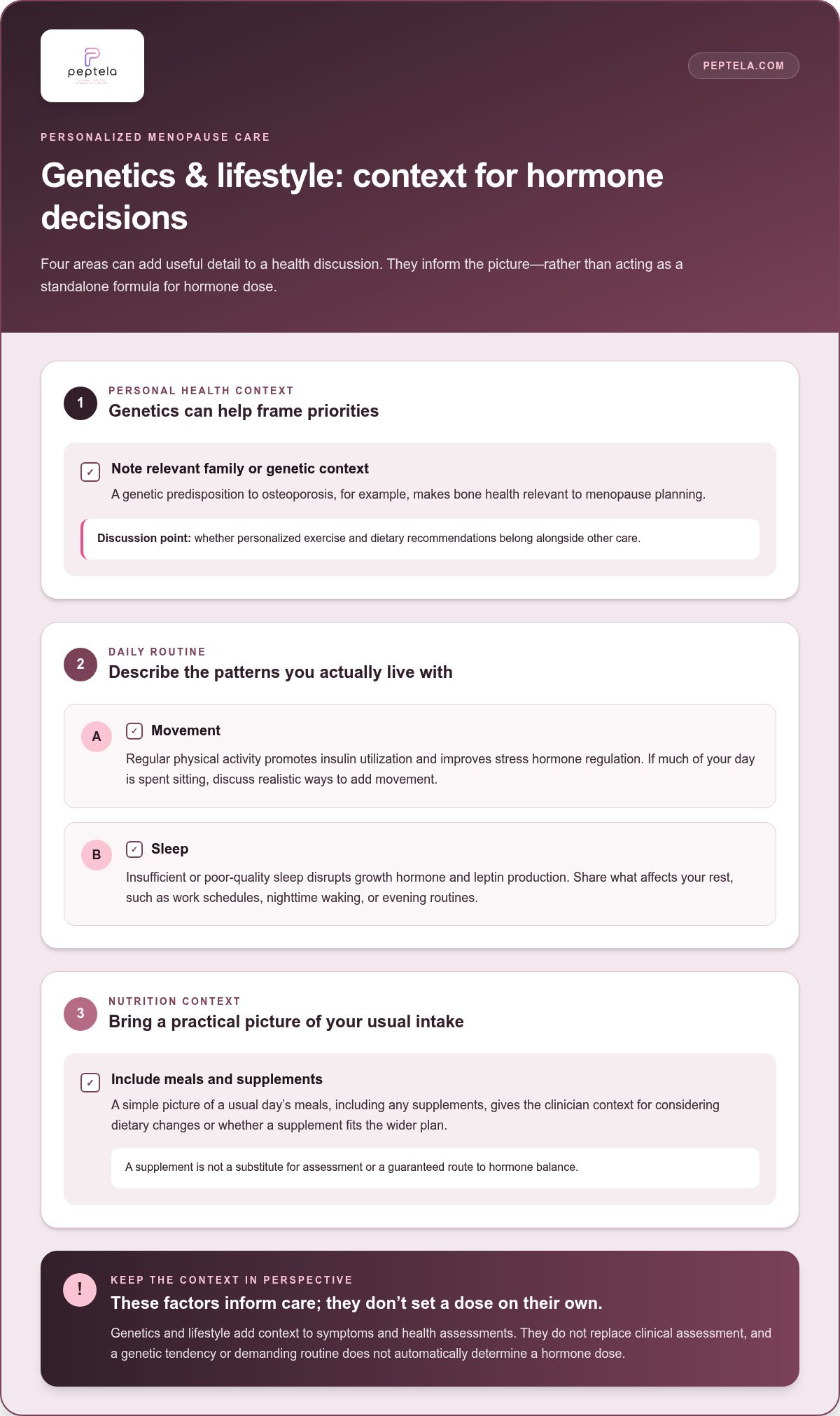
Hormone decisions can reflect more than symptoms or a test result. Personalized hormone care considers individual differences in genetics, environment, and lifestyle when shaping medical interventions. These factors provide context, not a standalone formula: a genetic tendency or demanding routine does not automatically determine a hormone dose.
Genetics can help frame questions about individual health risks and priorities. For example, a genetic predisposition to osteoporosis makes bone health relevant to menopause planning. The discussion can include whether personalized exercise and dietary recommendations belong alongside other care. Genes provide context; daily habits and health assessments help make that context useful.
Movement is one lifestyle factor relevant to broader hormonal health. Regular physical activity promotes insulin utilization and improves stress hormone regulation. If you spend much of the day sitting, for instance, you can discuss realistic ways to add movement to your routine. The aim is a sustainable habit that supports wellness, not a one-size-fits-all exercise prescription.
Sleep deserves equal attention. Insufficient or poor-quality sleep disrupts growth hormone and leptin production, so describing a typical night can add useful detail to a health assessment. Note whether work schedules, nighttime waking, or evening routines affect your rest. This helps connect daily experience with a broader conversation about symptoms, lifestyle, and quality of life.
Nutrition guidance should fit your habits and health priorities. Bring a simple picture of a usual day’s meals, including any supplements, to the discussion. This gives the clinician practical context for considering dietary changes or whether a supplement fits the wider plan. Do not treat a supplement as a substitute for assessment or as a guaranteed route to hormone balance.
Yoga and meditation offer hormone-free approaches that can be part of an individualized menopause management plan. If stress feels most disruptive before bed, you might explore a calming evening practice; someone else may prefer gentle movement. These options can complement clinical care, but they do not determine hormone dosing on their own.
Personalized follow-up connects lifestyle changes with what you actually experience. If you change your exercise routine, meal patterns, or sleep habits, noting when the change began can make later conversations more specific. Follow-ups and re-evaluations help track progress and adjust treatment. This keeps wellness goals connected to lived experience, rather than assumptions about what should work.
A practical discussion can start with three details: family health patterns, current routines, and the changes that matter most to daily life. This gives the care conversation a clear, personal foundation. Explore an individualized care approach as you consider which lifestyle factors deserve attention.
Individual health assessments and hormone testing
Assessment and testing help connect menopause symptoms with the wider health picture. Results are most useful when considered alongside your medical history, daily experience, and treatment goals.
Individual Health Assessments
An individual health assessment reviews symptoms, health history, lifestyle, and treatment priorities together. Root-cause investigations may last 60-90 minutes, allowing time to discuss patterns instead of focusing on one test result. For example, sleep disruption, medication use, and hot flashes can each add context to a care conversation.
That context can clarify which concerns deserve attention first. Bring a list of symptoms, current medications, supplements, and relevant family health patterns. A clinician can use these details to shape treatment plans around your overall health, rather than treating a lab value in isolation. The assessment also provides a baseline for later comparisons.
Hormone, Genetic, and Related Testing
Hormone testing measures selected hormone levels, while other lab work can add information about health factors relevant to treatment. Results are snapshots, not a complete explanation of how you feel. For instance, a test result should be considered alongside symptom timing, medical history, and the reason the test was ordered.
Genetic testing may identify inherited tendencies that help frame health discussions, but a result alone does not set a hormone dose. Advanced gut and metabolic testing can provide different kinds of information: gut tests may examine digestive function, while metabolic tests assess aspects of how the body processes energy. Their value depends on the question being explored and whether the finding could inform a treatment decision.
Ask what each test is meant to clarify and how its result could affect the plan. This helps distinguish relevant testing from results that would not change care. Testing can inform decisions, but it cannot prevent every health concern or replace ongoing clinical assessment.
Candidates for Personalized Hormone Therapy
A good candidate is someone whose menopause symptoms or health goals call for a thoughtful review of hormone therapy options. The decision considers symptom impact, health history, medications, and personal preferences. For example, if night sweats interrupt your sleep, describe how often they occur and which daily activities they affect.
Personalized care can also suit people who want treatment decisions grounded in their individual health picture, rather than symptoms alone. A clinician considers assessment findings and relevant test results, then weighs whether hormone therapy fits your goals and circumstances. The discussion should leave room for questions, clear explanations, and follow-up to evaluate how the plan is working.
Ongoing monitoring and treatment adjustments
Ongoing monitoring connects treatment decisions with changes in symptoms, test results, and daily health. Personalized hormone care is an ongoing process, not a single prescription. In the United States, hormone therapy options can include menopause treatment that considers estrogen and progesterone, with the dose and delivery method selected for your needs.
For menopause, monitoring tracks whether symptoms such as hot flashes improve and whether side effects emerge. Keep a brief record of symptom patterns, sleep, and changes after treatment starts. For example, noting when hot flashes occur makes follow-up more specific than relying on general impressions. Regular reviews and re-evaluations help assess progress and guide adjustments.
Wearable health data can reflect hormone changes across the menstrual cycle and help clinicians identify patterns. You might compare cycle information with symptoms in a personal log. These records add context to follow-up, but work best alongside discussions of health history and treatment response. Personalized hormone care uses these observations to inform review, not as a substitute for clinical assessment.
Personalized hormone care means tailoring hormone-related decisions to your symptoms, health context, and response over time. For menopause, the discussion often centers on estrogen and progesterone, whose production declines during menopause. The process can start with an assessment, followed by relevant testing and review of treatment response. Each step helps clarify whether the current plan still fits.
Endometriosis and PCOS can also shape questions during a hormone-related visit. Someone with endometriosis might describe how symptoms affect daily routines, while a person with PCOS might raise concerns about metabolic health. These conditions require their own clinical assessment; their presence does not mean menopause treatment will address them. Personalized hormone care keeps these distinct health questions in view.
Costs depend on the treatment type, formulation, testing, and follow-up involved. Pricing is provided after a quote request, with those factors shaping the quote. Discussing these components helps clarify what a proposed plan includes and which monitoring steps support it, without confusing treatment cost with clinical purpose.
To begin, prepare a symptom record, a list of current medications, and questions about your treatment goals. An assessment can establish relevant health context, while testing can inform decisions when appropriate. After treatment begins, track hot flashes, side effects, and other agreed measures, then review them during follow-up. Note which outcomes you want to prioritize, such as sleep or daytime comfort.
Individualized hormone and peptide protocols
A tailored protocol should connect a clear health goal with a defined treatment rationale. For menopause, that means distinguishing hormone therapy decisions from peptide discussions, then assessing each within your overall health picture. Customized care is not simply combining treatments or changing levels; each choice needs its own purpose and review.
For hormone therapy, the discussion can start with the symptoms that matter most, such as hot flashes disrupting sleep. Health history, relevant test results, treatment preferences, and follow-up findings all help shape the approach. A clinician can explain what a proposed hormone plan aims to address and how progress will be assessed. That makes relief a specific goal, not a broad promise.
Peptides require a separate conversation. The word describes a broad category, not one uniform treatment or outcome. Ask what a proposed peptide is intended to do, what evidence supports that use, and what measures will inform follow-up. For example, a plan should define its intended goal before treatment begins, rather than assuming a peptide will improve menopause symptoms or hormone levels.
Keeping protocols distinct also makes decisions easier to understand. If hormone therapy and a peptide are both being considered, clarify the rationale for each and how the clinician will evaluate them. A written plan can identify the goal, the treatment being considered, and the changes to discuss at review. This helps avoid attributing every change in overall wellbeing to one intervention.
Personal factors shape the plan beyond a lab result. If sleep is your priority, you may track nighttime symptoms; if daytime comfort matters most, note hot flashes during work. Genetics, lifestyle, health history, and treatment preferences can add context. They guide the conversation, but do not independently determine a dose or establish that a particular peptide is appropriate.
Follow-up turns a customized plan into an ongoing decision process. Track the symptoms chosen as goals, any new concerns, and changes made to the plan. At review, compare those observations with the original goal and discuss whether to continue, adjust, or reconsider an approach. This is especially useful when more than one strategy is being discussed, because each change should have a clear reason.
Before your next clinical discussion, write down your main goal and the questions above. Ask for a plain-language explanation of each proposed protocol, its intended outcome, and how progress will be reviewed. This keeps your choices connected to your priorities and gives every treatment a defined role.
Peptela: Tirzepatide Injections
Peptela offers Tirzepatide Injections for people considering this option as part of their care. It also offers Hormone Balance and Peptides, which relate to different treatment discussions. Tirzepatide Injections are not menopause hormone therapy, so keep each treatment’s purpose clear when discussing your goals.
If you’re exploring an injectable option, bring your health priorities and questions to the conversation. Ask how it fits alongside any menopause treatment plan and what follow-up involves. Clear distinctions help you make decisions based on the treatment’s intended role, rather than assuming one option addresses every concern.
To discuss whether Peptela’s offerings align with your care goals, contact Peptela or visit peptela.com.
Shape Your Next Care Conversation
Your next step can be a clearer conversation about what you want to change and how you’ll evaluate progress. Personalized hormone care works best as a collaborative discussion, with your priorities and questions guiding the options you explore.
Before reaching out, write down the outcomes that matter most to you and your remaining questions. You might ask how a proposed approach fits your goals, what follow-up involves, and how you’ll discuss changes over time. This preparation can turn a broad concern into a focused conversation.
Peptela offers Hormone Balance, NAD+, and Tirzepatide Injections. These are distinct offerings, so a conversation can help you focus on the one that relates to your goals. Which questions would help you feel ready to take the next step?
Contact Peptela to discuss your options. A thoughtful conversation is a practical place to begin, and you can move forward at your own pace.
Frequently Asked Questions
How Does Personalized Medicine Help in Menopause Management?
It helps connect care decisions to your symptoms, health priorities, and response to treatment. For example, if better sleep is your goal, track nighttime disruptions; if daytime comfort matters more, note when symptoms occur. Sharing these priorities can make appointments more focused. Ask how progress will be measured and which changes would prompt a review, so you know what to observe between conversations.
What tests and evaluations are used to personalize hormone treatment?
Clinicians may consider health history, symptoms, hormone tests, and other lab results when evaluating treatment. The relevance of each test depends on the clinical question. Bring copies of previous lab reports when available, including the test date and results, so a clinician can see what was measured and compare findings over time. Ask what a test result could change in your care plan.
How much does personalized hormone care cost, including labs and follow-up visits?
The total cost depends on the care plan, tests, treatment, and follow-up involved. For Peptela, pricing for its services is provided after a quote request; cost factors include the chosen treatment and related care. Before deciding, ask for a clear breakdown of what the quote covers, including any labs or follow-up charges. This helps you understand expected costs without assuming every plan includes the same items.
Does health insurance cover hormone testing and personalized hormone therapy?
Coverage depends on the insurance plan and the specific test or treatment. Peptela does not offer insurance-covered treatment. If you’re considering care through another arrangement, review the applicable benefit details, including whether testing and follow-up are handled separately. Keep billing documents and service descriptions together so you can compare them with your plan’s terms and understand which expenses may be your responsibility.
What are the risks and side effects of hormone therapy?
Risks and side effects vary with the treatment and delivery method, so discuss your health history and concerns before starting. During treatment, note new or bothersome symptoms and when they occur. Share those details during follow-up rather than changing a prescribed dose on your own. Ask how to report concerns and how the care plan will be reviewed if your symptoms or priorities change.
What FDA rules apply to compounded bioidentical hormones and hormone clinics?
Ask whether the hormone is an FDA-approved medication or a compounded preparation; “bioidentical” does not establish FDA approval. Compounded bioidentical preparations are not automatically the same as FDA-approved medicines. Ask how the product’s approval status, preparation, labeling, and follow-up are explained.


