

Hormones influence far more than mood or weight. These chemical messengers help regulate sleep, metabolism, appetite, reproduction, and the body’s response to stress. Levels naturally shift through life, but symptoms such as fatigue, weight changes, or irregular periods can have causes beyond hormones, so the right questions to ask about hormone balance focus on patterns, possible causes, and whether testing could clarify what’s happening.
If changes in your energy, sleep, mood, or body are hard to explain, it makes sense to look for a clear connection. A symptom alone doesn’t confirm a hormone imbalance. A clinician considers your health history and concerns and may use blood tests to assess relevant hormone levels.
This article explains how hormones affect body functions and weight, which conditions may involve an imbalance, and how lifestyle habits can complement medical care. You’ll also find practical questions to bring to a conversation about testing, treatment options, and potential risks, helping you take a more informed role in your health.
Key Takeaways
- Hormones influence functions such as sleep, metabolism, mood, and reproduction, but symptoms alone can’t confirm an imbalance.
- Weight changes may relate to hormone shifts, yet thyroid, insulin, and other health factors can also play a role.
- Keep track of symptoms and changes over time to make conversations about possible causes and testing more focused.
- Sleep, movement, stress management, and balanced nutrition can support well-being alongside appropriate medical treatment.
- Before considering hormone therapy or products marketed as natural, understand the potential risks and how they relate to your health.
What conditions are caused by hormonal imbalances?
Hormonal changes can accompany life stages, health conditions, or disrupted routines. Symptoms need context because fatigue, anxiety, sleep changes, and weight shifts can have several causes.
Estrogen and Progesterone Symptoms
Estrogen and progesterone levels shift during menstruation, pregnancy, and menopause, and changes may coincide with symptoms such as irregular periods, mood swings, sleep trouble, or hot flashes. Patterns across the menstrual cycle or life stages can help clarify what to discuss with a healthcare provider. Menopause is defined as having gone 12 months without a period, according to the National Institute on Aging.
Cortisol Symptoms and Causes
Cortisol is involved in the body’s response to stress, and prolonged stress can contribute to hormonal disruption. Cushing’s syndrome can cause rapid weight gain in the face, abdomen, chest, and back of the neck. Low cortisol can occur with adrenal insufficiency, a rare condition associated with nausea, unexplained weight loss, severe fatigue, and low blood pressure. “Adrenal fatigue” is not a recognized condition.
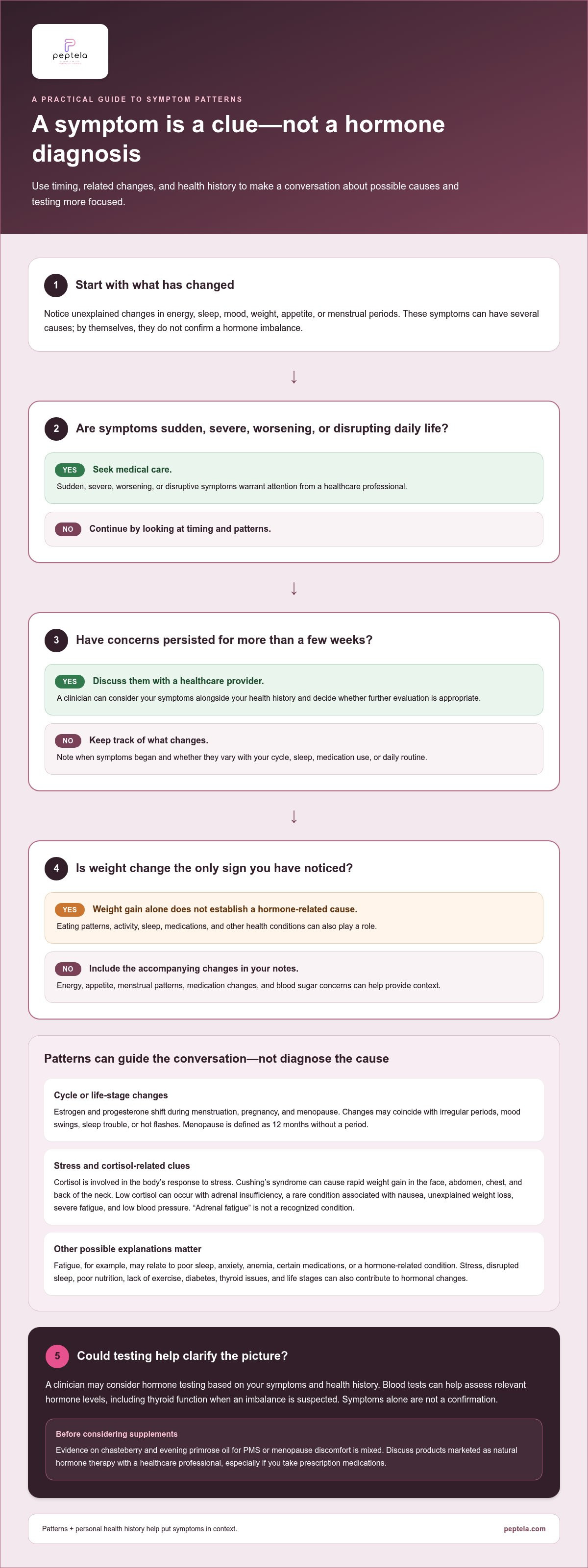
Symptoms alone don’t identify the cause. Fatigue, for example, may relate to poor sleep, anxiety, anemia, certain medications, or a hormone-related condition. Chronic stress, disrupted sleep, poor nutrition, lack of exercise, diabetes, thyroid issues, and life stages such as puberty or pregnancy can also contribute to hormonal changes. Note when symptoms began and whether they vary with your cycle, sleep, medication use, or daily routine.
That context helps make an evaluation more useful. Tell a healthcare provider about new medications, supplements, sleep changes, and symptoms such as persistent irregular periods, unexplained weight changes, infertility, fatigue, mood swings, or hot flashes. A clinician may consider hormone testing based on your symptoms and health history. Seek care if symptoms are sudden, severe, worsening, or disrupting daily life. Persistent concerns lasting more than a few weeks also merit discussion.
Supplements aren’t interchangeable with an evaluation. Findings on chasteberry and evening primrose oil for PMS or menopause discomfort are mixed. Adequate calcium and vitamin B6 intake may improve PMS-related mood swings, while vitamin D, vitamin E, and B vitamins may support hormone health during menopause. Before taking products marketed as natural hormone therapy, discuss them with a healthcare professional, especially alongside prescription medications.
Persistent or severe symptoms around puberty, pregnancy, or menopause may warrant personalized evaluation. Ongoing symptoms related to thyroid disorders, PCOS, or diabetes may need medical care rather than waiting for improvement.
Hormonal imbalance and weight gain
Hormones are chemical messengers that help regulate processes such as metabolism, reproduction, and appetite. A hormonal imbalance means hormone levels or production no longer support normal body functions. This can affect weight, but weight gain alone doesn’t establish a hormone-related cause. Eating patterns, activity, sleep, medications, and health conditions also matter. Considering timing and accompanying symptoms gives a clearer starting point than focusing on the scale alone. Questions to ask about hormone balance can begin with what else might explain a weight change.
Thyroid hormones help regulate metabolism. Low thyroid hormone levels can slow metabolism and contribute to weight gain. When a clinician suspects an imbalance, bloodwork can help assess thyroid function. A true hormone imbalance is a biochemical change, not a conclusion based on symptoms alone. Women are estimated to be five to eight times more likely than men to have thyroid problems. A healthcare provider can consider test results alongside symptoms and health history.
Other hormone-related conditions affect weight in different ways. Higher insulin levels can contribute to weight gain and blood sugar fluctuations. Cushing’s syndrome may cause rapid weight gain in the face, abdomen, chest, and back of the neck. Diabetes, thyroid disorders, adrenal insufficiency, PCOS, and hypogonadism are endocrine conditions associated with hormonal imbalance. Each has distinct causes and effects, so symptom patterns help guide evaluation.
Hormonal patterns can also differ by sex and life stage. In women, estrogen and other hormone levels can fluctuate around menstruation, pregnancy, and menopause. Menopause-related changes may slow metabolism and contribute to weight gain. In men, decreasing testosterone levels can be associated with fatigue, low libido, weight gain, increased fat mass, and osteoporosis. These examples show why similar weight changes may call for different questions and assessments.
To prepare for a discussion, note when weight changes began and whether other changes appeared at the same time. Include energy, appetite, menstrual patterns, medication changes, and blood sugar concerns. One of the questions to ask about hormone balance is whether thyroid or other hormone testing fits your symptoms and health history. This helps separate a possible endocrine condition from other influences without assuming one symptom explains everything. For readers considering personalized support after reviewing their concerns, Peptela’s Hormone Balance care is one option to explore.
How Do Lifestyle Changes Complement Medical Hormone Therapies?
In the United States, hormone testing and treatment costs depend on the tests selected, treatment approach, and care setting. Pricing depends on the individual case and is provided after a quote request.
Lifestyle habits can support well-being alongside medical hormone therapy, but they don’t replace evaluation of an underlying condition. A balanced diet, regular exercise, stress management, and consistent, quality sleep support hormone balance. Weight-bearing activity and nutrient-rich foods can also support bone health during hormone therapy. Sleep habits and stress management may support steadier hormone levels, while individual needs shape which changes are practical.
Clinical evaluation connects symptoms with health history and the right tests. There isn’t one all-inclusive test for female hormone imbalance. Depending on the concern, clinicians may order blood tests for estrogen, progesterone, testosterone, follicle-stimulating hormone (FSH), or thyroid hormones, including TSH, T3, and T4. The selected tests reflect the symptoms and questions being assessed, rather than a single universal panel.
Menopause testing also depends on age and symptoms. For women over 45 with typical perimenopause symptoms, routine estrogen testing may not be necessary. For other concerns, testing can help assess hormone levels alongside the clinical picture. If you’re experiencing persistent irregular periods, unexplained weight changes, infertility, fatigue, mood swings, or hot flashes, ask whether testing could clarify possible causes.
Cortisol testing requires attention to timing because levels normally change during the day. MedlinePlus notes that testing may include a second blood sample collected around 4 p.m., when cortisol levels are normally much lower. Cortisol testing is often performed with an ACTH test because ACTH helps regulate cortisol. An ACTH test measures the amount of this chemical messenger in the bloodstream. Ask what each test evaluates and how its timing affects interpretation.
Results can guide the next discussion, not just the next test. Ask how findings relate to your symptoms, whether a condition needs treatment, and which lifestyle habits can complement the plan. For example, someone managing menopause symptoms may discuss sleep quality, stress, nutrition, and bone-supporting exercise alongside medical options. These questions help connect test results with daily routines and personal health priorities.
Costs vary depending on the tests selected, treatment approach, and care setting. Pricing is provided after a quote request.
Hormone functions and endocrine balance
Hormones are chemical messengers that help coordinate functions across the body. Scientists have identified over 50 hormones, and their levels can change throughout life.
Hormone Functions and Types
Hormones carry signals that influence processes such as stress response, growth, and hunger. Cortisol, somatotropin, and leptin are examples linked to these functions. Other hormones, including thyroid and reproductive hormones, affect metabolism and menstrual patterns. A change in one body process can have several possible explanations, not just a hormone-related cause.
Hormone levels aren’t meant to stay identical every day. Menstrual cycles, pregnancy, and menopause can involve natural shifts, while some changes reflect an underlying issue. Consider how symptoms such as fatigue or appetite changes line up with sleep, stress, or cycle patterns. This context can help clarify which body functions may be changing together.
Endocrine Balance
Endocrine balance describes how hormone-producing glands and tissues coordinate signals that help maintain body functions. The thyroid, for example, produces hormones involved in metabolism. Disrupted thyroid function can affect energy and weight, while reproductive hormone shifts can affect menstrual cycles. Balance means appropriate signaling for the body’s needs, not identical hormone levels at every moment.
One system can influence how another feels in daily life. Stress affects cortisol signaling, while thyroid changes may contribute to fatigue or shifts in energy. If symptoms persist, note when they occur and what changes alongside them. Patterns across sleep, appetite, energy, or menstrual timing give a healthcare conversation more useful detail than one symptom alone.
Sleep and Hormone Function
Sleep and hormone signaling interact throughout the day. Adults are advised to aim for 7-9 hours of sleep each night to support hormone health, according to the National Heart, Lung, and Blood Institute. Sleep directly influences cortisol, somatotropin, and leptin, which are associated with stress, growth, and hunger. Poor sleep can affect hunger hormones the following day and increase appetite.
A steady sleep-wake schedule, a calming pre-bed routine, and a cool, dark bedroom can support more consistent rest. For example, track bedtime, waking time, and daytime energy alongside appetite changes. If fatigue continues despite adequate sleep, consider discussing that pattern with a healthcare provider. Sleep is one part of the picture, not a stand-alone measure of endocrine balance.
Hormone therapy and cancer or cardiovascular risks
Hormone therapy can ease disruptive symptoms, but benefits and risks deserve equal attention. Hormone replacement therapy (HRT) can relieve hot flashes by up to 90 percent. The right discussion also considers your symptoms, health history, treatment goals, and possible risks. Ask your doctor what a proposed therapy is meant to address, how its benefits will be assessed, and what monitoring it involves.
Estrogen therapy can raise the risk of breast and endometrial cancer and can carry cardiovascular risk. Those risks make personal context important, including your medical history and the causes of your symptoms. Ask how the proposed treatment affects your hormone levels, which benefits it targets, and what changes should prompt follow-up. A clear discussion helps you weigh symptom relief against potential risks rather than focusing on one outcome alone.
Testosterone therapy also calls for a specific monitoring conversation. It carries increased cardiovascular risk, and prostate-specific antigen (PSA) levels should be monitored. Ask your doctor how PSA monitoring fits into your care and how cardiovascular concerns are considered. If treatment aims to address symptoms such as fatigue or decreased libido, discuss how progress will be evaluated. Metabolism and hormone levels can have several influences, so clarify what the therapy is expected to change.
Products marketed as natural hormone therapy still deserve careful review. Many natural hormone therapies are not regulated by the Food and Drug Administration (FDA). “Natural” describes marketing, not proof that a product is safe or suitable for you. Talk with a doctor before taking one, and share the product name, ingredients, and any medications or supplements you use. Ask about evidence for the intended symptom, possible interactions, and how to recognize an unwanted effect.
Before starting or changing therapy, prepare focused questions. Ask which symptoms the treatment targets, how its potential benefits and risks compare for your situation, and what follow-up monitoring involves. For estrogen therapy, include breast, endometrial, and cardiovascular risks in the discussion. For testosterone therapy, ask about cardiovascular risk and PSA monitoring. If a product claims to regulate hormone levels naturally, ask what supports that claim and how it fits your health goals.
For personalized hormone-related support, explore Peptela’s Hormone Balance offering as a next step in considering your options.
Peptela: Tirzepatide Injections
Peptela offers Tirzepatide Injections and Hormone Balance for people considering clinician-guided support for different health goals. If your questions point toward understanding hormone-related symptoms and possible care options, Hormone Balance is the relevant place to continue the conversation. Tirzepatide Injections are another offering, but they shouldn’t be treated as a substitute for evaluating hormone concerns. Peptela’s personalized plans are guided by an in-house care team, helping you discuss your priorities and potential next steps with clinical oversight. The right starting point depends on what you’re seeking support for, whether that’s hormone-related concerns or exploring another offering. For a calm next step, contact Peptela to discuss your goals and care options.
Make your next health conversation count
Your next step can be simple: turn what you’ve noticed into a clear conversation about your goals. Use your questions to ask about hormone balance to explore what symptoms may mean, what information could help clarify them, and how possible treatment choices fit your priorities. You don’t need to arrive with every answer. A focused account of what has changed and what matters most to you can help guide the discussion.
Personalized care should make room for your questions and preferences. Peptela offers NAD+ alongside its hormone-related and other wellness offerings, giving you options to explore based on your goals. Consider what you want support with, then take the next step at a pace that feels right for you.
Contact Peptela with your questions and start a thoughtful conversation about your care options. Your health decisions can move forward with clarity, confidence, and your priorities at the center.
Frequently Asked Questions
What are hormones?
Hormones are chemical signals that help different parts of the body coordinate their activity. A gland or tissue releases a hormone, which travels to cells that respond to its message. For example, signals involved in appetite can affect how hungry you feel, while reproductive signals help coordinate menstrual cycles. Because these messages interact, one symptom can reflect several processes rather than one isolated hormone.
How and why do men and women experience hormonal imbalances differently?
Hormonal patterns differ partly because reproductive systems and life stages differ. Women’s hormone levels shift with menstrual cycles, pregnancy, and menopause. Men can experience decreasing testosterone, which may accompany symptoms such as lower libido or fatigue. Thyroid conditions and other endocrine issues can affect anyone. Symptoms, timing, and health context matter more than assuming one pattern applies to every man or woman.
What are the signs and symptoms of hormonal imbalance?
Possible signs include changes in energy, sleep, mood, appetite, skin, hair, or menstrual regularity. These symptoms aren’t specific to hormones. Medication effects, anemia, anxiety, and disrupted sleep can cause overlapping changes. A practical step is to record when a symptom starts, how it affects daily routines, and whether it appears alongside other changes. That timeline can make a health conversation more focused.
How Do Lifestyle Habits Influence Hormonal Health?
Daily routines can influence systems involved in appetite, stress response, and sleep. For example, irregular sleep may leave you hungrier the next day, while ongoing stress can affect how you feel and function. Regular movement, nourishing meals, and a steady bedtime offer practical foundations. Track routine changes alongside energy or appetite so you can notice patterns without treating one habit as a cure for a medical condition.
How Do Stress Reduction Techniques Support Hormonal Balance?
Stress reduction can support well-being by helping you manage the body’s response to everyday pressure. Try a brief breathing pause, a quiet walk, or a consistent wind-down routine after work. Notice which practice feels sustainable and whether it affects tension, sleep, or focus. These techniques complement broader healthcare; they don’t establish that a hormone imbalance exists or replace evaluation of persistent symptoms.
How do estrogen and progesterone affect women’s health?
Estrogen and progesterone help coordinate reproductive functions and change across menstrual cycles and life stages. Their patterns relate to menstruation, pregnancy, and the transition into menopause. For example, note whether sleep or mood changes repeatedly occur at a similar point in your cycle. Sharing that pattern, along with medication changes, can help a clinician understand the concern more clearly than one symptom alone.
What Is Cortisol?
Cortisol helps the body respond to stress and follows a daily pattern. Its levels normally vary, so test results need context, including the collection time and reason for testing. For example, tell the clinician whether a sample was taken in the morning or later in the day. That detail helps make sense of results and prevents interpreting one measurement in isolation.
What symptoms can indicate a hormone imbalance?
Symptoms that raise questions about hormones include persistent changes in periods, unexplained weight shifts, hot flashes, or ongoing fatigue. A cluster of changes, such as altered sleep and mood alongside menstrual disruption, gives more context than one isolated sign. Record when symptoms began and whether they interfere with work, relationships, or daily tasks. Sudden, severe, or worsening changes deserve timely medical attention.


