

A tirzepatide maintenance dose tapering schedule should be tailored to the person, not treated as a one-size-fits-all plan. The FDA-recommended maintenance doses for weight reduction and long-term weight management are 5 mg, 10 mg, or 15 mg once weekly. Some patients may discuss a lower dose or less frequent injections with a healthcare provider; dosing every other week is off-label because the FDA label calls for weekly dosing.
It makes sense to want a maintenance approach that supports your progress while fitting your needs and budget. This guide explains how dose and injection-frequency changes may be considered, what can affect medication costs, and how to plan and reassess a change with a healthcare provider. You’ll also see why maintenance decisions depend on your response to treatment, not just the number on the scale.
Key Takeaways
- Maintenance planning should account for weight stability, progress toward your goal, treatment response, and tolerability.
- Changing injection intervals can affect medication use and costs; a provider can explain the trade-offs of weekly or less frequent dosing.
- In a clinical trial, participants switched from tirzepatide to placebo regained about 14% of their weight on an annual basis over the following year, according to the New England Journal of Medicine.
- A taper plan can include monitoring weight, appetite, and well-being, plus guidance for missed doses.
- Discuss how lifestyle factors, including nutrition and protein intake, fit into your maintenance plan with your healthcare provider.
Cost considerations for reduced or less frequent dosing
Changing from weekly injections to a less frequent schedule can affect refill timing and medication use. A tirzepatide maintenance dose tapering schedule may involve adjusting the dose, the injection interval, or both. A clinician should consider your treatment response, tolerability, and prescribing plan before recommending a change.
Less frequent dosing may reduce annual medication costs, but the savings depend on how medication is supplied and billed. Individual savings can differ based on the prescribed product, dose, dispensing arrangement, and coverage. A 10-day interval uses injections less often than weekly dosing, but the cost effect depends on how medication is supplied and billed. Compare the planned schedule and refill terms, not just the dose.
Clinician Assessment of Every-Other-Week Dosing
Less frequent tirzepatide dosing spaces injections farther apart than the usual schedule. It is off-label because the FDA label calls for weekly dosing. A clinician considers weight stability, appetite, tolerability, health needs, blood sugar when relevant, eating patterns, and exercise. They also weigh whether longer gaps could make appetite or weight changes harder to interpret.
A 10-day schedule creates a smaller interval change than moving directly to every other week. The clinician may compare weight trends, hunger, side effects, and timing against weekly dosing. If appetite rises or weight trends upward, that pattern may affect the plan. Any interval change should be part of an agreed prescription, not a self-directed adjustment.
Transitioning to Maintenance Dosing
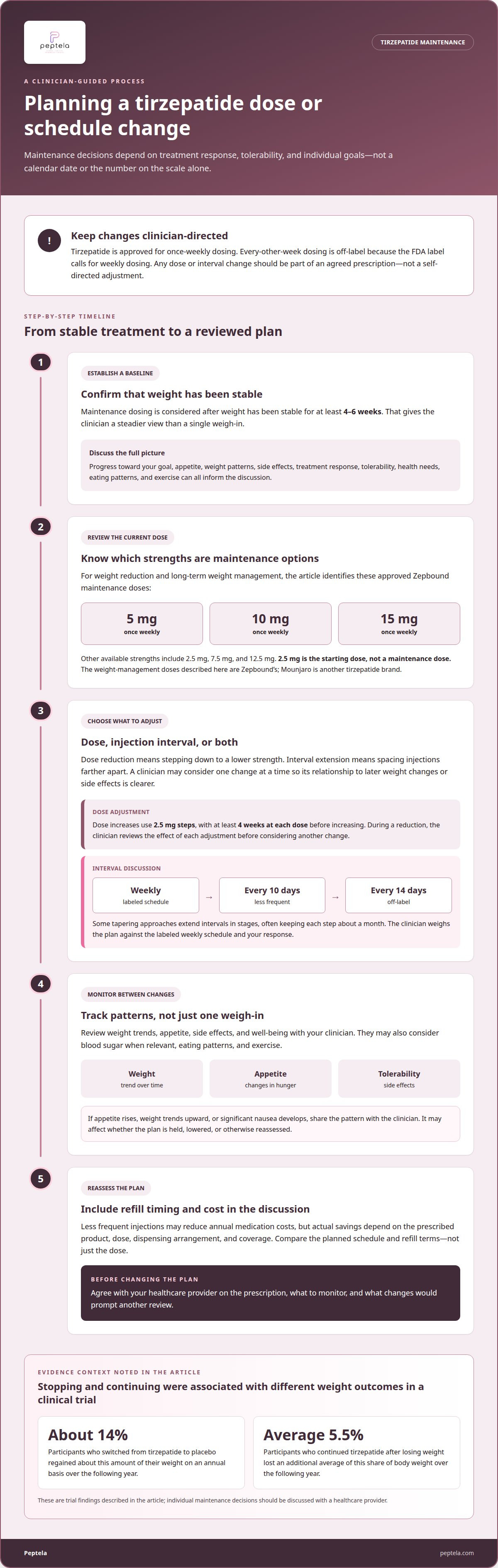
Maintenance dosing is considered after weight has been stable for at least 4-6 weeks. That period gives the clinician a steadier view than one weigh-in. During titration, tirzepatide doses increase in 2.5 mg steps, with at least 4 weeks at each dose before increasing. A tirzepatide maintenance dose tapering schedule should reflect progress, response, and tolerability, not a calendar date alone.
Before changing frequency, the clinician can map expected injections across the refill period and discuss how extending intervals affects supply needs. Weekly dosing means more injections over the same span than a 10-day schedule. Review the plan alongside eating and exercise routines, and agree on what changes would prompt reassessment. This connects cost planning with treatment response and the maintenance goal.
Dose-reduction and injection-frequency approaches
A clinician may adjust tirzepatide by changing the dose or the interval between injections. The right approach depends on your response, side effects, and maintenance goals.
Approved Maintenance Dose Options
For weight reduction and long-term weight management, approved Zepbound maintenance doses are 5 mg, 10 mg, or 15 mg once weekly. Available strengths also include 2.5 mg, 7.5 mg, and 12.5 mg. Those additional strengths can support dose titration, but 2.5 mg is the starting dose, not a maintenance dose. Mounjaro is another tirzepatide brand; the weight-management doses described here are Zepbound’s.
Adjusting Dose and Injection Timing
Dose reduction means stepping down to a lower strength, while interval extension spaces injections farther apart. Tirzepatide is approved for once-weekly dosing, every 7 days. Some tapering approaches extend the interval from annual to every 10 days, then every 14 days, often keeping each step about a month. Every-other-week dosing is off-label, so a clinician weighs its potential fit against the labeled weekly schedule.
A clinician can assess whether your current dose supports a stable weight near your goal, then consider one change at a time. They may review appetite, weight patterns, tolerability, and treatment history before adjusting the dose or timing. Making one change at a time helps clarify how it relates to later weight changes or side effects.
Adjusting Treatment for Response or Side Effects
To decide whether to hold, lower, or increase a tirzepatide dose, clinicians review treatment response and tolerability. If significant nausea develops, they may consider a lower dose. If the response is inadequate, the clinician reviews the current dose and how long you have taken it before deciding whether an increase fits your plan.
Dose increases use 2.5 mg steps, with at least 4 weeks at each dose before increasing. That interval gives the clinician time to assess response and side effects before another change. During dose reduction, the same principle applies: review the effect of each adjustment before changing the next step. A slower or paused progression can be considered when tolerability shapes the plan.
For example, a person with a stable response at 10 mg weekly may discuss whether to remain there or consider a different plan. The clinician considers whether appetite, weight, or side effects have changed and whether the goal remains appropriate. Dose and frequency are prescription decisions, not interchangeable self-directed options. A change should follow an individualized clinical assessment.
Choosing whether to discontinue or continue treatment
Deciding whether to continue tirzepatide or stop involves weighing your response, tolerability, and priorities. Reaching a goal weight is only one consideration. Your clinician can review appetite, weight patterns, side effects, and health needs before discussing prescribing options.
In a clinical trial, participants switched from tirzepatide to placebo regained about 14% of their weight annually, according to the New England Journal of Medicine. Participants who continued tirzepatide after losing weight lost an additional average of 5.5% of their body weight over the following year. These findings offer context, but they don’t predict an individual patient’s outcome.
Continuing treatment may be part of a maintenance plan if the medication remains appropriate and tolerable. A clinician can consider whether a lower effective dose supports your goals or whether side effects, changes in health, or your preferences call for another approach. Eating and activity habits also help put weight changes in context.
Stopping is a separate decision from reducing a dose or extending injection intervals. Before discontinuation, patients and clinicians can discuss what changes to monitor, including appetite, weight, and well-being. They can also agree when to reassess and what would prompt a new conversation about treatment. This creates a plan for responding to changes instead of treating stopping as a one-time event.
For example, if your weight is stable but side effects persist, you might discuss a dose adjustment before stopping. If your priorities or health needs have changed, you can weigh discontinuation against continuing treatment. A clinician can review your history and current response, then explain how each option applies to your situation.
Evidence about semaglutide is not interchangeable with evidence about tirzepatide. They are different medications, and trial results apply to the treatment and participants studied. Ask how the relevant evidence applies to your plan, including possible weight changes and the practical considerations of ongoing treatment.
Make this decision through a clear discussion, rather than changing treatment abruptly on your own. Raise concerns about side effects, daily routines, and your preferences. Your provider can explain the options, plan follow-up, and revisit prescribing decisions as your response and needs change.
Planning a taper with a healthcare provider
A taper plan starts with a review of treatment response and your goals. There is no established 3 to 6-month waiting period for considering a change. Your provider can review your weight trend, appetite, side effects, and response to earlier dose changes.
Before changing treatment, your provider reviews the full picture, not just one weigh-in. They may consider how long your weight has been stable, whether your appetite has changed, how the current dose feels, and your other health needs and medications. This helps distinguish a temporary fluctuation from a pattern that may affect your plan.
There is no established tirzepatide maintenance tapering schedule based on extending injection intervals. Moving injections from weekly to every 10 days and then every 14 days is not a universal or evidence-based schedule. Discuss any dose or interval changes with your provider, who can consider your response and priorities.
Plan follow-up with your provider when changing treatment; there is no established 4 to 8-week interval for reassessment. Review weight trends, appetite, and well-being together. A 5% increase above a goal is not an established threshold for reconsidering GLP-1 treatment; your provider can help decide what changes, if any, warrant a discussion.
Lifestyle support also belongs in the plan. Activity, strength training, and protein intake can be discussed in light of your needs, health, and capabilities; targets such as 150 minutes of activity per week, strength training 2 to 3 times weekly, or 80-120 grams of protein daily are not right for everyone. A healthy routine should fit the person’s needs and capabilities, not become a rigid test of success.
Make the plan specific: record the current dose and interval, any proposed change, and the follow-up date. Your provider can document the plan and review it with you. Tracking appetite, weight trends, and side effects can help inform the next decision. A written plan makes these checkpoints easier to follow.
During titration, a healthcare provider may increase tirzepatide dosage every four weeks, allowing response and tolerability to inform each adjustment. Clinical trial data regarding specific percentage weight loss outcomes should be evaluated directly through verified medical literature and consultation with your care team at Peptela.
Long-term data demonstrate that continuous therapy helps maintain achieved weight reduction more effectively than discontinuing treatment. Individual wellness goals, including adequate rest and nutrition, should be personalized in consultation with a qualified professional rather than following generalized timelines for appetite control.
How does a clinician advise patients to handle missed tirzepatide doses during dose reduction or discontinuation?
A clinician first distinguishes a missed injection from a planned change in dosing frequency. Tirzepatide is prescribed for once-weekly injections, every 7 days. During a taper, the schedule may differ from that routine, so the clinician reviews the agreed plan before advising what happens next. Patients should not treat an unplanned delay as a new taper step.
To assess a missed injection, the clinician establishes your prescribed dose, the date of your last injection, and when the next dose is due. They also ask whether you are lowering the dose, extending the interval, or stopping. This clarifies whether the missed dose interrupted your existing plan or occurred during a planned transition.
The clinician can give product-specific instructions for a missed dose and confirm when your next injection is due. The instructions depend on the medication’s prescribing information and your treatment plan. Don’t take an extra injection or change your dose to make up for a missed one unless your clinician directs you to. A written calendar can help distinguish the prescribed schedule from a planned interval change.
If you are stopping, clarify with your clinician whether treatment has ended or a dose was delayed. Discuss what to monitor, including appetite, weight, and well-being. If you use tirzepatide for blood sugar management, make sure the clinician accounts for that treatment purpose. Your other medications and health needs also matter.
After a dose reduction, reassessment of weight, appetite, and well-being is recommended 4 to 8 weeks later. A missed dose may affect how the clinician interprets changes during that period. Sharing the injection date and any symptoms helps place those changes in context. The clinician can then decide whether the existing plan remains appropriate or needs revision.
For example, someone extending injections from weekly to every 10 days should clarify whether a late injection changes the next planned date. The provider can restate the schedule in calendar terms and explain which date to follow. If the plan changes again, documenting the new dose and interval reduces confusion. This is especially useful when tapering and missed injections overlap.
Have your medication packaging and current prescription details available when you talk with your clinician. Note the missed date, your last dose, and any effects since the injection. These details help the clinician give instructions based on your prescribed product and situation.
Peptela: Tirzepatide Injections
Peptela offers Tirzepatide Injections for people considering treatment or planning a change with clinical guidance. Its process is 100% online, and no in-person visit is required. Prescription products require an online evaluation with a licensed medical professional, who determines whether a prescription is appropriate. This evaluation is where your health history, current medications, and treatment questions can be discussed.
If you are considering a maintenance change, bring your current prescription details and reasons for the change to your evaluation. Your clinician can review your experience and discuss options in light of your health needs. A dose reduction, a change in injection timing, and stopping treatment are distinct decisions, so make sure you understand the plan.
Peptela’s care team can discuss Tirzepatide Injections alongside other listed offerings, including NAD+, Hormone Balance, and Peptides. These are separate offerings, not interchangeable parts of a tirzepatide plan. The appropriate discussion depends on the health question and the clinician’s evaluation. No treatment outcome or particular dosing approach should be assumed before that review.
Keep product limitations in mind: Peptela products have not been evaluated by the FDA and are not intended to diagnose, treat, cure, or prevent any disease. Some products are compounded by a licensed pharmacy; compounded products are not FDA-reviewed or approved for safety, efficacy, or quality. Prescription products require an online evaluation with a licensed medical professional who will determine if a prescription is appropriate.
Peptela describes its service as 100% online, with fast, discreet shipping through a US-licensed, LegitScript-certified pharmacy partner. A subscription model allows customers to cancel anytime. These operational details do not replace medical evaluation or determine whether tirzepatide is appropriate for an individual. Your clinician’s review remains central to treatment decisions.
If you’re ready to discuss your tirzepatide plan, contact Peptela.
Frequently Asked Questions
Are there any side effects of stopping tirzepatide?
After stopping, appetite or weight may change, though individual experiences differ. Ask your prescriber what to monitor after your last dose, especially if tirzepatide is part of your blood sugar management. Report new or concerning symptoms so your care team can assess them in context.
Can I take tirzepatide every other week?
Taking tirzepatide every other week is off-label; the labeled schedule is weekly. A clinician can discuss whether changing the interval fits your treatment goals, health history, and response. Don’t turn a missed injection into a new routine. Confirm the prescribed dates and instructions with your prescriber before changing your schedule.
Can you stop tirzepatide and keep the weight off?
It may be possible to maintain your weight after stopping, but no individual outcome is assured. Plan follow-up to review appetite, weight trends, eating patterns, and activity. Discuss in advance which changes should prompt a review, rather than waiting until you are uncertain about your progress.
Do you have to taper off tirzepatide?
Ask your prescriber whether tapering is appropriate before stopping tirzepatide. They can clarify how to handle your final dose, review your other medicines and health needs, and set a follow-up plan. This is especially relevant if tirzepatide also plays a role in managing blood sugar.
Can I stay on a low dose of tirzepatide long term?
Possibly, if a clinician determines that continuing at that dose fits your needs. The decision depends on your response, tolerability, health history, and treatment goals. At follow-up, discuss whether the plan remains appropriate and whether new symptoms or changes in your health affect the prescription.
Can I stop tirzepatide cold turkey?
Discuss stopping with your prescriber first. They can review your reasons, whether another treatment needs attention, and how to monitor relevant changes afterward. If you use tirzepatide for blood sugar management, include that in the plan.
What is the FDA-approved tirzepatide maintenance dose for weight loss?
The FDA-recommended maintenance options for weight reduction are 5 mg, 10 mg, or 15 mg once weekly. The prescribing clinician selects an option based on treatment response and tolerability. The starting dose is not a maintenance dose for weight management, so ask how your current prescription fits its intended phase.
Does the prescribing information recommend tapering tirzepatide when stopping?
The prescribing information gives a once-weekly dosing regimen, but does not set out a tapering schedule for stopping. Ask your prescriber how to handle your final dose and plan follow-up around your health needs. Their instructions should account for why you take tirzepatide and any other medicines you use.


